Cube Solver
AI Cube Solver AppOnline Rubik’s Cube Solver
Blogs
GET IT NOW
AI Cube Solver AppOnline Rubik’s Cube Solver
BlogsGET IT NOW
#Tutorial

Why the Windmill Cube Is the Most Underrated Puzzle in 2026

Kelsey Geller
Kelsey Geller
|2026年6月26日

Guides

No headings found

No headings found

The Windmill Cube is a unique 3x3 shape modification that changes both its appearance and the solving experience. It looks different and moves in unexpected ways. Whether you are an experienced cuber or just starting out, this puzzle offers a fresh and engaging challenge. This guide explains what makes the Windmill Cube special, why it belongs in your collection, and how to solve it step by step.

What Is the Windmill Cube

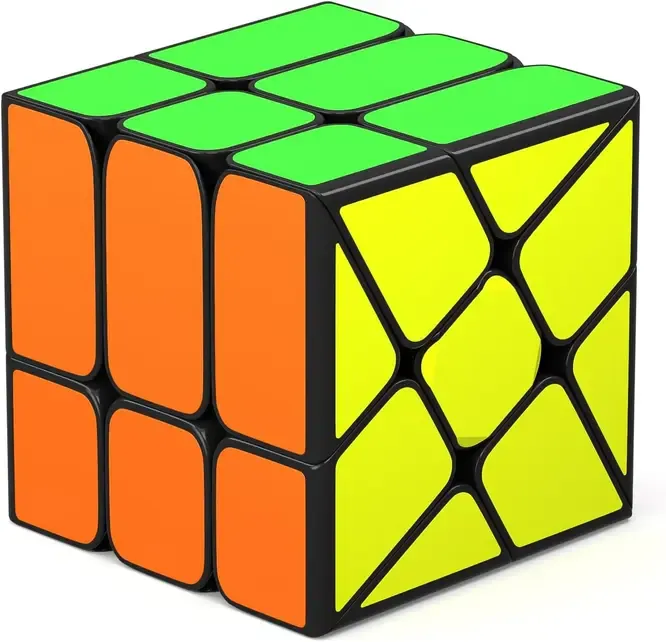
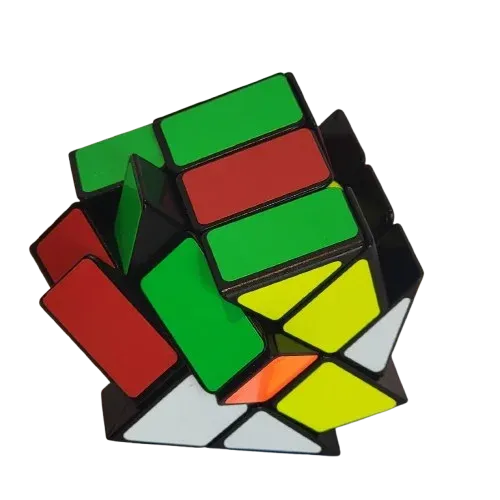
At first glance, the Windmill Cube might look like a distorted version of a standard 3x3, as if it has been twisted out of shape. But don't worry, it is fully functional and offers a unique solving experience. The cube is a 3x3 shape modification, meaning it shares the same internal mechanism as a classic Rubik's Cube, but the pieces have been reshaped and offset. As a result, turning the cube scrambles both the colors and the overall shape.

windmill-cube-1

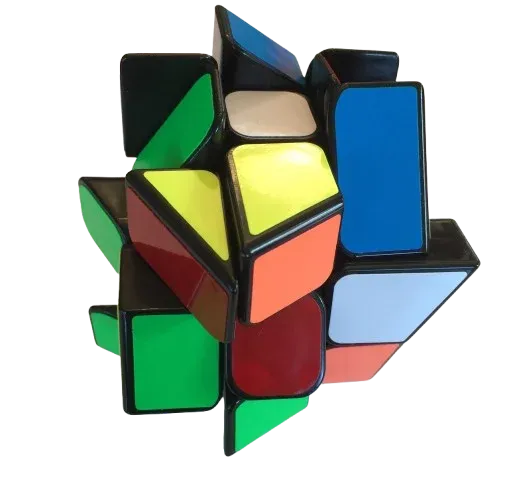
The name "Windmill Cube" comes from the way its layers shift into diagonal, blade-like positions when scrambled, giving it a windmill-like appearance. A single twist is enough to break its symmetry and create an irregular, eye-catching form. While it looks complex, the core solving method is still based on standard 3x3 logic.

Why the Windmill Cube is Great for Cubers

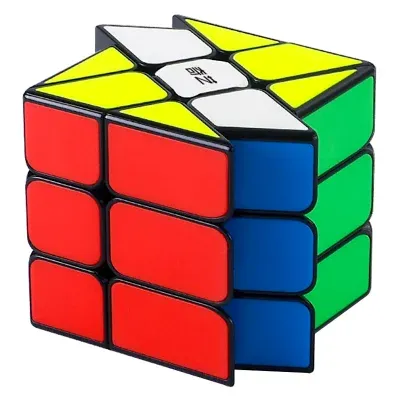
So why should you, whether you're a beginner or an experienced cuber, spend time mastering the Windmill Rubik's Cube? Simply put, it's one of the best ways to get into shape, mods, and non-WCA puzzles. The Windmill Cube challenges you to think differently by making you manipulate its shape as you solve it.

windmill-cube-2

You'll improve your ability to recognize pieces, especially when it comes to corners and edges. This puzzle also deepens your understanding of how the Rubik's Cube works at its core. If you want to boost your 3D visualization skills, this is an excellent cube to practice with.

Beyond the challenge, the Windmill Cube is visually appealing. Watching it twist and shift into unusual shapes only to snap back into a clean, solved cube is satisfying. It's not just a puzzle—it's a great conversation starter and a rewarding display of your spatial reasoning skills.

Understand Windmill Rubik's Cube Mechanics

Before we dive into solving the Windmill Cube, let's first take a look at how it works on the inside. The internal structure is the same as a regular 3x3 cube. It has six fixed centers, eight corners, and twelve edges. The centers don't move, and the edges and corners rotate around them when you twist the cube. Nothing too complicated here.

windmill-cube-3

What sets the cube apart is the way its layers are cut. Unlike a regular 3x3, where the layers are evenly divided, the Windmill Cube has skewed layers. This gives the pieces uneven shapes, with some edges longer and narrower and others more square or trapezoidal. When you twist it, the misaligned cuts cause the cube to take on a distorted shape that looks chaotic, but it still follows the same mechanical rules.

Since the internal workings are the same as a standard 3x3, you can use the same solving methods, but there's a catch. You need to get used to identifying which oddly-shaped pieces are corners and which are edges. That's one of the first challenges most solvers face—training your brain to recognize the parts in their new, unfamiliar forms.

How to Solve a Windmill Cube

Now let's walk through the Windmill Cube solver approach. If you already know how to solve a standard 3x3 with CFOP or the beginner layer by layer method, you have a strong starting point. The real challenge is recognizing pieces by shape and angle instead of relying only on color.

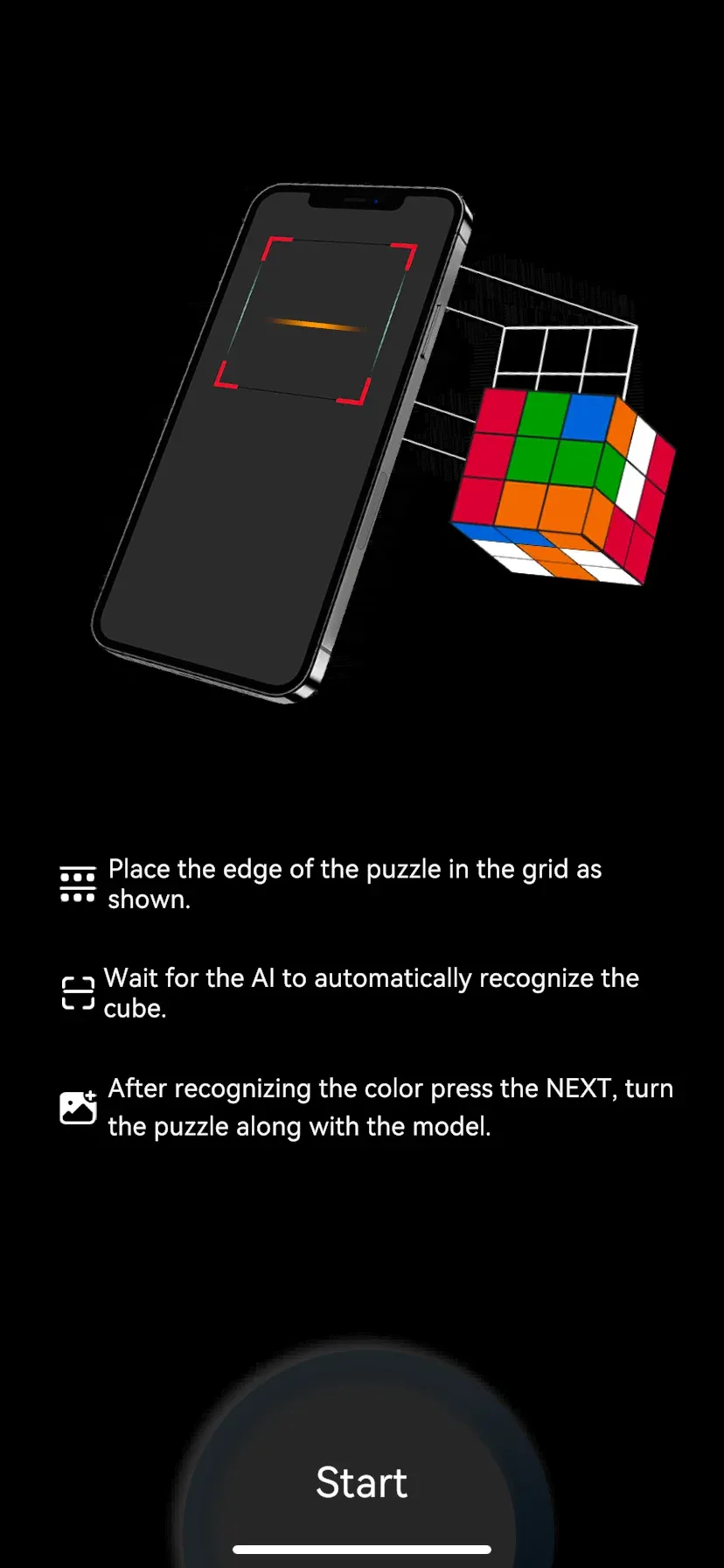
Bonus: If you're still learning the traditional Rubik's Cube, CubeSolver AI can help you practice standard color based cubes like 2x2, 3x3, and 4x4. Once you're comfortable with regular 3x3 solving, the Windmill Cube is a fun next step. It uses familiar 3x3 logic, but the twisted shape makes piece recognition more challenging.

windmill-cube-4

CubeSolver AI

CubeSolver AI

⚡ Fast. Accurate. Free. | ⭐ 4.8 Rating | 👥 5M+ Users
Download on the App StoreGet it on Google Play

Step 1. Solve the Cross

Start by solving the cross on one face, just like on a classic 3x3 cube. The challenge here is identifying the edge pieces, as their shapes are distorted. Focus on the colors and positions instead of relying on how the pieces look.

Step 2. Complete the First Layer

Next, solve the corners of the first layer. Some corners may look more like edge pieces, so take your time identifying them. Matching colors is the most reliable method in this step.

windmill-cube-5

Step 3. Solve the Middle Layer

Place the middle-layer edges using the same algorithms used for a regular 3x3. This step can be tricky because the unusual shapes make it harder to see if a piece is correctly oriented. Double-check the color alignment before moving on.

Step 4. Solve the Top Layer

This is the point where many solvers run into trouble. Although the solving algorithms are the same as those used on a regular 3x3 cube, the Windmill Cube can present unusual cases that do not appear in the standard version. These are known as parity errors.

Common top-layer issues include a single edge piece that appears flipped or two corners that seem to have swapped places. These situations can be confusing at first, but they are usually easy to fix with some adjusted moves.

In most cases, modified 3x3 algorithms or parity solutions borrowed from the 4x4 cube can solve the problem. One of the most helpful is the edge flip algorithm: (R U R' U') (R' F R F')

Once you resolve any parity errors, the Windmill Cube should return to its normal cubic shape. The process may feel unfamiliar in the beginning, but with a bit of practice, your recognition skills and solving speed will quickly improve.

Tips and Tricks for Mastering the Windmill Cube

With the basics covered, it's time to level up. Solving the Windmill Cube is one thing, but mastering it takes practice and strategy. These tips will help you get there faster and with more confidence.

  • Focus on Colors, Not Shapes

When identifying pieces, rely on color alignment instead of shape. The distorted pieces can be misleading, but the color patterns remain consistent and will guide you more accurately.

  • Keep a Regular 3x3 as a Reference

Having a standard 3x3 cube nearby can help you double-check where certain pieces belong. This is especially helpful when you're still learning to recognize distorted parts.

  • Practice with Other Shape Mods

Try solving similar puzzles like the Mirror Cube or the Fisher Cube. These also use shape-based solving and will help you develop stronger pattern recognition and spatial awareness.

  • Turn Slowly and Watch Closely

Avoid rushing through moves. Slower, more controlled turns give you time to observe how each piece moves and how the shape shifts with every rotation.

  • Repeat to Build Recognition

The more you practice, the more natural it becomes. Over time, the cube will stop looking like a scattered collection of strange shapes and start to reveal clear groups of edges and corners.

Conclusion

Solving the Windmill Cube gets easier when you slow down and check each piece before turning. Focus on one layer at a time, compare the angles, and use each mistake to understand the puzzle better. With steady practice, the strange shapes start to make sense, and each solve becomes more controlled.

Windmill Cube FAQ

Q: Is the Windmill Cube easy?

The Windmill Cube is easier if you already know a basic 3x3 method, but it still takes time to get used to. The moves may feel familiar, but the shifted pieces make it harder to tell whether a piece is in the right place. Most beginners struggle less with algorithms and more with reading the puzzle correctly.

Q: Is the Windmill Cube the same as a 3x3?

Not exactly. It turns like a 3x3 and uses similar solving ideas, but the pieces are reshaped and offset. That changes how the cube looks during a solve. You still rely on 3x3 logic, but you need to pay more attention to piece shape, angle, and orientation.

Q: Can I use a cube solver app for a Windmill Cube?

Most cube solver apps are made for standard color based cubes, so they are not the right tool for scanning a Windmill Cube. CubeSolver AI supports regular 2x2, 3x3, and 4x4 cubes. If you are still learning 3x3 basics, it can help you practice before moving on to shape mods like the Windmill Cube.

Kelsey Geller
Kelsey Geller

Kelsey Geller focuses on practical Rubik's Cube learning for beginners. Her guides simplify complex steps, explain the "why" behind moves, and help new cubers build confidence with a reliable solving approach. Every guide follows CubeSolver's editorial review standards before publishing.

Related Articles

What is the Shashibo Cube? The Ultimate Transforming Puzzle

Discover the Shashibo Cube, a puzzle that can change into countless geometric shapes using its magnetic sides and is ideal for fidgeting and problem-solving.

Read article

Can You Solve a LEGO Rubik's Cube In 2025

Want to build a LEGO Rubik's Cube? Follow this detailed guide to create a functional, twistable puzzle using LEGO bricks and clever design techniques.

Read article

Mastering the Puppet Cube: A Shape-Shifting Puzzle Challenge

The Puppet Cube is a unique twist on the classic puzzle, featuring shape-shifting mechanics that make solving it more challenging.

Read article
Cube Solver
Download on the
App Store
GET IT ON
Google Play

Follow us

Language

Products

  • AI Cube Solver App
  • 3D Online Cube Solver

Solvers

  • 2x2 Cube Solver
  • 3x3 Cube Solver
  • 4x4 Cube Solver

Tools

  • Cube Timer
  • Cube Simulator

Resource

  • Blogs

Misc

  • Term of use
  • Privacy policy
  • Contact us

This website is an independent entity and is not associated with or endorsed by the Rubik's TM Brand

The term "Rubik's Cube" is used herein to denote 3x3x3 puzzle cubes in a generic sense.