

No headings found
If you are new to the 3x3, the easiest way to solve a Rubik's Cube is to follow a simple layer-by-layer method and stick with the same order every time. Most beginners get stuck because they mix up steps, turn the cube the wrong way during a sequence, or rush the last layer. This guide explains how to solve a Rubik's Cube in the easiest way with a clear seven-step process and a quick checklist to help you recover if something goes wrong.
What Is the Easiest Way to Solve A Rubik's Cube
The easiest way to solve a 3x3 Rubik's Cube is the beginner layer-by-layer approach: first layer, middle layer, then last layer in a fixed sequence. For a first full solve, this is easier than speed methods because you solve one clear objective at a time instead of making constant case-recognition decisions. For a real scrambled cube, an online Rubik's Cube solver can also help you check the current colors and follow a step-by-step solution. After that, the beginner method below makes it easier to understand why each stage works.
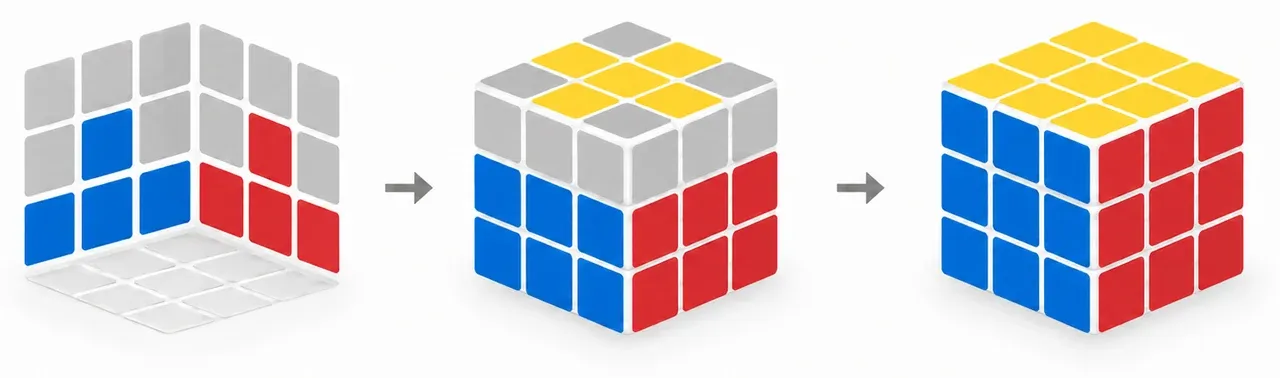
It is also more forgiving when you make mistakes. When something breaks, you can usually trace it back to a single stage and recover without restarting the whole cube. This method gives beginners a reliable way to solve any valid 3x3 scramble and builds a clean foundation for learning speed techniques later.
Before You Start: 3 Rules That Prevent Beginner Mistakes
Before you run the easiest way to solve a Rubik's Cube step by step, lock these three rules first. They prevent most beginner mistakes and make every stage easier to debug.
Rule 1. Keep cube orientation fixed during each algorithm. Choose one front face and one top face, then keep them unchanged until that sequence ends.
Rule 2. Check side-center matches, not top color alone. For the white cross and yellow-edge alignment, a piece is correct only when side colors match their centers.
Rule 3. Complete the current stage before moving on. If a stage is only half done, stop and fix it first. Early shortcuts usually break the last layer.
How to Solve a Rubik's Cube Easiest Way
If you lose track during the easiest Rubik's Cube solving process, CubeSolver AI can detect your current cube state and show the next moves step by step. You can also use the online timer and scramble tools to practice more smoothly after learning the basics.
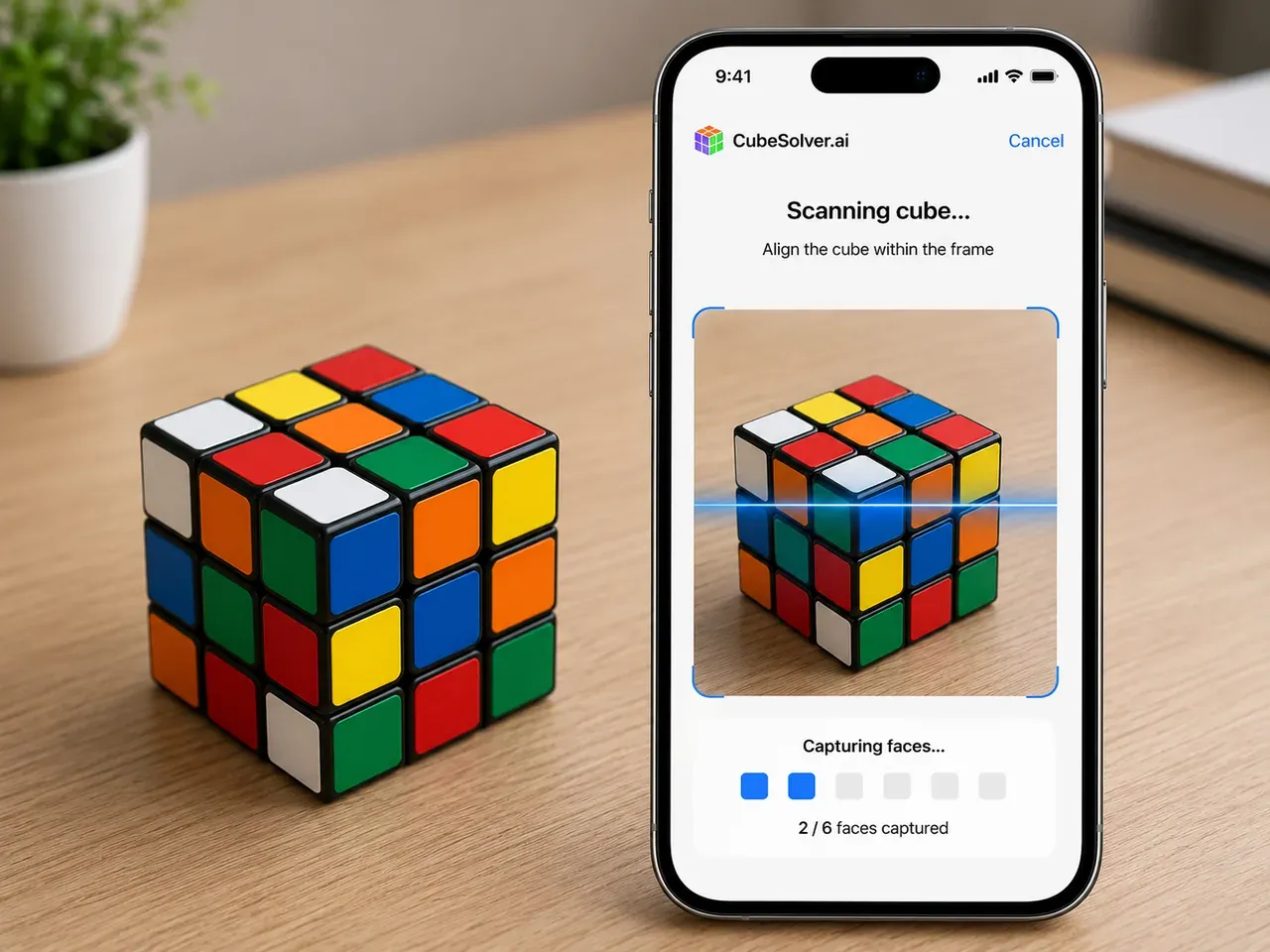

CubeSolver AI


Step 1. Make the White Cross
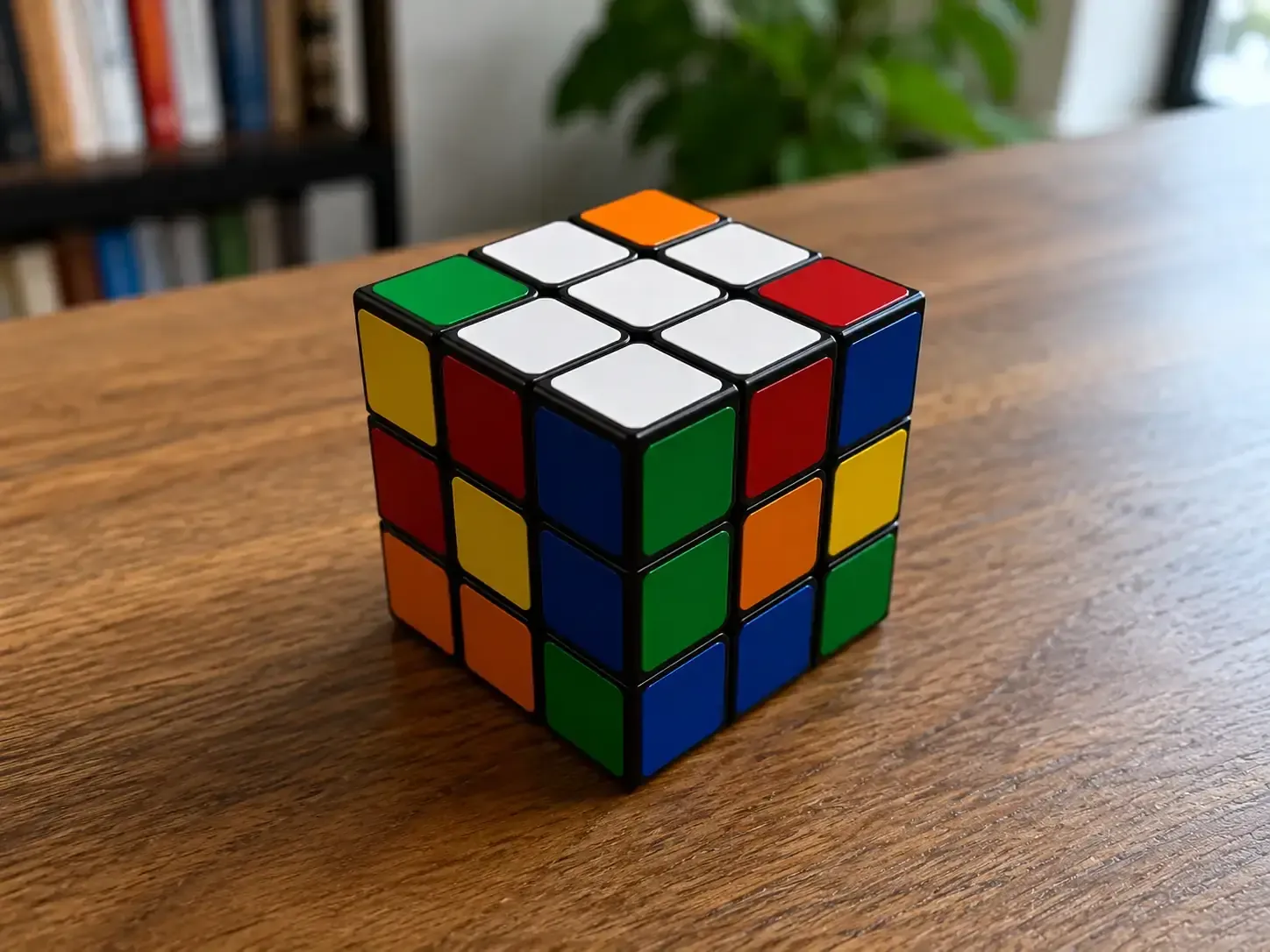
Place the four white edge pieces on the white face and match their side colors with the center pieces. No fixed algorithm is required here. Use simple turns to move each edge into place until the white cross is complete and all four side colors match their centers.
Step 2. Finish the White Layer Corners
Insert the four white corner pieces to finish the white face and complete the first layer. Use the easiest Rubik's Cube algorithm for beginners: R U R' U' and repeat it until the corner moves into the correct position and orientation.
Step 3. Solve Middle Layer Edges
Place the four non-yellow edge pieces into the middle layer. Continue inserting edges until the first two layers are fully solved.
Right insert: U R U' R' U' F' U F
Left insert: U' L' U L U F U' F'
Step 4. Make the Yellow Cross
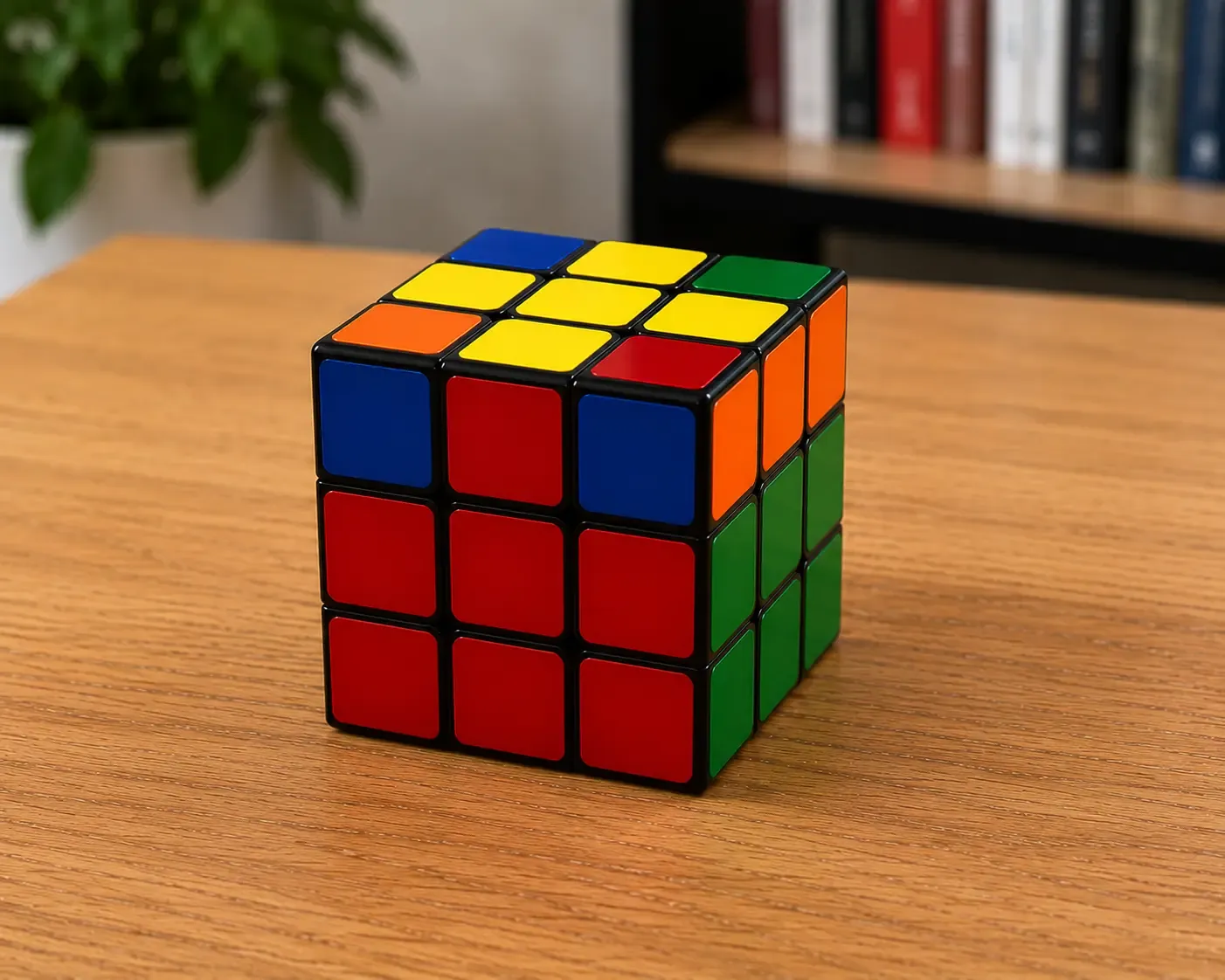
What's the easiest way to solve a Rubik's Cube step 4? Turn the top edges so a yellow cross appears on the top face using F R U R' U' F'. Apply the sequence until a yellow cross forms on the top.
Step 5. Match Yellow Edges to Side Centers
Rotate the top layer so the yellow edge pieces line up with the matching center colors on the sides. Use your beginner edge-alignment sequence for the current case (a common beginner sequence is R U R' U R U2 R') and keep the top face properly aligned before each run until all four edges match their centers.
Step 6. Put Yellow Corners in the Right Positions
Move the yellow corner pieces into their correct positions. The orientation may still be wrong, but each corner should be in the correct location. Use U R U' L' U R' U' L until all four corners are positioned correctly.
Step 7. Twist Yellow Corners to Solve the Cube
Place an unsolved corner at the UFR position and repeat R' D' R D until that corner is correctly oriented. Then rotate the last layer on the Rubik's Cube to bring the next unsolved corner to UFR and repeat the sequence until the cube is solved.
If You Get Stuck, Use This Quick Recovery Checklist
If the cube stops making sense, pause and check your last moves before restarting. Most problems come from a small mistake in notation, cube orientation, or layer alignment. A quick check can usually get you back to the correct step.
Return to the last stage you are sure was correct. Once you reach a point where everything looks right, continue solving from there.
Check whether you used the correct sequence direction. A common mistake is using a left-hand algorithm on the right side, or the other way around. Make sure the sequence matches the side of the cube you are working on.
Look at the edge pieces and their side colors. Each edge should match the center color next to it. If the colors do not line up, correct the edge before moving forward.
Turn the cube carefully and keep the layers aligned. Clean, controlled moves reduce the chance of small errors.
Use a solver as a check, not a shortcut. If a step keeps failing, review your notation, cube orientation, and the moves you performed first. If you still cannot find the mistake, scan the cube with CubeSolver AI to confirm the current state and continue from the correct next move.
Conclusion
The fastest and easiest way to solve a Rubik's Cube is to follow a simple layer by layer method in a clear order. Use the seven steps above, check that edge colors match the centers at key points, and use the recovery checklist if something goes wrong. Focus on accuracy first. Once you can solve the cube consistently, your speed will improve naturally.
Easiest Way to Solve A Rubik's Cube FAQ
What's the easiest way to solve a 2x2 Rubik's Cube?
The easiest way to solve a 2×2 Rubik's Cube is the beginner layer-by-layer method. This method solves the cube in three simple stages.
Solve the first layer by placing four matching corners on one face.
Position the last layer corners so each corner is in the correct location.
Rotate the last layer corners until the cube is fully solved.
What's the easiest way to solve 4x4 Rubik's Cube?
The easiest way to solve a 4×4 Rubik's Cube is the reduction method. This approach first turns the 4×4 into a cube that behaves like a standard 3×3, then solves it using normal 3×3 steps.
Solve the center pieces so each face has a solid center color.
Pair the edge pieces to create single edges like those on a 3×3 cube.
Solve the cube like a 3×3 using the beginner layer-by-layer method.
Fix parity cases if they appear, using a special parity algorithm.
What's the easiest way to solve Rubik's Cube last layer?
The easiest way to solve the Rubik's Cube last layer is to use the beginner last-layer method, which solves the top in a few simple steps instead of many advanced cases.
Make the yellow cross on the top face.
Align the yellow edges so they match the side centers.
Position the yellow corners, so each corner is in the correct location.
Rotate the yellow corners until the cube is fully solved.
How to solve Rubik's Cube in 5 minutes?
To solve a Rubik's Cube in about 5 minutes, use the beginner layer-by-layer method and practice a small set of algorithms until they become automatic.
Solve the white cross and match the edge colors with the side centers.
Finish the white corners to complete the first layer.
Solve the middle layer edges so the first two layers are complete.
Make the yellow cross on the top face.
Align the yellow edges with the side centers.
Place the yellow corners in the correct positions.
Twist the yellow corners to finish the cube.

Kelsey Geller focuses on practical Rubik's Cube learning for beginners. Her guides simplify complex steps, explain the "why" behind moves, and help new cubers build confidence with a reliable solving approach. Every guide follows CubeSolver's editorial review standards before publishing.