If you enjoy puzzles like the Rubik's Cube, the Fisher Cube adds a unique twist. It looks similar to a 3x3 cube but rotates along diagonal axes, causing it to distort into non-cubic shapes. This makes solving it more complex, as it's not just about color matching but also understanding how the pieces move. The Fisher Cube challenges both beginners and experienced cubers with its altered shape and rotation.
What Is the Fisher Cube
The Fisher Cube is a 3x3 shape mod invented by Tony Fisher. It is based on the classic Rubik’s Cube, but its turning cuts are shifted, so the puzzle changes shape as you turn it. The colors still matter, but the bigger challenge is recognizing each piece by its shape, size, and position. This makes the Fisher Cube feel familiar to 3x3 solvers while adding a new layer of difficulty.
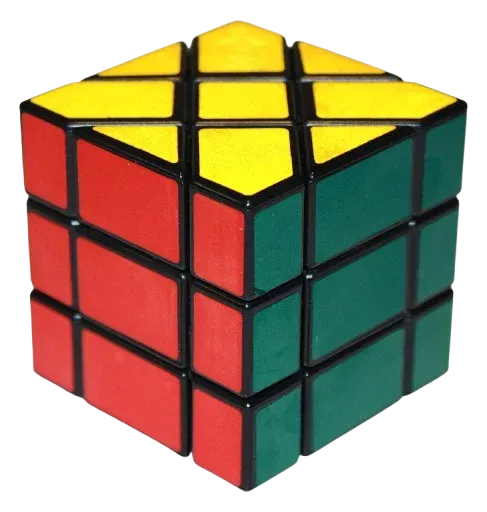
While this Cube is based on the standard 3x3 format, the shape-shifting nature adds an extra level of complexity. The pieces can lock into place (a phenomenon known as the bandaging effect), which can block certain moves and complicate the solving process. The misaligned axes also make it harder to track the position of the pieces.
How Is the Fisher Cube Different from a Rubik’s Cube
The Fisher Cube differs from the standard Rubik's Cube mainly due to its rotational axes. While the classic Rubik's Cube rotates along fixed vertical and horizontal axes, the Fisher Cube twists along diagonal axes. This causes the pieces to rotate in ways that distort the cube's shape, making it harder to track piece positions as the puzzle no longer maintains a uniform structure.
Another key difference is the level of spatial awareness required. Solving the Fisher Cube isn't just about matching colors—it involves understanding how the pieces interact in a three-dimensional space. As the puzzle distorts, edge and corner orientation become trickier, and traditional Rubik's Cube strategies need to be adapted to deal with the new challenges.
How to Solve a Fisher Cube Step by Step
Now that we know what sets the cube apart, let's go over how to solve it. While the cube follows the same basic structure as a traditional Rubik's Cube, its diagonal axis rotations create unique challenges. Here's a clear, step-by-step approach to solving the Fisher Cube:
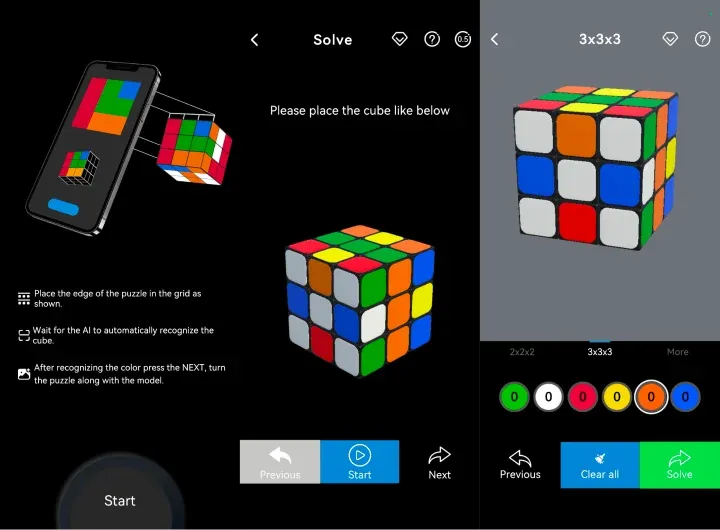
Bonus: The Fisher Cube uses many of the same solving ideas as a regular 3x3 cube. If you want to practice the basic 3x3 method first, CubeSolver AI can guide you through step-by-step moves on your phone.
Step 1: Restore the Cube's Shape
The first step is to get the cube back into a cubic shape. Since the Rubik's Fisher Cube distorts with each turn, focus on returning it to its regular form before worrying about piece placement. Once the shape is restored, it will be easier to recognize the pieces and plan your next moves. This step may require a bit of trial and error, but that's normal!
Step 2: Solve the Corners
After restoring the shape, start solving the corners. This step helps create a foundation for the rest of the cube. Position the corners correctly using corner permutation algorithms like R U R' U'. While the cube might not seem solved yet, aligning the corners is crucial for the next step.
Step 3: Align the Edges
With the corners in place, the next task is to align the edges. This can be tricky due to the cube's unique rotations. Use edge permutation algorithms and commutators to swap misplaced edges without disturbing the corners. Gradually, the cube will start to resemble its solved state, with all pieces aligned properly.
Why You Should Try the Fisher Cube
The Fisher Cube isn't just another puzzle—it's a great way to level up your cubing skills and problem-solving abilities. If you enjoy solving traditional Rubik's Cubes, the Cubo Fisher offers a fresh challenge with new rotation rules and piece alignment. Its shape-shifting design requires a better understanding of geometry and spatial thinking, making it both fun and rewarding to solve.
The super Fisher Cube is also perfect for anyone looking to push their limits. It blends classic cubing with a creative twist, offering an engaging challenge for both beginners and seasoned cubers. Whether you're solving it for fun or to improve your skills, this cube is a must-try for any puzzle enthusiast.
Final Verdict
The Fisher Cube offers a fresh twist on the classic Rubik's Cube with its unique structure and diagonal axes, making it a fun and challenging puzzle. By following a clear approach and practicing the solving steps, you'll soon get the hang of it. Whether you're looking to improve your cubing skills or just enjoy a new challenge, this cube is worth a try.
Fisher Cube FAQ
Q: Is a Fisher Cube good for beginners?
The Fisher Cube is easier to learn after you already know the basic 3x3 method. New solvers can still try it, but the shape changes may feel confusing at first. Practice with a regular 3x3 first, then move to the Fisher Cube when you can recognize corners, edges, and centers with confidence.
Q: Why does my Fisher Cube look unsolved even after the colors match?
The Fisher Cube is not solved by color alone. A piece can have the right color position but still face the wrong direction or create an uneven shape. Check the height, angle, and position of each edge and corner before you move to the final layer.
Q: What should I do if I cannot recognize a Fisher Cube piece?
Start by finding the centers, then compare the size and shape of nearby pieces. On a Fisher Cube, small shape differences matter more than they do on a regular 3x3. Turn the cube slowly and match each piece by shape, not only by color.
Q: Do Fisher Cube algorithms work the same as 3x3 algorithms?
Most basic 3x3 algorithms still work on a Fisher Cube. The hard part is knowing when to use them, since the shifted cuts make pieces harder to identify. Once you know which edge or corner is in the wrong place, you can apply the same kind of moves you would use on a regular 3x3.