
No headings found
The Pitcher Insanity Cube is a wild, unpredictable twist on the classic 3x3 Rubik's Cube. It's chaotic and offers a real challenge for any solver. In this post, we'll explore what makes this puzzle unique and why mastering it could be your most rewarding puzzle experience.
What Is the Pitcher Insanity Cube
At first glance, the Pitcher Insanity Cube might look like a twisted version of the classic Rubik's Cube, and in many ways, that description is spot on. Designed by puzzle creator Ben Pitcher, it takes the traditional 3x3 format and introduces radical asymmetry, shape-shifting moves, and a major challenge: stickerless color tracking and uneven cubie sizes.
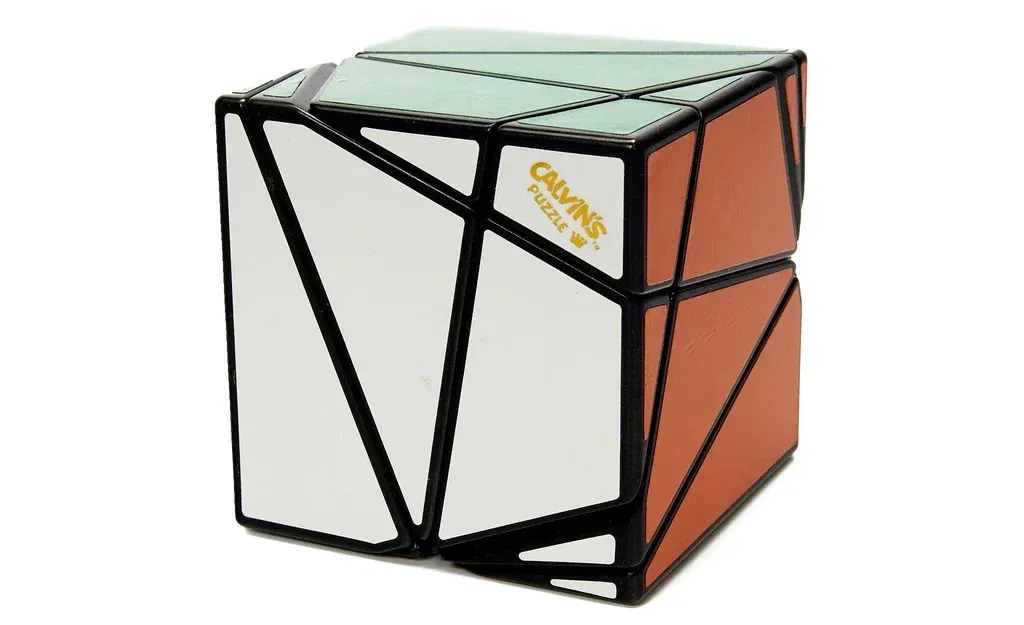
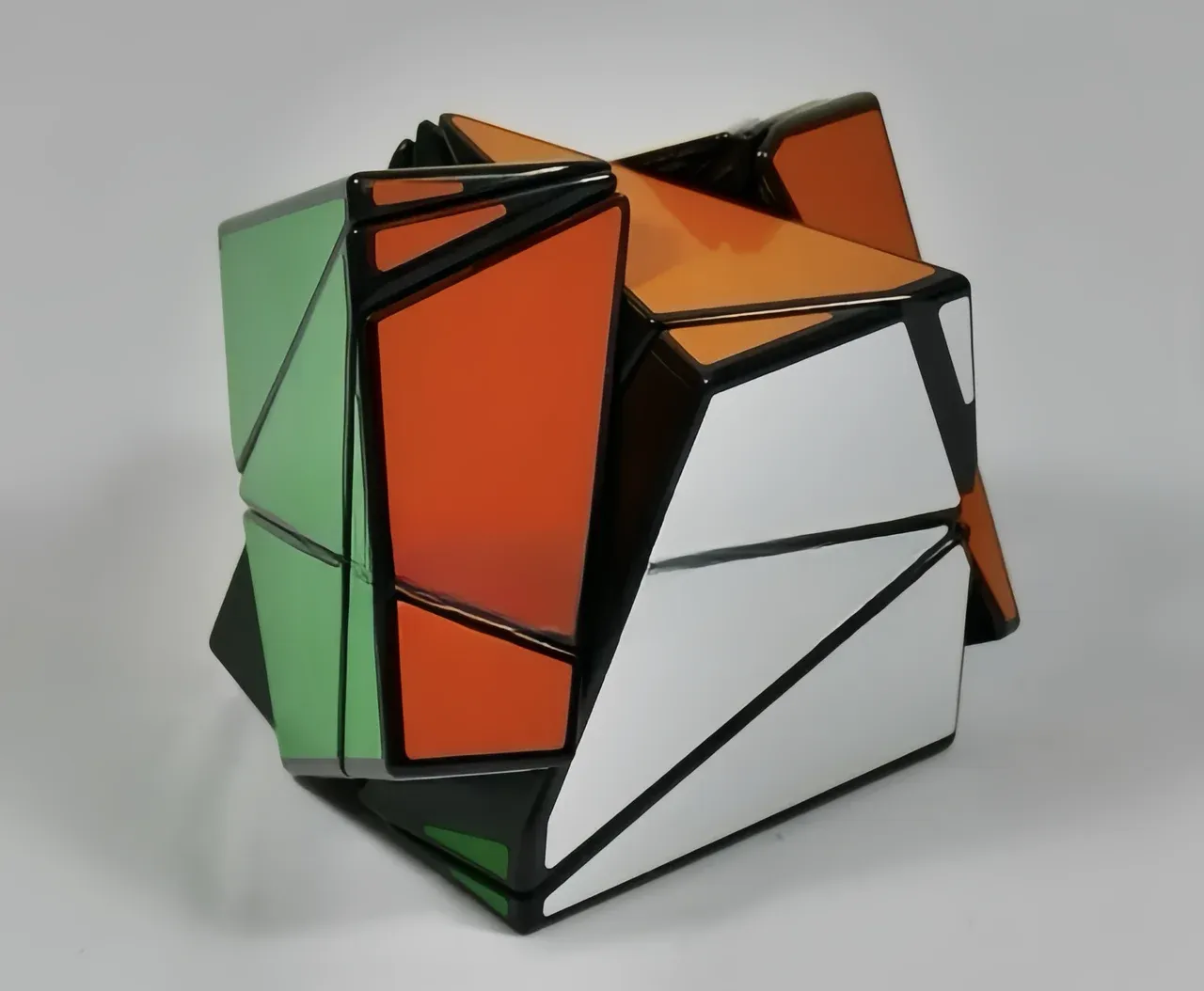
Once scrambled, the cube quickly becomes a chaotic jumble of uneven protrusions and odd angles, resembling a scrambled jigsaw puzzle more than a color-based puzzle. However, despite disorder, there's a method to madness, though it challenges the usual problem-solving instincts you'd apply to a standard cube.
Insanity Cube Puzzle Vs. Classical 3x3 Cube
Before diving into the detailed Pitcher insanity cube solution, let's take a quick look at a side-by-side comparison to clearly understand how the Pitcher Cube stands apart from the classical 3x3 cube.
| Feature | Classical 3x3 Cube | Pitcher Insanity Cube |
|---|---|---|
| Shape | Perfect cube with uniform cubies | Irregular shape with asymmetrical cubies |
| Color Scheme | Clear, uniform, sticker-based color faces | Often stickerless or minimal color cues |
| Piece Identification | Based on color and position | Based on shape and orientation |
| Solving Approach | Layer-by-layer, color matching | Spatial reasoning, piece shape matching |
| Algorithm Use | Standardized algorithms (OLL, PLL, etc.) | Mostly custom, intuitive moves and commutators |
| Visual Anchors | Fixed color centers for orientation | Shape and mechanical centers for reference |
| Difficulty Level | Beginner to expert, scalable | Advanced to expert, highly challenging |
| Community Resources | Extensive tutorials and speed-solving methods | Very limited tutorials, niche community |
| Puzzle Mechanism | Uniform 3x3 core and cubies | Same core, but with cubies of varying size/shape |
| Scramble Appearance | Colorful, easily trackable | Chaotic, shape-distorted |
How to Solve the Pitcher Insanity Cube
Now that we know what makes the Pitcher Insanity Cube different, let's look at how to actually solve it. The process isn't like a regular 3x3 cube, so we'll take it step by step to make it easier to understand.
Bonus: If you're still getting comfortable with classic cubes or want to build a strong foundation before tackling advanced puzzles like the Pitcher Insanity Cube, I highly recommend using a cube solver app such as the AI Rubik's Cube Solver App. It's a great tool for learning how to solve 2x2, 3x3, and 4x4 cubes with step-by-step instructions and visual guides.

CubeSolver AI


Step 1. Find and Understand Centers
Start by identifying the center pieces. These don't move relative to each other and give you a reference for the cube's orientation. Unlike a normal cube, these centers may look different in shape, so use them to figure out how the cube is arranged.
Step 2. Focus on Piece Shapes, Not Colors
Since the cube might not have clear colors, pay attention to the shape and size of each piece. Try to group pieces that fit together naturally based on their shape rather than how they look.
Step 3. Rebuild the Layers by Shape
Instead of solving piece by piece, work on assembling entire layers or sections that fit together smoothly. Think of the puzzle more like a 3D jigsaw where you match edges and contours.
Step 4. Use Custom Moves and Algorithms
Many traditional 3x3 algorithms won't apply directly. You'll need to experiment with moves called commutators and conjugates, which are short sequences of twists that move specific pieces while keeping the rest mostly intact.
Step 5. Adjust the Final Layer Carefully
The last layer is the trickiest because you must orient the pieces correctly without messing up the shape you've rebuilt. Make small, careful moves, checking how each affects the cube's overall form.
Step 6. Practice Patience and Observation
This puzzle requires a lot of trial, error, and attention to detail. With time, you'll start recognizing patterns and developing your own solving techniques.
Why You Will Hate/ Love This Pitcher Cube
Whether you thrive on a challenge or get frustrated by the unexpected, the Insanity Cube offers a unique experience. Let's dive into what makes this puzzle so mind-bending and why, despite the chaos, it's hard to put down.
- Hate
- It defies your Rubik's Cube instincts. If you're used to the predictable patterns of traditional cubes, this one will throw you off balance. Every move feels like you're starting from scratch.
- Every move feels like a gamble**.** Especially when you're new to the cube, it's easy to make a move that seems right but then causes chaos.
- Help is scarce. Unlike classic cubes, there's very little support out there. No quick tutorials or plug-and-play algorithms to fall back on.
- A single mistake can unravel everything. Misalign one move and the entire shape collapses into a confusing mess of mismatched pieces.
- It can feel like you're making negative progress. It's frustrating to spend hours working on it and feel like you've moved backward rather than forward.
- Love
- It's the purest form of puzzle-solving. There's no need to memorize long algorithms or complicated sequences. Instead, it's all about understanding mechanics and thinking on your feet.
- Each solved section feels earned. Unlike some puzzles where the solution feels automated, each step on the Pitcher Insanity Cube feels like a personal win.
- It teaches you more about cube mechanics**.** Solving this puzzle deepens your understanding of how pieces move and interact, giving you a better grasp of puzzle-solving logic in general.
- It gives you elite bragging rights. Conquering the Insanity Cube is no small feat. Solving it puts you in an exclusive group of puzzle solvers who truly understand complex cube dynamics.
- It's a tactile, visual, and creative challenge. The Insanity Cube Puzzle offers a truly immersive puzzle experience that few other cubes can match. Its unique design makes solving it feel like an artistic and mental challenge in one.
Final Verdict
The Pitcher Insanity Cube is a tough but mesmerizing challenge. It is not for beginners or even intermediate solvers, but for those seeking a real mental test, it is hard to resist. It shatters your usual strategies and forces you to rethink how you solve puzzles. While the Rubik's Cube offers structure, the Insanity Cube thrives on chaos, and that is what makes it fascinating.
Pitcher Insanity Cube FAQ
Q: Is the Pitcher Insanity Cube suitable for beginners?
No, the Pitcher Insanity Cube is not suitable for beginners. It's a complex and challenging puzzle that requires a deep understanding of spatial reasoning and problem-solving. Unlike traditional cubes, it lacks a simple color-coding system and demands a completely different approach to solving.
Q: Can you use regular 3x3 algorithms on the Insanity Cube?
No, regular 3x3 algorithms won't work on the Insanity Cube. Due to its unique shape and lack of a standard color-coding system, the solving methods for a regular Rubik's Cube don't apply here. The Insanity Cube requires a completely different approach, focusing more on spatial awareness and piece orientation than following traditional algorithms.

Kelsey Geller focuses on practical Rubik's Cube learning for beginners. Her guides simplify complex steps, explain the "why" behind moves, and help new cubers build confidence with a reliable solving approach. Every guide follows CubeSolver's editorial review standards before publishing.