O Rubik's Cube desafia mentes há gerações, desenvolvendo a lógica, as habilidades espaciais e a coordenação. O Cubo Sensorial leva esse clássico à comunidade de pessoas cegas e com baixa visão por meio de padrões táteis que permitem resolvê-lo pelo toque. Mais do que um quebra-cabeça, ele representa um passo para tornar a diversão e o aprendizado acessíveis a todos.
O que é o Cubo Sensorial Rubik's
Um cubo sensorial é uma versão redesenhada do Rubik's Cube clássico que utiliza recursos sensoriais em vez das cores visuais ou em conjunto com elas. Esses recursos podem incluir texturas, sons ou até aromas, tornando o quebra-cabeça acessível para pessoas com deficiência visual e proporcionando também uma experiência de aprendizado multissensorial única.
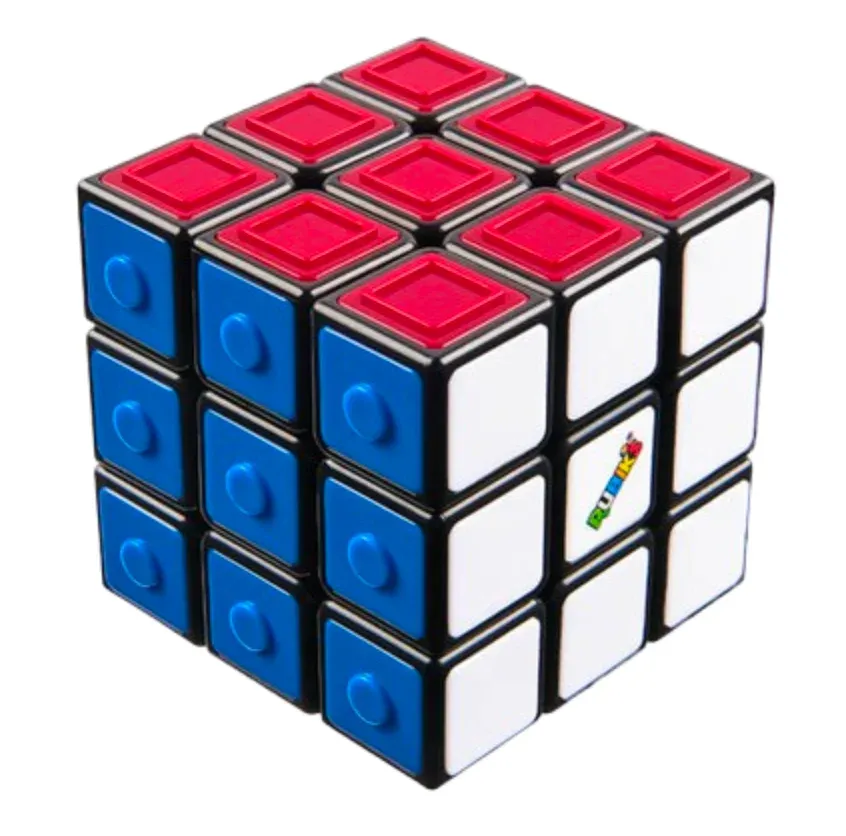
Enquanto o cubo tradicional utiliza faces identificadas por cores, o cubo sensorial apresenta outras formas de identificar cada lado. Ele pode incluir superfícies táteis com texturas ásperas, macias ou com relevos, sons integrados, como cliques ou tons, ou até aromas distintos adicionados a cada seção.
Esse design transforma a resolução do cubo em uma atividade sensorial completa. Ele estimula o tato, a audição e o olfato, além de desenvolver a coordenação motora fina e a memória. É uma maneira divertida e inclusiva de aprender e brincar, seja para quem tem deficiência visual ou simplesmente deseja explorar quebra-cabeças de uma nova forma.
Diferentes tipos de cubos sensoriais
O Cubo Sensorial Rubik's está disponível em vários estilos, cada um desenvolvido para atender a diferentes necessidades, formas de aprendizagem e preferências. Conheça alguns dos tipos mais comuns:
1. Cubo sensorial tátil
Esse tipo utiliza uma textura diferente em cada lado, como lixa, borracha, feltro ou espuma. Ele é especialmente útil para pessoas com deficiência visual ou que aprendem melhor pelo toque. A resolução do cubo se baseia em sentir e identificar cada superfície somente pela textura.
2. Cubo sensorial auditivo
Esses cubos incluem sons integrados, como cliques ou tons, que respondem ao movimento ou ao alinhamento. Alguns podem até fornecer pistas sonoras quando as peças são posicionadas corretamente. Eles são excelentes para quem responde bem a estímulos sonoros e podem ajudar a desenvolver a percepção espacial por meio de sinais auditivos.
3. Cubo sensorial olfativo
Cada lado desse cubo possui um aroma exclusivo, criado com óleos essenciais ou marcadores perfumados. Os aromas ajudam os usuários a reconhecer cada face sem precisar enxergá-la. Esse tipo é útil para pessoas com olfato apurado ou para quem utiliza aromas em treinamentos sensoriais.
4. Cubo multissensorial
Esses cubos combinam diferentes recursos, como texturas e sons, para criar uma experiência mais imersiva. Eles são frequentemente utilizados na terapia e na educação porque estimulam vários sentidos, ajudando na concentração e no desenvolvimento cognitivo. Cada tipo de cubo sensorial oferece algo especial. Seja para encontrar um desafio divertido, um recurso terapêutico ou uma ferramenta de aprendizagem, existe um cubo sensorial desenvolvido para atender às suas necessidades.
Benefícios de usar um cubo sensorial
Os cubos sensoriais são mais do que simples brinquedos — eles são ferramentas valiosas que oferecem diversos benefícios educacionais e para o desenvolvimento. Veja em detalhes suas principais vantagens:
Acessibilidade para pessoas com deficiência visual
Os cubos sensoriais são desenvolvidos para serem inclusivos, com texturas táteis e sinais auditivos que permitem que pessoas com baixa visão ou cegueira interajam com quebra-cabeças e os resolvam, mesmo quando normalmente eles só seriam acessíveis por meio da visão. Esses recursos tornam a experiência do Rubik's Cube disponível para um público mais amplo, proporcionando condições mais igualitárias para todos.
Apoio a pessoas neurodivergentes
Para pessoas com autismo, TDAH ou outras diferenças no processamento sensorial, os cubos sensoriais oferecem uma experiência sensorial estruturada e relaxante. O feedback tátil e os elementos interativos podem ajudar a reduzir o estresse e melhorar a concentração, tornando-os uma ferramenta poderosa tanto em casa quanto na sala de aula para pessoas neurodivergentes.
Maior estímulo cognitivo
Usar vários sentidos para resolver o cubo sensorial ativa diferentes áreas do cérebro. Essa abordagem multissensorial fortalece habilidades cognitivas como memória, reconhecimento de padrões, capacidade de concentração e coordenação motora. Não se trata apenas de resolver o quebra-cabeça, mas também de desenvolver habilidades essenciais enquanto você se diverte.
Aplicações terapêuticas
Em contextos terapêuticos, os cubos sensoriais são frequentemente utilizados na terapia ocupacional. Eles ajudam a aprimorar a coordenação motora fina, a coordenação entre mãos e olhos e a regulação sensorial. Seja para crianças ou adultos, esses cubos oferecem uma forma prática de desenvolver habilidades importantes por meio de uma atividade lúdica.
Novos desafios para solucionadores experientes
Até mesmo os fãs mais experientes do Rubik's Cube podem considerar a versão sensorial um desafio revigorante. Os novos sinais sensoriais obrigam o cérebro a processar informações de maneiras diferentes, oferecendo uma experiência única de resolução de quebra-cabeças que pode renovar o interesse e incentivar solucionadores experientes a pensar de forma criativa.
Como resolver um Cubo Sensorial Rubik's
Resolver um Cubo Sensorial Rubik's é uma experiência diferente de solucionar a versão clássica. Em vez de usar cores, você depende do tato ou do som para entender a configuração do cubo. Veja um guia simples, passo a passo, para começar:
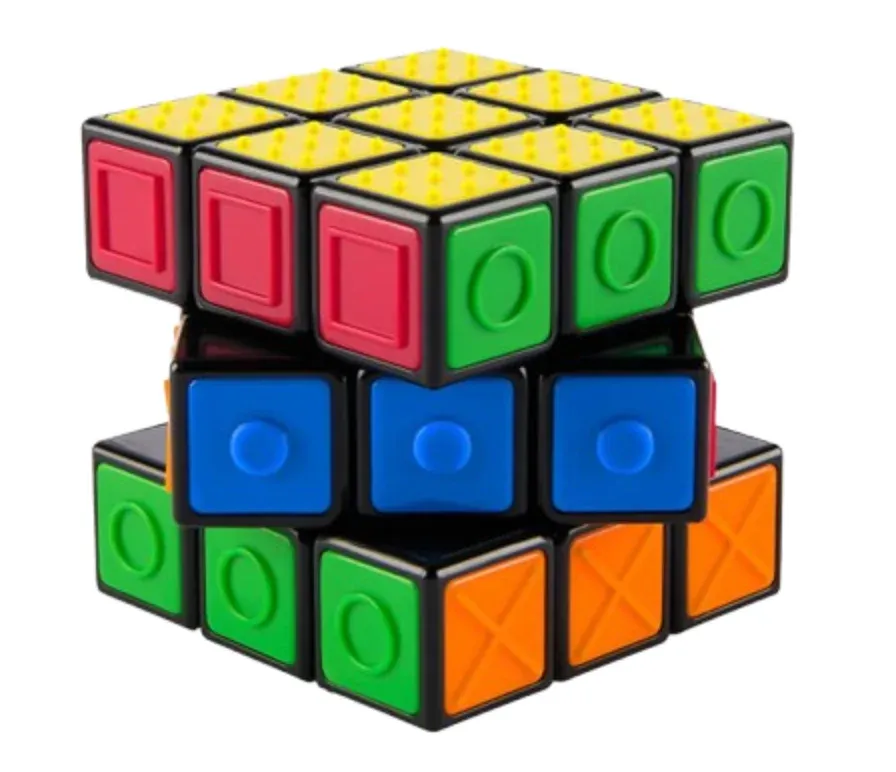
Passo 1: conheça o cubo
Comece sentindo ou ouvindo cada lado do cubo. Aprenda o que cada textura ou som representa para poder associá-lo a um lado específico.
Passo 2: crie uma imagem mental
Como você não dependerá das cores, tente formar um mapa mental do cubo. Memorize onde cada textura ou som está localizado para acompanhar as posições enquanto gira as peças.
Passo 3: aplique métodos de resolução conhecidos
Use as mesmas técnicas de resolução que você utilizaria com um Rubik's Cube comum, como o método iniciante de resolução por camadas ou o CFOP. A principal diferença é que você utilizará o tato ou a audição em vez da visão.
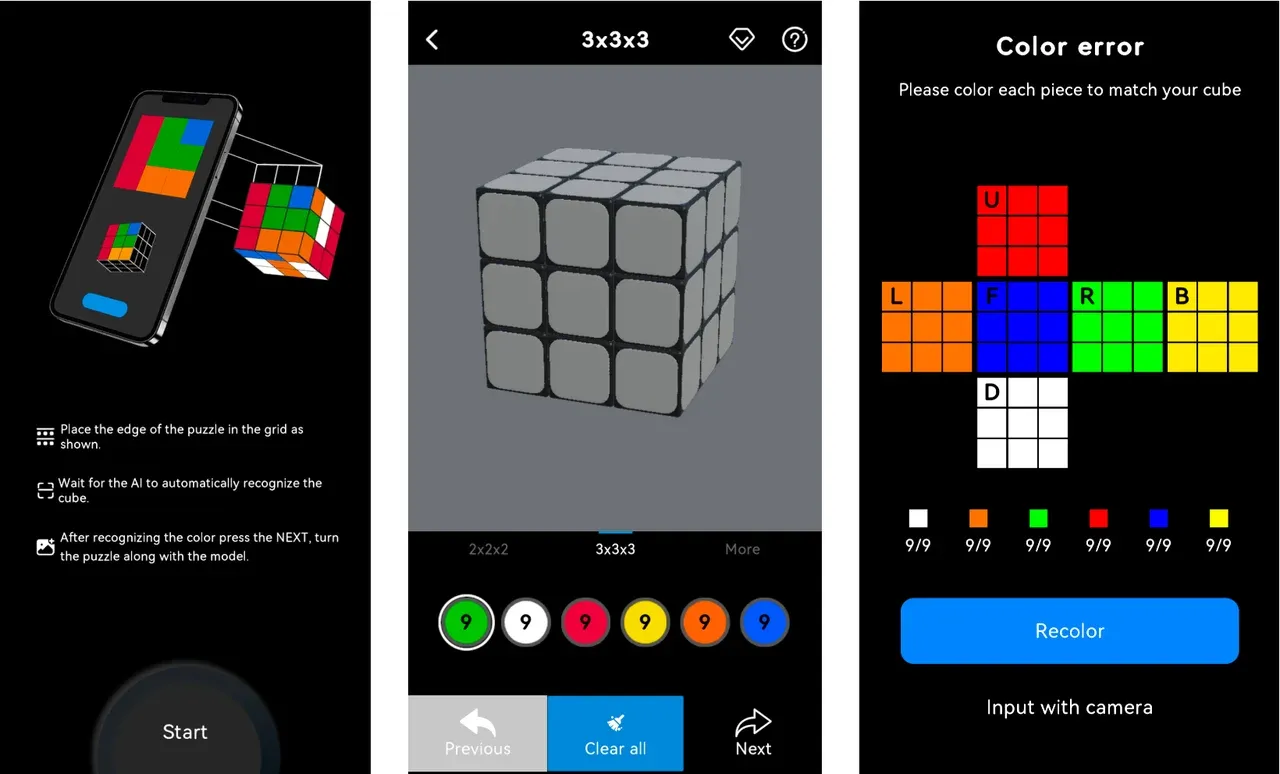
Bônus: se você ainda não conhece as soluções mais comuns para o Rubik's Cube, pode praticar primeiro suas habilidades de resolução. Este poderoso aplicativo Rubik's Cube AI Solver pode ajudar você a resolver rapidamente cubos tradicionais embaralhados, como os modelos 2x2, 3x3 e 4x4.
Passo 4: treine seus sentidos
Com a prática, seus dedos ou ouvidos ficarão melhores em reconhecer padrões e posições. Isso leva tempo, mas fortalece sua memória e concentração.
Passo 5: tenha paciência
Resolver um cubo sensorial geralmente leva mais tempo, principalmente no início. Isso é completamente normal. O objetivo não é apenas solucionar o quebra-cabeça, mas também melhorar sua concentração, percepção sensorial e capacidade de resolver problemas.
Dica extra: muitos iniciantes começam resolvendo o cubo com os olhos abertos e depois passam para a resolução com os olhos vendados, à medida que se familiarizam com os sinais do Cubo Sensorial Rubik's.
Veredito final
O Cubo Sensorial Rubik's é mais do que uma variação divertida de um quebra-cabeça clássico e representa um avanço rumo à inovação inclusiva. Ao estimular o tato e a audição, ele torna a alegria de resolver quebra-cabeças acessível a um público mais amplo. Seja em salas de aula, centros de terapia, salas de estar ou competições, os cubos sensoriais mostram que a resolução de problemas pode ser para todos, convidando pessoas com diferentes habilidades a se conectar por meio dos sentidos.
Perguntas frequentes sobre o cubo sensorial
P: O que é um cubo sensorial?
Um cubo sensorial é um tipo de quebra-cabeça desenvolvido para estimular diferentes sentidos, como tato, audição e olfato, tornando-o acessível a uma variedade maior de usuários. Diferentemente de um Rubik's Cube tradicional, que depende principalmente das cores, o cubo sensorial inclui recursos como superfícies texturizadas, sons distintos ou adesivos perfumados para ajudar as pessoas a resolvê-lo usando outros sentidos.
P: Os brinquedos sensoriais são indicados para pessoas com autismo?
Sim, os brinquedos sensoriais são frequentemente utilizados para apoiar crianças com autismo. Eles ajudam a estimular sentidos como tato, audição ou visão, o que pode produzir um efeito calmante e melhorar a concentração. Esses brinquedos também podem favorecer a aprendizagem, a comunicação e as habilidades motoras ao oferecer estímulos sensoriais de maneira divertida e controlável.