O Cubo de Rubik em Braille é uma versão tátil do quebra-cabeça clássico, desenvolvida para pessoas cegas ou com deficiência visual. Com marcações em Braille em relevo no lugar das cores, ele transforma um desafio visual em uma experiência acessível e prática. Mais do que uma simples adaptação, ele estimula a resolução de problemas e o desenvolvimento cognitivo por meio do tato.
O que é o Cubo de Rubik em Braille
O Cubo de Rubik em Braille é um cubo 3×3 acessível para pessoas cegas ou com deficiência visual. Em vez de adesivos coloridos, cada face apresenta marcações táteis, como letras em Braille em relevo ou padrões texturizados, que podem ser identificados pelo toque. Isso permite que os usuários resolvam o cubo sem precisar de indicações visuais.
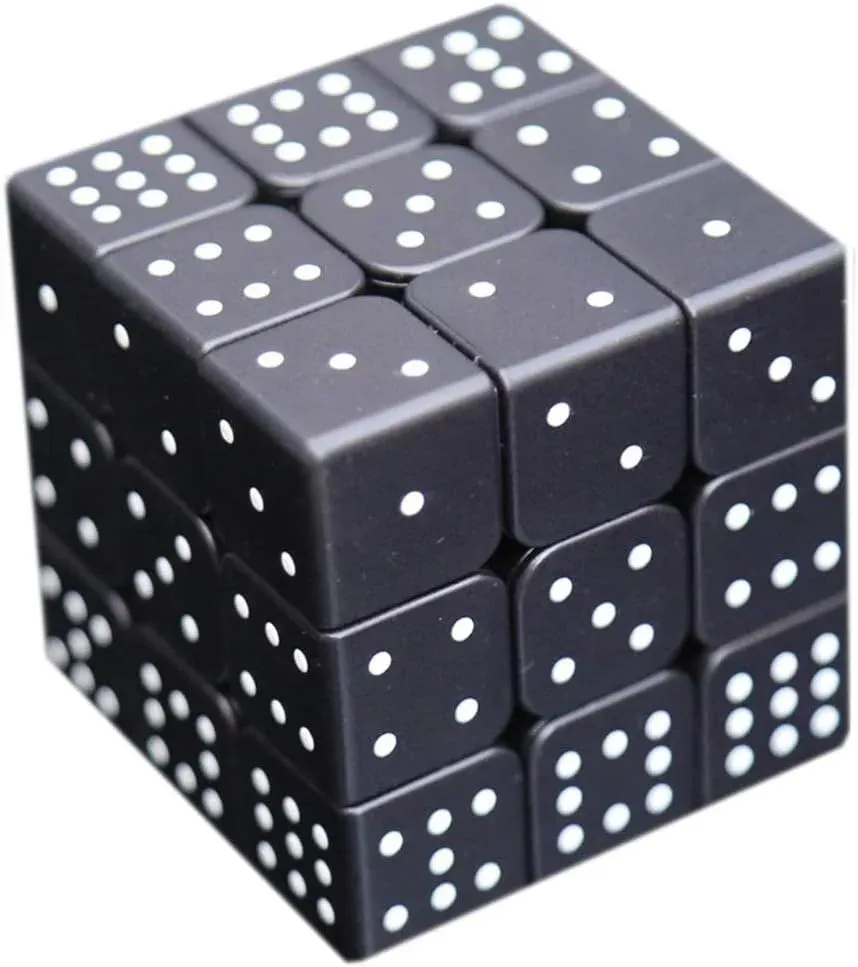
Há diversas versões disponíveis no mercado, com diferentes sistemas táteis, como letras em Braille (A–F), pontos, ondas ou linhas. Alguns modelos também incluem cores, tornando-os adequados tanto para pessoas cegas quanto para pessoas que enxergam. Esse design duplo favorece o uso inclusivo em salas de aula, ambientes terapêuticos ou em casa.
Mais do que um brinquedo, o Cubo de Rubik em Braille ajuda a desenvolver o raciocínio espacial, a memória e as habilidades de resolução de problemas. Ele é uma ferramenta valiosa para a educação, a reabilitação e as brincadeiras do dia a dia, demonstrando que a acessibilidade pode ser prática e divertida.
Como funciona o Cubo de Rubik em Braille
Para entender como funciona o Cubo de Rubik em Braille, precisamos imaginar o cubo de uma perspectiva não visual. No lugar dos adesivos coloridos, os adesivos ou blocos do cubo apresentam indicações táteis exclusivas. Essas indicações permitem que os praticantes identifiquem e diferenciem as peças da mesma forma que jogadores que enxergam utilizam as cores.
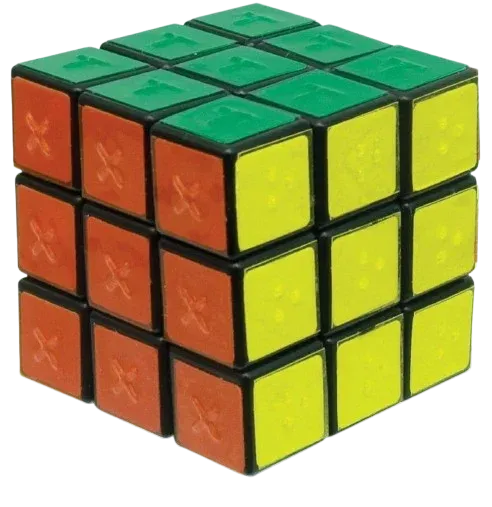
- Peças centrais: cada face possui uma peça central fixa marcada com um símbolo exclusivo (por exemplo, a letra "A" em Braille para uma face e a letra "B" para outra). Ela funciona como um ponto de referência tátil.
- Peças de aresta e de canto: essas peças utilizam combinações de padrões ou símbolos em relevo para representar a qual face pertencem. O praticante usa a memória e o tato para determinar suas posições corretas.
- Indicações de orientação: assim como a orientação das cores é essencial nos cubos visuais, a orientação tátil é fundamental aqui. As texturas precisam estar alinhadas corretamente, portanto, os praticantes devem acompanhar a rotação e a orientação a cada movimento.
O restante do cubo mantém o mecanismo tradicional do Cubo de Rubik: rotações de 90 graus das camadas em três eixos. O desafio está em manter a orientação e aplicar estratégias de resolução sem feedback visual.
Principais recursos e designs do Cubo de Rubik para cegos
O Cubo de Rubik em Braille não é uma solução única para todos; existem diversos designs voltados para diferentes preferências e necessidades. Esses detalhes cuidadosamente planejados garantem que o cubo seja não apenas acessível, mas também ergonômico e funcional durante períodos prolongados de uso. Confira alguns dos principais recursos e designs inovadores encontrados atualmente no mercado:
Faces com letras em Braille
- Utilizam letras padrão do Braille (de A a F) nas peças centrais.
- Permitem que pessoas familiarizadas com o Braille identifiquem rapidamente cada face.
Padrões texturizados
- Cada face possui uma textura tátil exclusiva (por exemplo, pontos, linhas diagonais, círculos concêntricos etc.).
- São excelentes para pessoas que não conhecem Braille, incluindo crianças pequenas ou pessoas que perderam a visão recentemente.
Cubos de percepção dupla
- Combinam cores e texturas, permitindo que praticantes cegos e que enxergam compitam ou colaborem.
- São populares em ambientes educacionais para promover a inclusão.
Cubos personalizáveis
- Alguns fabricantes oferecem conjuntos modulares de adesivos para que os usuários criem suas próprias combinações táteis.
- São úteis para pessoas com sensibilidades ou preferências táteis específicas.
Bordas suaves e design antiderrapante
- Muitos cubos em Braille são um pouco maiores e mais macios para melhorar a interação tátil e evitar a fadiga dos dedos.
Como resolver o Cubo de Rubik para cegos
Resolver um Cubo de Rubik para cegos exige uma versão adaptada das técnicas tradicionais. Os algoritmos fundamentais, como CFOP ou Roux, continuam relevantes, mas precisam ser adaptados ao processamento cognitivo não visual. Veja como praticantes cegos normalmente fazem isso:
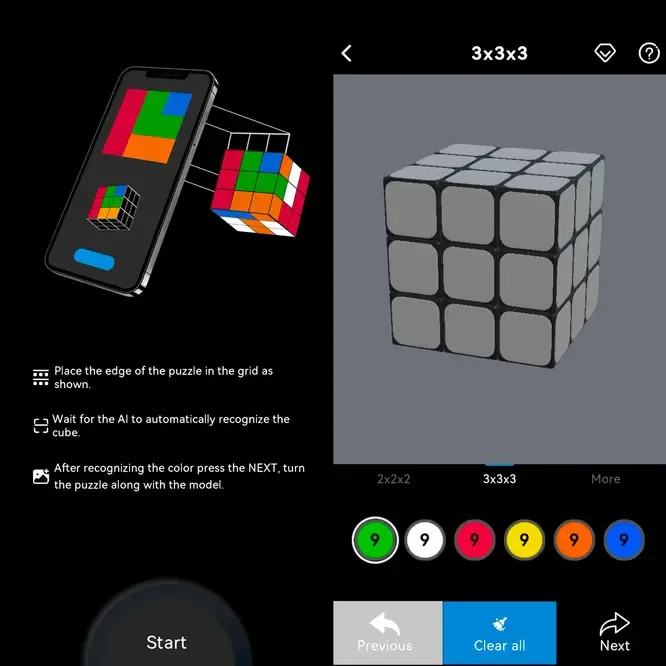
Dica bônus: se você estiver usando um Cubo de Rubik tradicional e quiser uma ajuda extra, existe um aplicativo de Cubo de Rubik com tecnologia de IA que permite escanear o cubo embaralhado e fornece instruções de resolução passo a passo. Embora não tenha sido desenvolvido para cubos em Braille, ele ainda pode ser um prático recurso digital complementar à resolução tátil do quebra-cabeça.
Etapa 1. Mapeamento tátil
Antes de embaralhar ou resolver o cubo, os praticantes costumam memorizar a textura ou a designação em Braille de cada face e associá-las a um modelo mental do cubo. Essa etapa é fundamental.
Etapa 2. Método por camadas
- Resolução da primeira camada: geralmente é feita tomando como referência a face central marcada com a letra "A" ou outra letra em Braille.
- Arestas da camada intermediária: são resolvidas por meio do posicionamento lógico das peças de aresta, utilizando suas marcações táteis.
- Resolução da última camada: os algoritmos de orientação e permutação são executados de memória, com base no raciocínio espacial.
3. Rastreamento com os dedos
Praticantes cegos desenvolvem uma forte memória muscular e capacidade de mapeamento mental. Eles frequentemente acompanham com os dedos o percurso das peças pelo cubo, construindo na mente um modelo espacial dinâmico.
4. Recursos de memória auditiva (opcional)
Alguns praticantes cegos podem dizer em voz baixa as posições das peças ou usar técnicas mnemônicas mentais para acompanhar os movimentos.
Resumo
O Cubo em Braille é um exemplo significativo de design inclusivo. Adaptado de um quebra-cabeça conhecido para torná-lo acessível, ele oferece às pessoas cegas e com deficiência visual de nossa comunidade a oportunidade de aproveitar o mesmo desafio mental que todas as outras pessoas. Essa inovação ajuda a eliminar barreiras e promove a participação igualitária.
Perguntas frequentes sobre o Cubo de Rubik em Braille
P: Existe um Cubo de Rubik para pessoas cegas?
Sim. Existem diversas versões do Cubo de Rubik desenvolvidas especificamente para pessoas cegas ou com deficiência visual. Elas incluem cubos com caracteres em Braille, texturas táteis exclusivas ou uma combinação de ambos. Funcionam exatamente como um Cubo de Rubik 3x3 tradicional, mas são resolvidos por meio do tato em vez da visão.
P: Pessoas cegas montam quebra-cabeças?
Sim, pessoas cegas montam quebra-cabeças. Existem quebra-cabeças especialmente desenvolvidos, como o Cubo em Braille e os quebra-cabeças táteis de encaixe, que utilizam padrões em relevo ou Braille para se tornarem acessíveis. Esses quebra-cabeças ajudam a desenvolver habilidades de resolução de problemas e proporcionam desafios mentais agradáveis sem depender da visão.