

No headings found
Ao resolver um 4×4, você pode chegar à última camada e ver um caso que não pode acontecer em um 3×3 normal, como uma aresta invertida ou duas arestas trocadas. Isso é chamado de paridade de arestas 4x4, que é uma situação comum em cubos 4×4 em que as peças de arestas extras podem se mover de maneiras que um 3×3 não consegue. Em vez de repetir as etapas normais da última camada, você simplesmente precisa reconhecer o caso e aplicar a paridade OLL ou o algoritmo de paridade PLL correto.
O que é paridade de borda 4×4
Cubo de Rubik 4x4 A paridade de emparelhamento de arestas é um caso especial em que as peças de arestas na última camada não podem ser resolvidas com curvas normais. O cubo pode atingir um estado em que uma aresta é invertida ou duas arestas são trocadas, mesmo que o resto do cubo pareça correto.
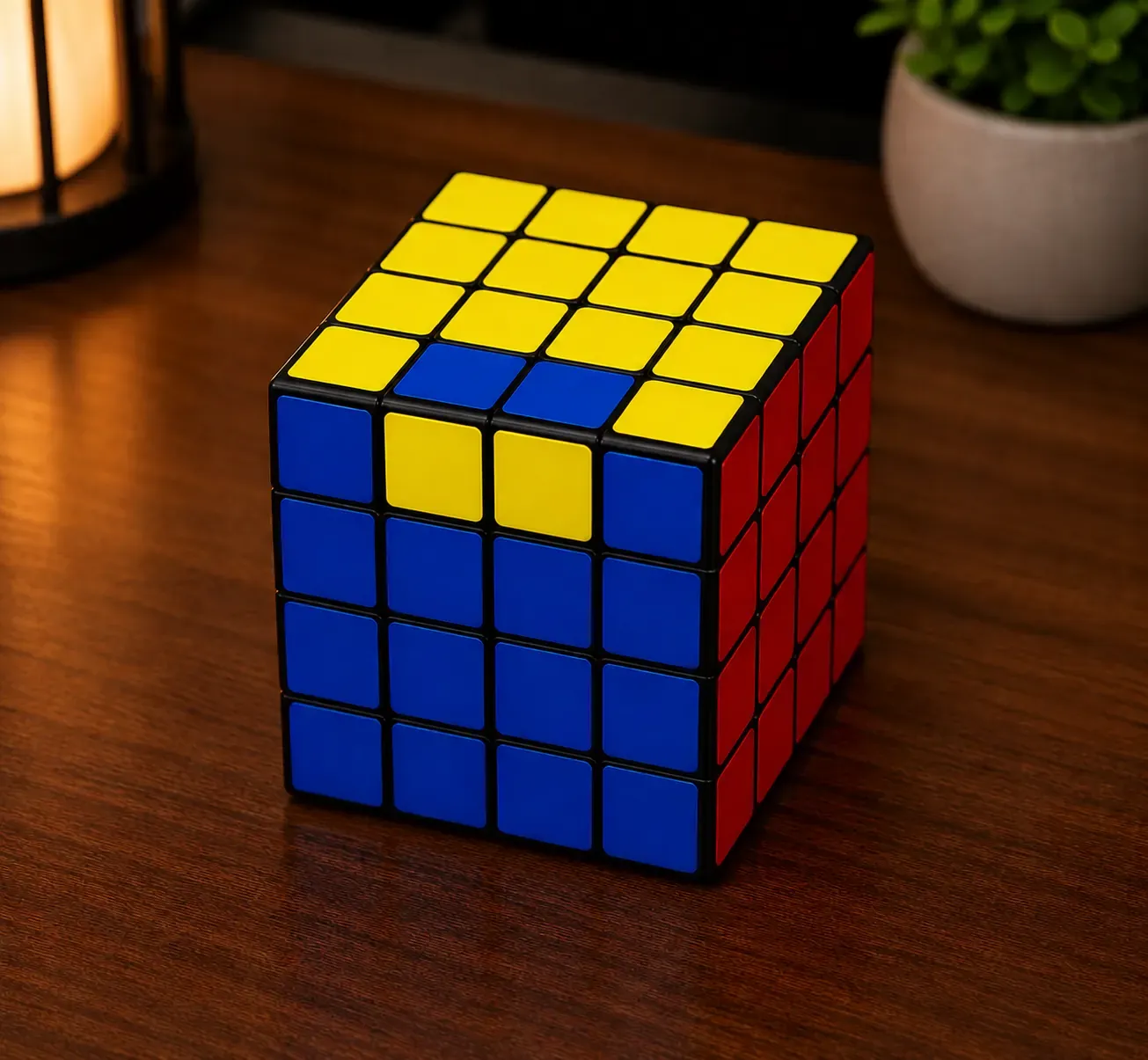
Isso acontece porque cada aresta de um 4×4 é feita de duas peças separadas. Durante a resolução, essas peças são emparelhadas para formar uma única aresta. No entanto, o processo de emparelhamento pode deixar o cubo em uma configuração que requer um algoritmo de paridade para correção.
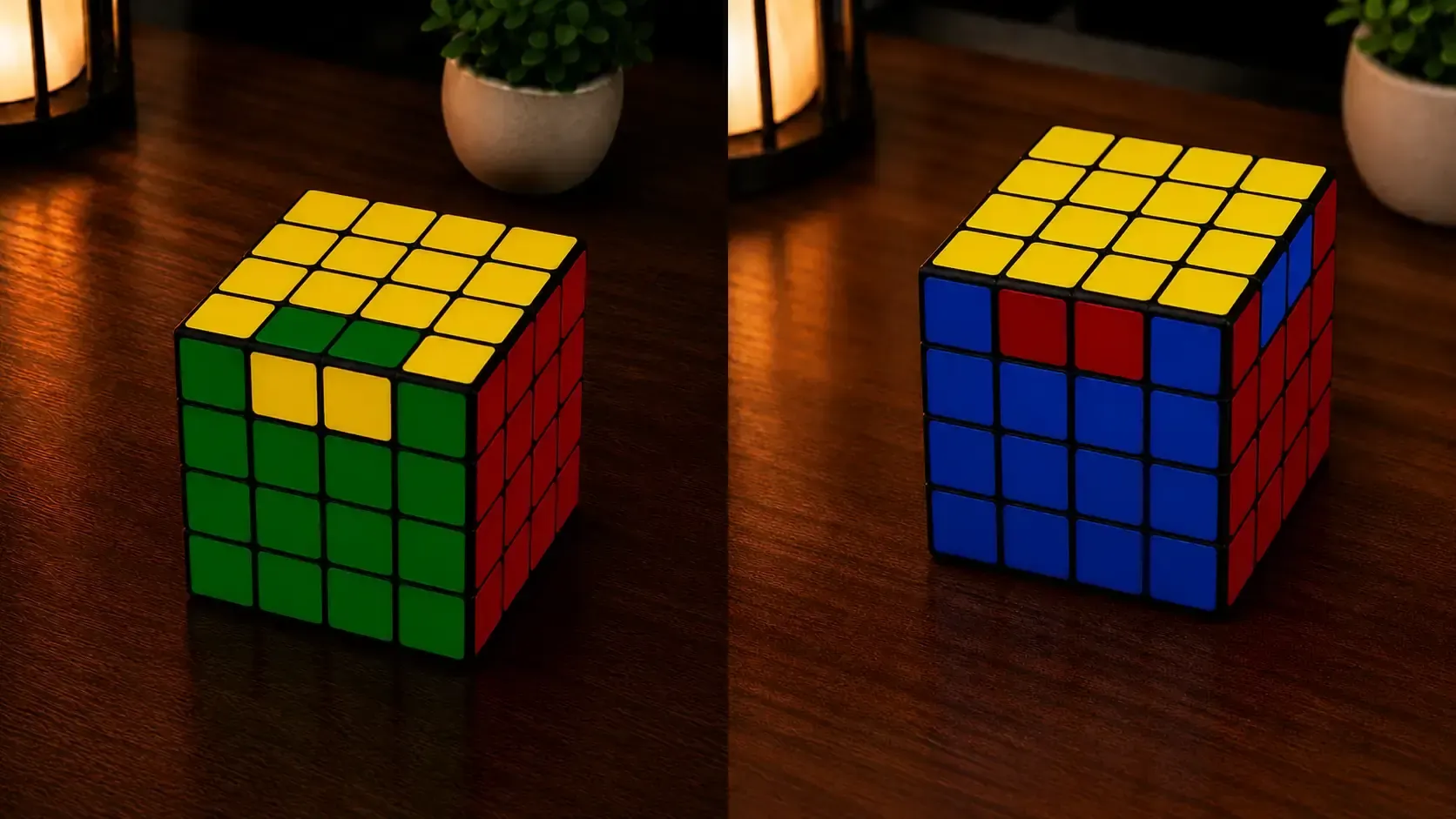
Os dois tipos de paridade 4×4A paridade de arestas do Cubo de Rubik 4x4 aparece em duas formas, dependendo do que está errado na última camada. A paridade OLL ocorre quando uma aresta é invertida incorretamente, enquanto a paridade PLL ocorre quando duas arestas são trocadas. Reconhecer qual caso você possui determina qual algoritmo de paridade de borda 4x4 você precisa usar.
Paridade OLL
A paridade OLL é um caso de orientação de borda de última camada em um cubo 4×4. Geralmente aparece como uma única borda invertida, o que impede que a última camada forme o padrão de orientação correto. As etapas normais de orientação não resolverão o problema. Um algoritmo de paridade OLL é necessário para corrigir a orientação da borda.
Paridade PLL
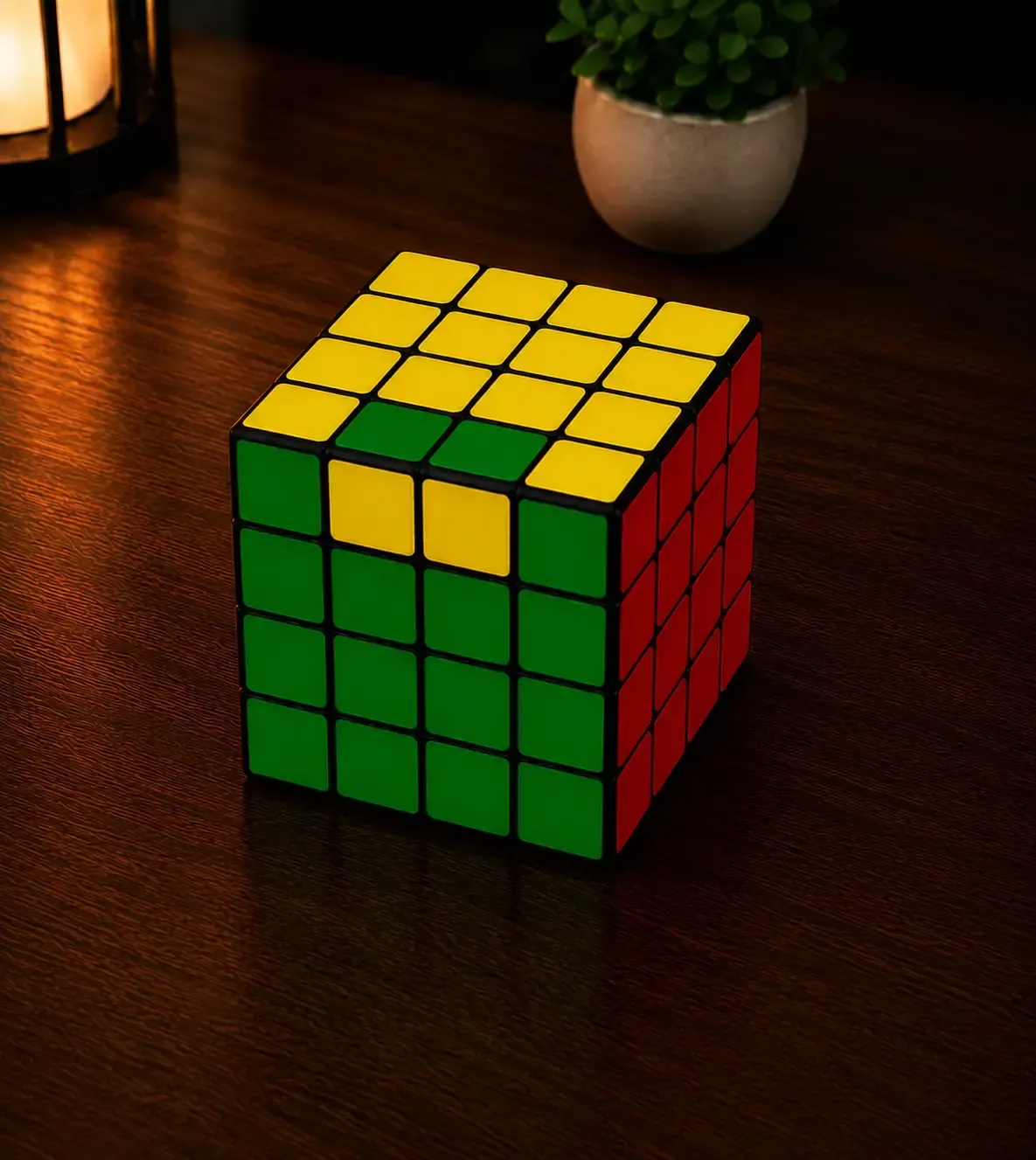
A paridade PLL é um caso de permutação de arestas de última camada em um cubo 4×4. Geralmente aparece como duas arestas que precisam trocar de lugar, um movimento que não pode ser resolvido com etapas normais de permutação. Por causa disso, a última camada não pode ser completada com algoritmos padrão. Um algoritmo de paridade PLL é necessário para corrigir a permutação de arestas.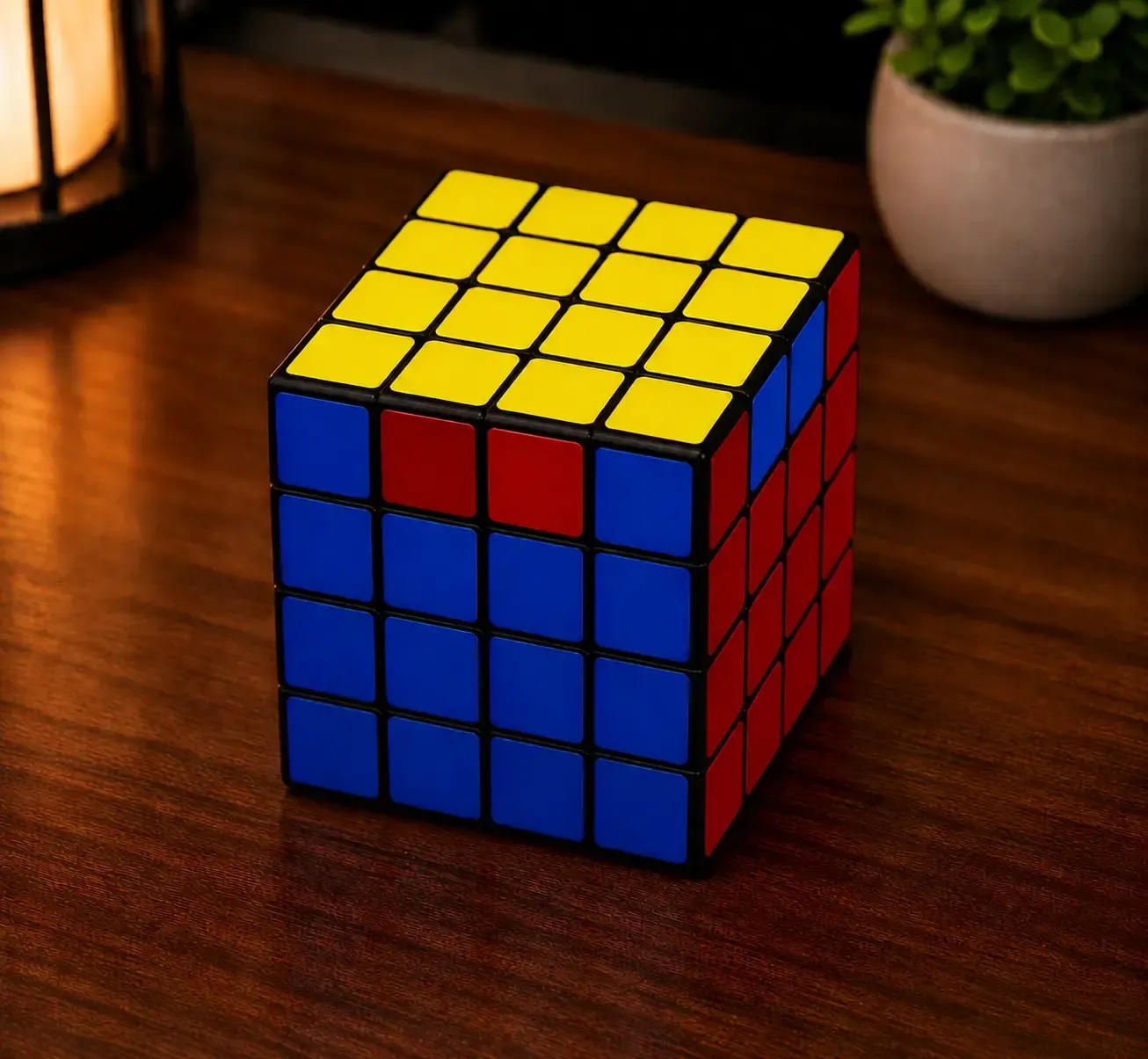
Como reconhecer a paridade OLL vs PLL
Você pode identificar o tipo de algoritmo de paridade 4x4 verificando o estado das arestas da última camada. A paridade OLL está relacionada à orientação das bordas, enquanto a paridade PLL está relacionada à permutação das bordas. Use esta verificação rápida:
Observe a orientação da borda na camada superior. Se uma aresta parecer invertida e o padrão de orientação normal não puder ser formado, é paridade OLL.
Se as arestas estiverem orientadas corretamente, mas duas arestas precisarem trocar de lugar, é paridade PLL.
Antes de identificar a paridade, certifique-se de que todas as arestas estejam totalmente emparelhadas. O emparelhamento incompleto pode criar padrões semelhantes à paridade.
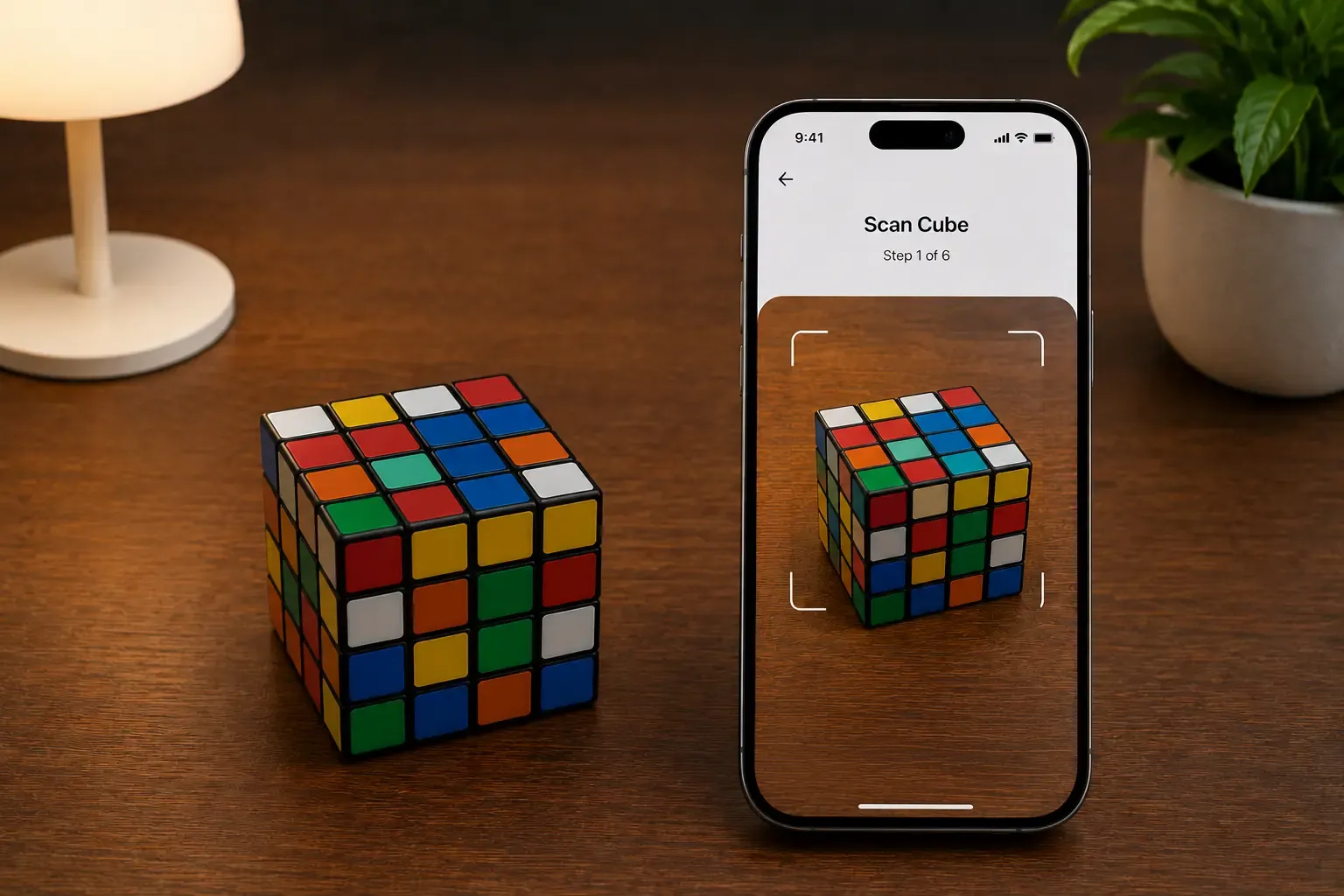
Se você não tiver certeza sobre o estado do cubo ou quiser verificar as etapas da solução automaticamente, ferramentas como CubeSolver AI for Rubik's Cube 4x4 podem ajudar. O solucionador alimentado por IA pode escanear ou analisar um cubo embaralhado e gerar instruções passo a passo para resolver quebra-cabeças de Cubo de Rubik 2×2 a 4×4, tornando-o útil tanto para iniciantes quanto para cubers experientes

CubeSolver AI


Depois de saber se é paridade OLL ou paridade PLL, use os algoritmos de paridade de borda do Cubo de Rubik 4x4 correspondentes. As seções abaixo mostram como corrigir cada caso.
Como corrigir a paridade OLL
A paridade OLL ocorre quando a orientação da borda da última camada não consegue formar um padrão válido. O algoritmo a seguir corrige a orientação da aresta para que a resolução possa continuar normalmente.
-
Rw = vire as duas camadas para a direita juntas
Uw = junte as duas camadas superiores
' = giro no sentido anti-horário
2 = giro de 180°
Algoritmo
Rw U2 x Rw U2 Rw U2 Rw' U2 Lw U2 Rw' U2 Rw U2 Rw' U2 Rw'
- Quando usar
A última camada mostra uma borda invertida e o padrão de orientação não pode ser concluído com etapas normais.
Dicas de execução
Gire um pouco mais devagar que sua velocidade normal de resolução.
Certifique-se de que cada movimento amplo vire duas camadas.
Se a sequência for interrompida, reinicie desde o primeiro movimento.
Como corrigir a paridade PLL
A paridade PLL ocorre quando as arestas da última camada são orientadas, mas duas arestas precisam trocar de lugar. O algoritmo a seguir corrige a permutação de arestas.
Notação
2R = gire a fatia interna próxima à face direita- 2R2 = gire a fatia interna em 180 graus
Uw = junte as duas camadas superiores
Algoritmo
2R2 U2 2R2 Uw2 2R2 Uw2
- Quando usar
Duas arestas da última camada precisam trocar de lugar e as etapas normais de permutação não podem resolver isso.
Pontos de verificação de execução
Após o algoritmo, verifique se a troca de arestas foi resolvida.
Continue com a permutação normal da última camada se o cubo ainda não estiver resolvido.
Se o mesmo padrão permanecer, verifique as voltas da fatia e repita o algoritmo.
Erros comuns de paridade 4x4 Rubik's Edge
Esses algoritmos de paridade de emparelhamento de arestas 4x4 são confiáveis, mas erros durante a execução ou reconhecimento podem levar a resultados incorretos. A seguir estão os problemas comuns que aparecem ao resolver casos de paridade e como corrigi-los.
- Vire o número errado de camadas
Sintoma: o cubo fica bagunçado após alguns movimentos.
Solução rápida: certifique-se de que movimentos amplos, como Rw e Uw, unam duas camadas, não apenas uma.
- Use o algoritmo de paridade de borda 4x4x4 errado
Sintoma: o algoritmo termina mas o cubo ainda não foi resolvido.
Solução rápida: verifique o caso novamente. (Uma borda invertida: paridade OLL. Duas bordas que precisam ser trocadas: paridade PLL)
- Parar no meio do algoritmo
Sintoma: o cubo parece pior depois de reiniciar no meio do caminho.Solução rápida: os algoritmos de paridade devem ser executados do início ao fim, sem pular movimentos. Se você parar, recomece desde o primeiro movimento.
- Gire o cubo durante o algoritmo
Sintoma: os movimentos não correspondem mais à posição do cubo.
Correção rápida: mantenha a mesma face frontal ao executar o algoritmo.
- Verifique a paridade antes que o emparelhamento da borda seja concluído
Sintoma: a última camada parece estranha, mas os algoritmos de paridade não resolvem isso.
Solução rápida: certifique-se de que todos os pares de arestas sejam concluídos antes de decidir que é um caso de paridade.
Veredicto Final
A paridade da última borda 4x4 é uma situação normal que pode aparecer na última camada. Geralmente aparece como uma borda invertida (paridade OLL) ou duas bordas que precisam ser trocadas (paridade PLL). Depois de aprender a reconhecer esses dois casos, a solução é simples: use o algoritmo de paridade correto e continue a resolução. Com um pouco de prática, a paridade torna-se apenas mais um passo rápido na resolução de um cubo 4×4.
Perguntas frequentes sobre paridade de borda 4x4
Qual é a maneira mais fácil de resolver a paridade de borda 4x4?
A maneira mais fácil de resolver a paridade de arestas 4×4 é primeiro identificar o caso e, em seguida, aplicar o algoritmo de paridade correto.
Se uma borda for invertida, é paridade OLL. Use um algoritmo de paridade OLL para corrigir a orientação da borda.
Se duas arestas precisam trocar de lugar, é paridade PLL. Use um algoritmo de paridade PLL para corrigir a permutação de arestas.Assim que o algoritmo de paridade for concluído, você poderá continuar resolvendo o cubo normalmente.
Qual é a maneira mais fácil de memorizar a paridade de borda 4x4?
A maneira mais fácil de memorizar algoritmos de paridade de arestas 4×4 é aprendê-los por padrão e repetição, não apenas lendo os movimentos. Primeiro, entenda os dois casos:
Paridade OLL: uma borda parece invertida.
Paridade PLL: duas arestas precisam ser trocadas.
Em seguida, pratique os algoritmos lenta e consistentemente, mantendo a mesma orientação do cubo. Repetir a sequência várias vezes ajuda a construir a memória muscular, o que torna o algoritmo mais fácil de lembrar durante uma resolução. Com a prática regular, o reconhecimento do caso e a realização da correção da paridade tornam-se automáticos.
A paridade em 4x4 é evitável?
Não. A paridade num 4×4 não é completamente evitável.
A paridade acontece devido à estrutura dos cubos de camadas pares. Durante o método de redução, as arestas são emparelhadas e tratadas como uma única aresta, mas sua orientação ou posição interna ainda pode ser inconsistente. Isso pode criar estados como uma borda invertida (paridade OLL) ou duas bordas trocadas (paridade PLL) que requerem um algoritmo de paridade para correção.
Por que meu algoritmo de paridade às vezes "não funciona"?
Geralmente por causa de um destes problemas:
Você pode estar usando o algoritmo errado para o caso. A paridade OLL e a paridade PLL são diferentes, portanto a correção de uma não resolverá a outra.2. Você pode estar virando as camadas erradas. Em um 4×4, movimentos como Rw, Uw ou giros da fatia interna devem afetar as duas camadas corretas ou a fatia intermediária. Se apenas uma camada se mover, o resultado estará errado.
Você pode estar começando da posição errada do cubo. Alguns casos de paridade precisam da borda invertida ou trocada em uma posição específica antes de começar.
Você pode estar parando no meio do caminho ou perdendo o controle da sequência. Se isso acontecer, reinicie movendo um.
Você pode estar chamando isso de paridade muito cedo. Se as arestas ainda não estiverem totalmente emparelhadas, o cubo poderá parecer paridade mesmo quando não estiver.
Os iniciantes devem aprender ambos os casos de paridade cedo?
Sim. Os iniciantes devem aprender ambos os casos de paridade desde o início, porque são as duas situações mais comuns em um cubo 4×4. Você não precisa de muitos algoritmos, apenas um para paridade OLL e outro para paridade PLL. Aprendê-los antecipadamente ajuda a reconhecer os casos rapidamente e evita confusão quando a última camada parece impossível.
Qual é a diferença entre paridade OLL e PLL em 4x4?
A diferença é o que há de errado com as bordas da última camada.
A paridade OLL é um problema de orientação. Uma borda parece invertida, portanto a última camada não pode formar o padrão de orientação correto.
A paridade PLL é um problema de permutação. As arestas estão voltadas na direção correta, mas duas arestas precisam trocar de lugar, o que as etapas normais do PLL não conseguem resolver.

Kelsey Geller focuses on practical Rubik's Cube learning for beginners. Her guides simplify complex steps, explain the "why" behind moves, and help new cubers build confidence with a reliable solving approach. Every guide follows CubeSolver's editorial review standards before publishing.