The real secret to Rubik's Cube is understanding fixed centers, legal move constraints, and repeatable checks, not hidden tricks. A normal 3x3 is rule-based, so most "impossible" moments come from orientation errors or misassembly. This guide breaks down core mechanics, debunks common myths, and gives practical beginner actions you can use right away.
The Biggest Secret: How a Rubik's Cube Really Works
To understand the secret to the Rubik's Cube, it helps to start with two simple principles that control how the puzzle moves. Many beginners think there is a hidden trick or cheat to solving a Rubik's Cube, but the puzzle actually follows a set of simple mechanical rules.
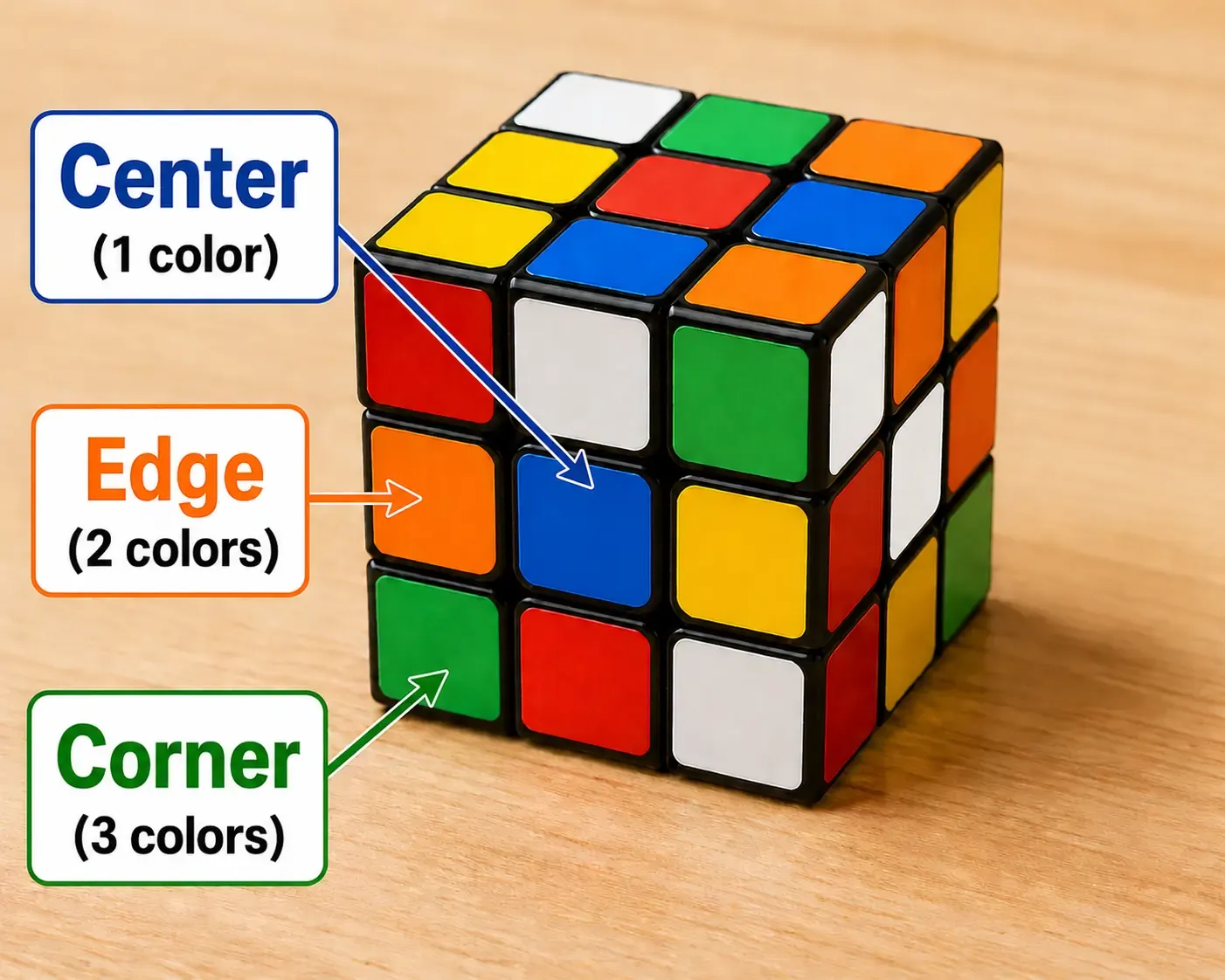
- Why center pieces never move relative to each other
On a 3x3, center pieces define the color identity of each face and stay fixed relative to each other. Even though the whole cube rotates in your hands, the six center colors keep their relative positions in the cube's structure. That means if white is opposite yellow at the start, it remains opposite forever.
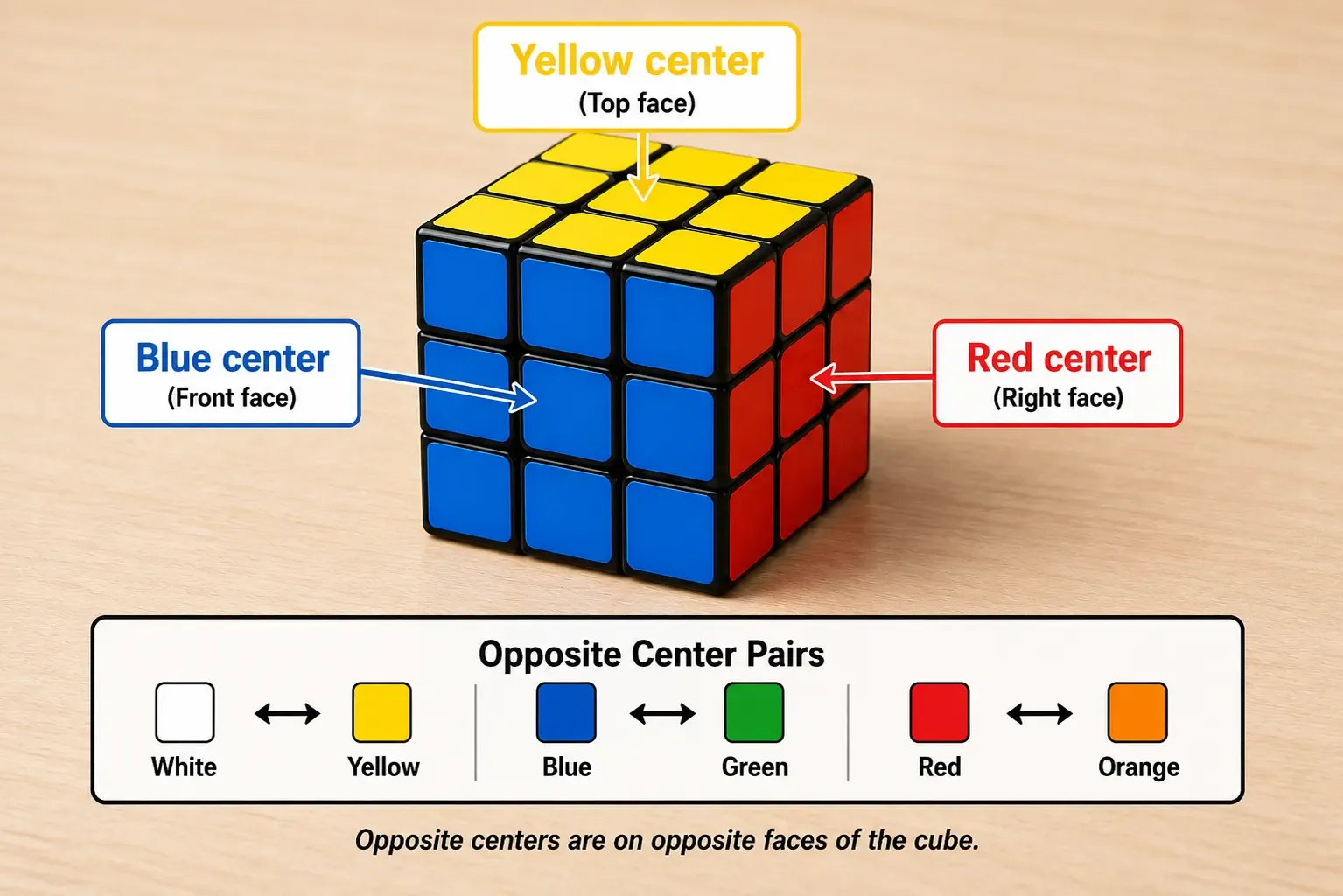
This matters because beginners often think the cube changes its "color map" while scrambling. It does not. The map is stable. Edges and corners travel around that stable map.
Practical takeaway: when a solve feels wrong, check whether your edge or corner piece matches the center colors of the slot you are targeting. This single habit prevents many dead ends.
- Why a scrambled cube is usually still solvable
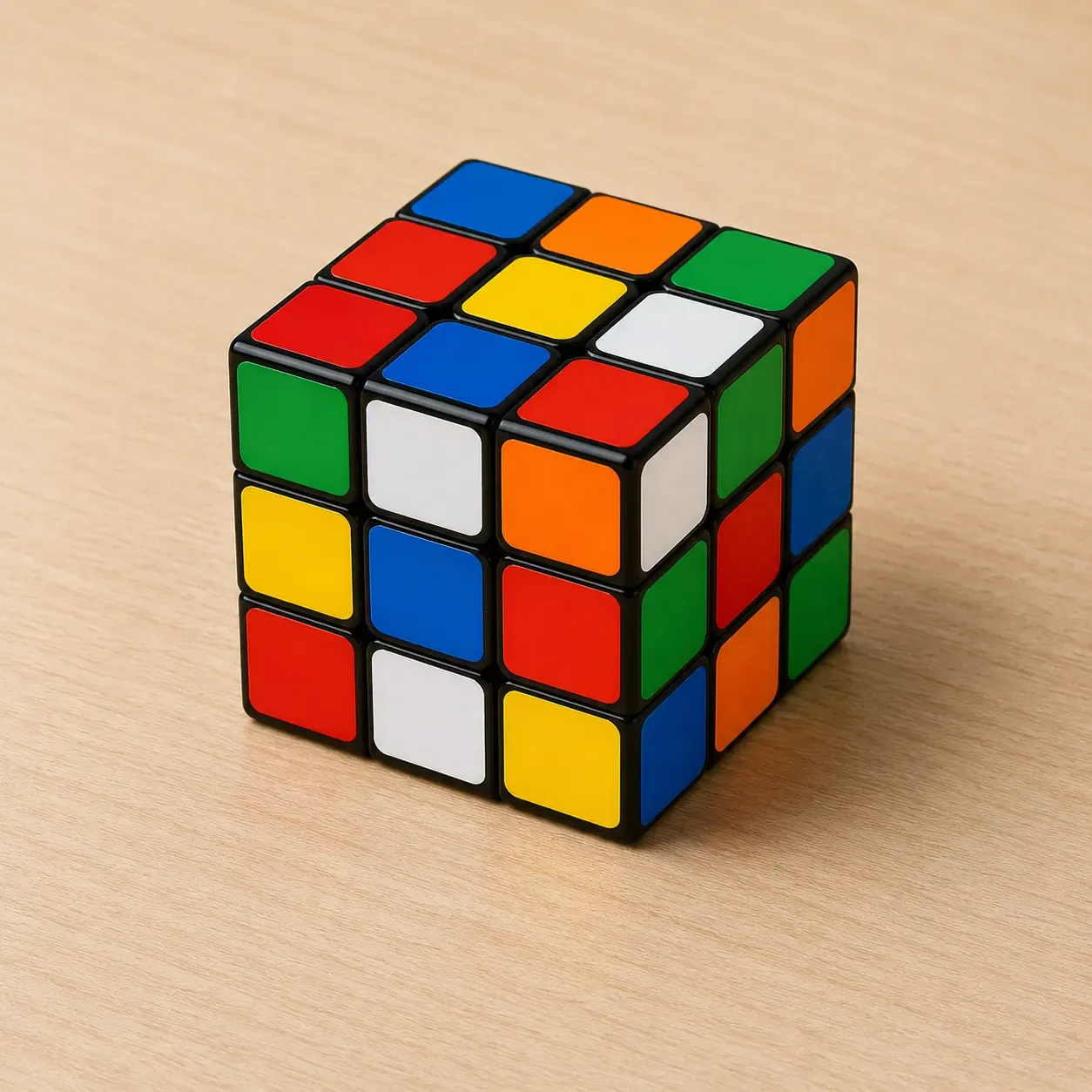
A properly scrambled Rubik's Cube is created through valid moves, which means it always remains solvable. If your cube seems impossible to solve, the problem is usually caused by one of the following situations:
A sequence was executed from the wrong angle.
A move was mirrored by mistake.
A piece was physically twisted or swapped by disassembly.
The Hidden Rules of the Cube
Is there a secret to solving a Rubik's Cube? Understanding the Rubik's Cube becomes much easier once you recognize that it follows a few structural rules. Beneath the colored stickers is a simple mechanical system that determines how pieces move and interact.
The Core Structure
At the center of a 3×3 cube is a mechanical core that connects the six center pieces and allows each face to rotate smoothly around it. Screws and springs control the cube's tension, while the edge and corner pieces move around the fixed centers rather than attaching directly to the core. Because of this design, pieces cannot change their fundamental type:
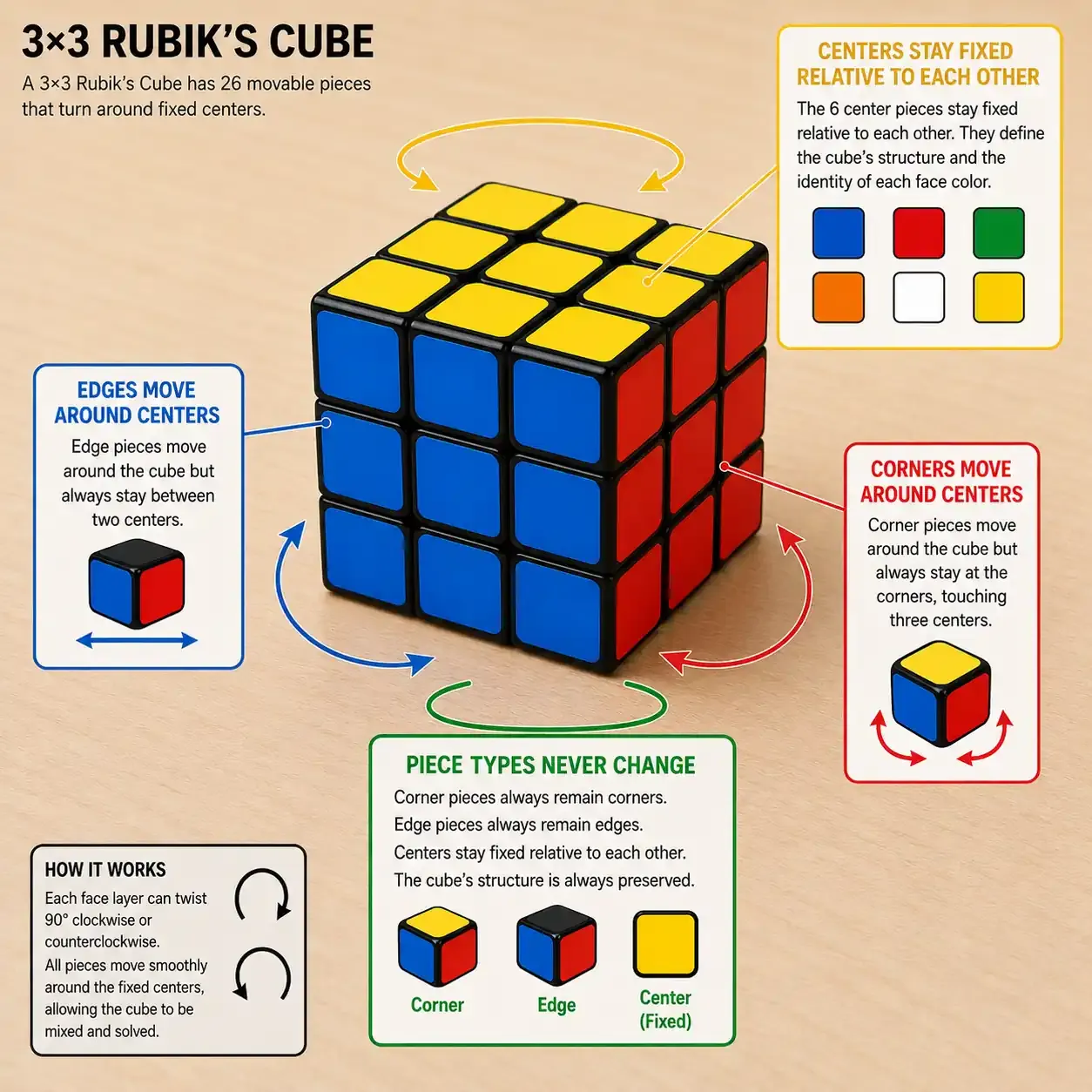
Corners always remain corners.
Edges always remain edges.
Centers define the color identity of each face.
Every twist simply rearranges these pieces within the limits of the mechanism.
What Patterns Reveal About the Cube
Cube patterns demonstrate that move sequences are controlled transformations rather than random twists. Familiar visual designs on the cube include:
These patterns are not random tricks. Each one is produced by a sequence that performs a controlled transformation on the cube. A sequence may:
The Key Insight Behind Algorithms
The real insight behind algorithms is understanding what a sequence changes and what it preserves. Once you start thinking about piece behavior, the Rubik's Cube secret to solving becomes much clearer.
Once you begin thinking in terms of piece behavior instead of isolated moves, algorithms become easier to understand and much easier to remember.
"Impossible" Cases and Common Myths
Many beginners believe they have encountered an "impossible" Rubik's Cube state. In reality, most of these situations come from misunderstandings about cube mechanics or solving methods rather than true impossibility.
Parity vs Normal 3×3 States
One common source of confusion is parity. On larger cubes such as 4×4 and 5×5 Rubik's Cube, parity cases can appear during reduction methods because pieces are grouped differently while solving. These situations are real and expected in larger puzzles.
On a standard 3×3 cube, however, the puzzle cannot naturally reach those states through legal turns. If a 3×3 appears to have a parity-like issue, the cause is usually one of the following:
A move sequence was executed from the wrong orientation.
A step was mirrored or reversed accidentally.
A piece was twisted or swapped after disassembly.
Understanding this distinction saves time. If you are solving a normal 3×3, there is no need to search for a 4×4 parity fix.
Scrambled vs Misassembled Cube
A normal Rubik's Cube scramble created through regular twists will always follow the cube's movement rules. If your cube shows an impossible pattern, it is likely assembled incorrectly or forced into an invalid position. The comparison below shows the difference.
| Situation |
What It Means |
| Single flipped edge |
Usually caused by reassembly or forced twisting |
| Single twisted corner |
Indicates illegal orientation after disassembly |
| Two swapped pieces |
Impossible from legal turns alone |
| Fully scrambled cube |
Always solvable if created by normal turns |
A simple rule helps diagnose the situation:
- If the cube was never disassembled, assume it is solvable and review your steps.

If you are still unsure whether your cube is solvable, you can verify it with CubeSolver AI. The tool lets you scan or enter your cube state, then instantly shows whether the cube is valid and generates the step-by-step moves needed to solve it. You can also practice algorithms with the interactive Cube Simulator or improve your solving speed using its Cube Timer tool available on the website.
Common Rubik's Cube Myths
Several persistent myths make beginners believe the cube has become impossible to solve. In reality, these beliefs usually hide execution mistakes rather than real cube limitations.
| Myth | Reality |
| Some scrambles are unsolvable | Every properly scrambled 3×3 cube can be solved |
| You need very high TPS | Consistency matters more than speed |
| Expensive cubes solve the problem | Hardware helps feel, not logic |
| One secret algorithm solves everything | Solving relies on a method system |
When something feels impossible, treat these myths as diagnostic signals. Verify the cube's state first, then review the moves you executed before assuming the puzzle itself is unsolvable.
The Practical Secret for Beginners
If you want a practical explanation of what's the secret to a Rubik's Cube, focus on a few simple habits that guide how you think about the puzzle:
Understand that center pieces anchor the cube's color relationships.
Treat algorithms as controlled transformations of specific pieces.
Distinguish between legal cube states and misassembled cubes.
Build accuracy and orientation discipline before trying to turn faster.
This approach keeps progress stable, especially for beginners and early intermediate solvers. Real improvement does not come from mysterious tricks. It comes from clearer mental models and repeatable solving habits.
Final Verdict
The real secret to Rubik's Cube 3x3 is not a hidden algorithm or shortcut trick. Once you understand the structure, constraints, and piece transformations, the puzzle becomes predictable. For many learners looking for a secret way to solve a Rubik's Cube, the real answer is understanding how the cube works rather than searching for a magic move.
Secret to Rubik's Cube FAQ
Does a 3x3 Rubik's Cube have parity?
No, a standard 3×3 Rubik's Cube does not have parity. Parity occurs on larger cubes, like 4×4 or 5×5 because their pieces are grouped during solving, which can create situations that cannot be fixed with normal 3×3 algorithms.
Is there a secret to Rubik's Cube 2x2?
Yes, but the "secret" to a 2×2 Rubik's Cube is simpler than many people think. A 2×2 cube has only corner pieces. There are no edges or fixed center pieces, like on a 3×3. This means solving the puzzle is mainly about positioning and orienting the eight corners correctly.
Why does my cube look unsolvable even when I follow steps?
Common reasons your cube may look unsolvable even when you follow the steps include:
Incorrect cube orientation when applying an algorithm.
Mirrored or reversed moves (for example confusing R with R′).
A step executed in the wrong order within the solving method.
A move accidentally skipped or repeated during the sequence.
A piece twisted or swapped after disassembly, creating an illegal state.
Misreading the notation used in the instructions.
Using a guide with a different color reference than the cube's current orientation.
Do I need an expensive speedcube to improve?
No, you do not need an expensive speedcube to improve. A better cube can feel smoother and reduce lockups, but improvement mostly comes from technique, accuracy, and understanding algorithms. Many beginners and intermediate solvers make the biggest progress by practicing clean turning and learning efficient methods, not by upgrading hardware.
What is the fastest way to stop repeating the same mistakes?
The fastest way to stop repeating the same mistakes is to identify exactly where the mistake happens instead of simply repeating full solves. Common causes include:
Rushing algorithms without checking piece orientation
Misreading move notation such as R vs R′
Losing cube orientation during longer sequences
Repeating a step incorrectly earlier in the solve