
No headings found
If you are stuck on a scrambled cube and want a method that always works, this guide on how to solve any Rubik's Cube easy is for you. The biggest issue is usually not speed, it is following a system that prevents you from undoing your own progress. Here, you will learn a reliable beginner workflow, what to do when pieces look impossible, and how to improve once you can finish consistently.
Start With the Right Expectation
Most people say they wonder how to solve a Rubik's Cube in any position, or how to solve a Rubik's Cube with any scramble, but they usually mean a normal 3×3 scramble. That is the best place to start, because the same logic carries over to larger cubes later. I recommend learning one complete method first, even if it feels slow. A slow method you can repeat is better than random tricks you forget after one solve.
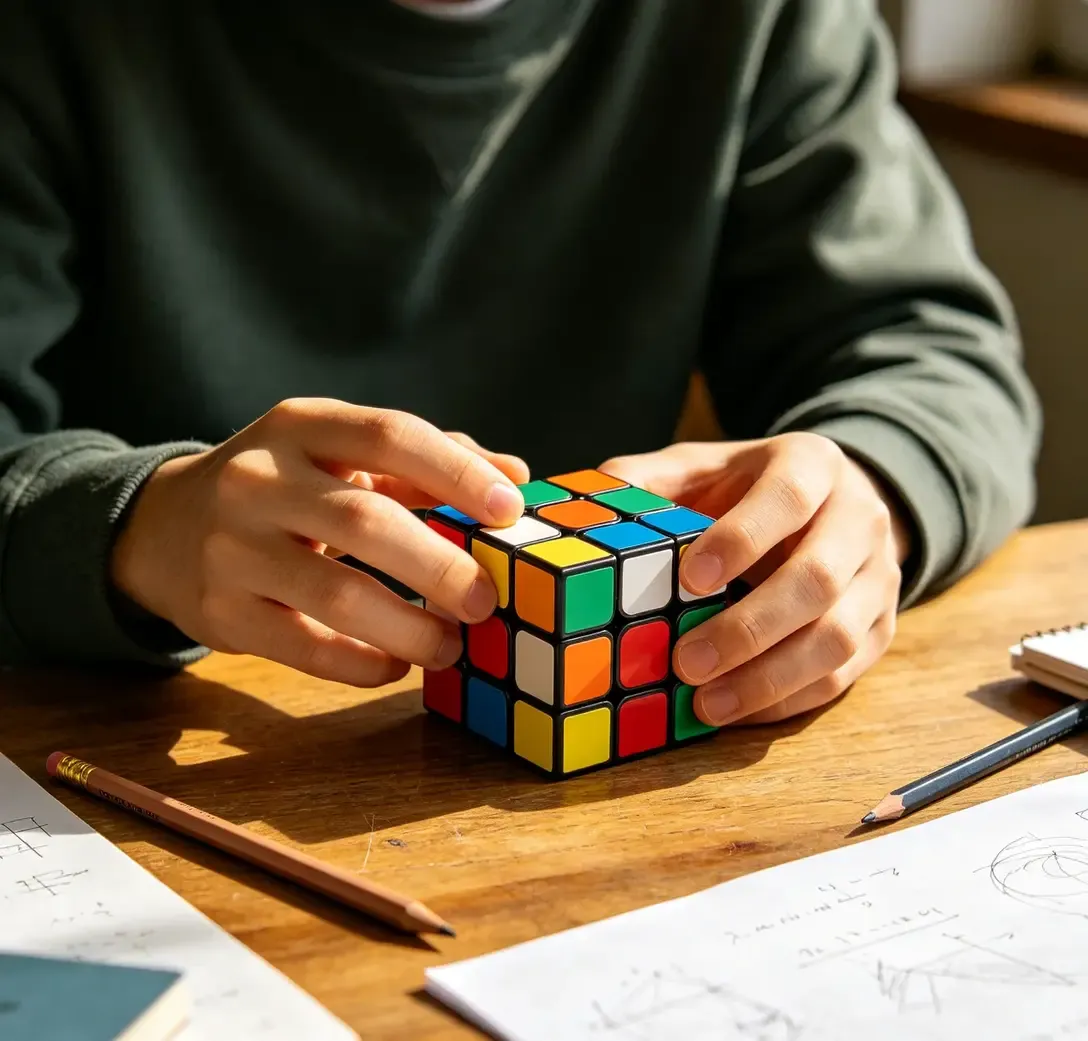
A practical way to learn faster is to solve this cube manually first, then verify difficult states with CubeSolver smart solution. That feedback loop helps beginners fix recognition mistakes without building bad habits.

CubeSolver AI


Before learning moves, lock in these basic notations: (Use quarter turns unless noted)
R = right face clockwise
R' = right face counterclockwise
R2 = right face 180° turn
L = left face clockwise
L' = left face counterclockwise
L2 = left face 180° turn
U = top face clockwise
U' = top face counterclockwise
U2 = top face 180° turn
D = bottom face clockwise
D' = bottom face counterclockwise
D2 = bottom face 180° turn
F = front face clockwise
F' = front face counterclockwise
F2 = front face 180° turn
B = back face clockwise
B' = back face counterclockwise
B2 = back face 180° turn
Step-by-Step Beginner Method (3x3 Core)
How to solve a Rubik's Cube from any position? Follow the steps in the same order each time: solve the first layer, complete the middle layer, then finish the last layer of a Rubik's Cube. This structured approach prevents you from breaking solved pieces while you work on the remaining ones, making it one of the most reliable methods for beginners.
Step 1. Make a White Cross
Find white edge pieces and match each one with its center color on the side faces. Do not only make a white plus on top. Make sure side colors also line up with their centers.
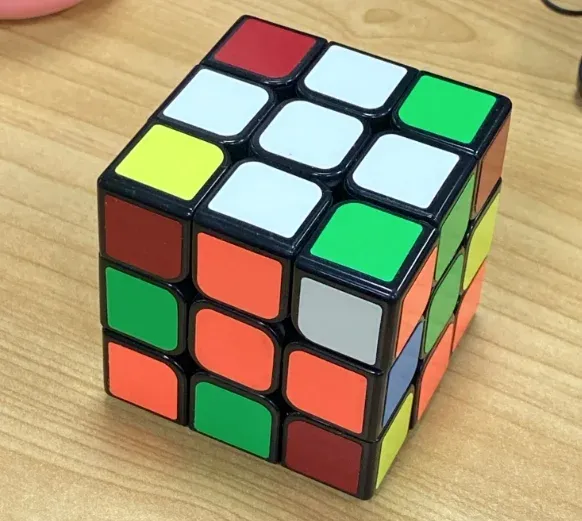
Find white edges in the top/middle/bottom layers.
Move each white edge to the top first.
Rotate top (U) to align edge side color with its center.
Insert edge down to white face without breaking solved edges.
Step 2. Finish White Corners (First Layer Complete)
Insert each white corner between the two matching side centers. If a corner is in the wrong slot, move it to the top layer first, then insert it correctly.
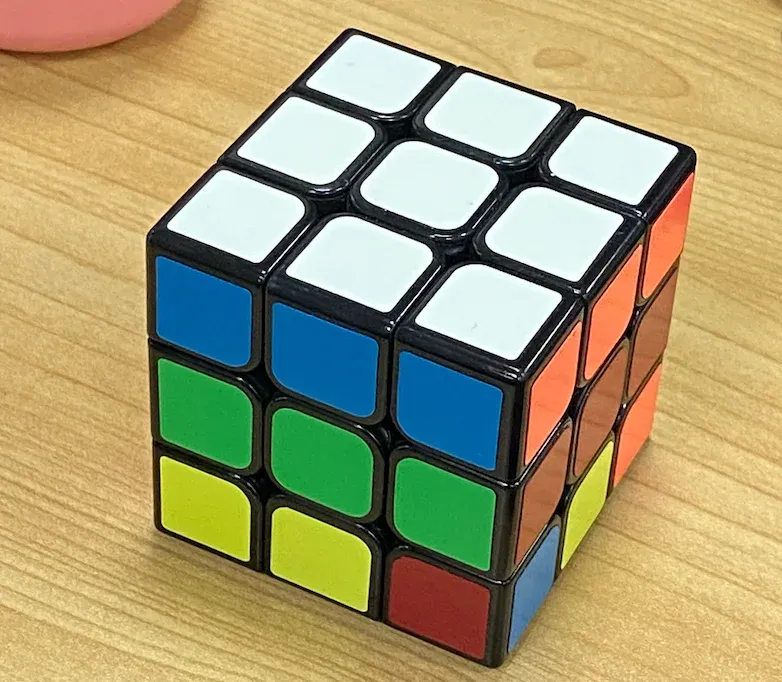
For a corner in top layer above its slot, use:
Right insert: R U R'
Left insert: L' U' L
Step 3. Solve the Middle Layer Edges
Look for top-layer edges that do not contain yellow. Move each edge to the left or right middle slot using the standard insertion sequence for that direction.
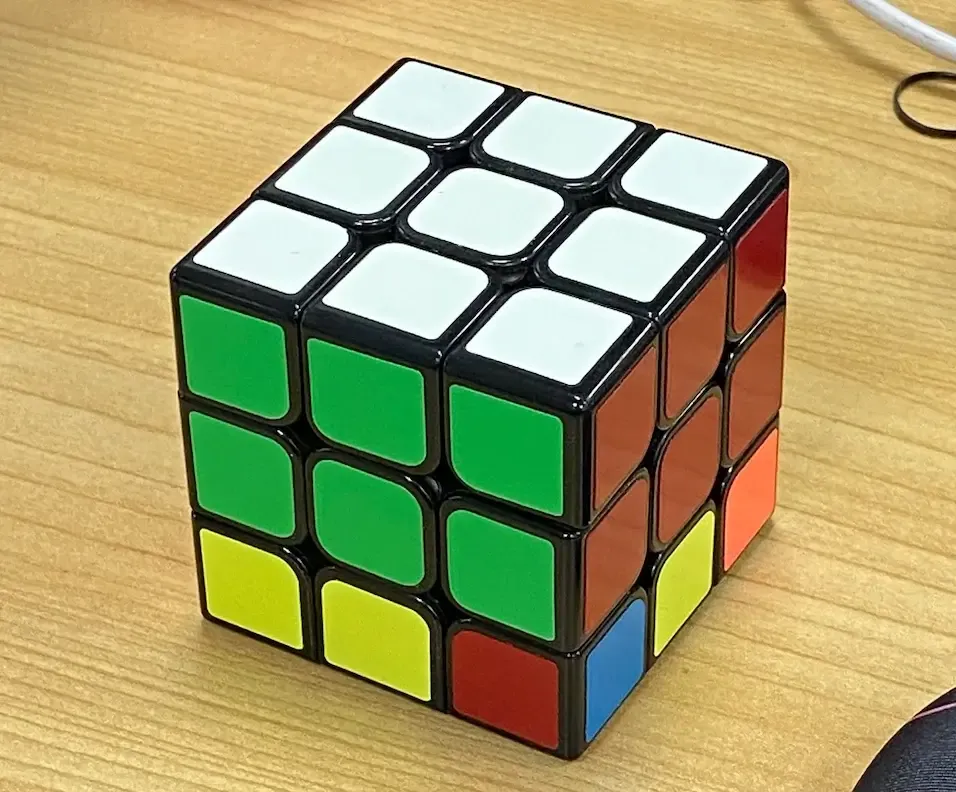
Find an edge on top with no yellow sticker:
If it belongs on right: U R U' R' U' F' U F
If it belongs on left: U' L' U L U F U' F'
Step 4. Make the Yellow Cross
From here, ignore side mismatches for a moment and focus on getting a yellow cross on top. Apply the same algorithm pattern until the cross appears.
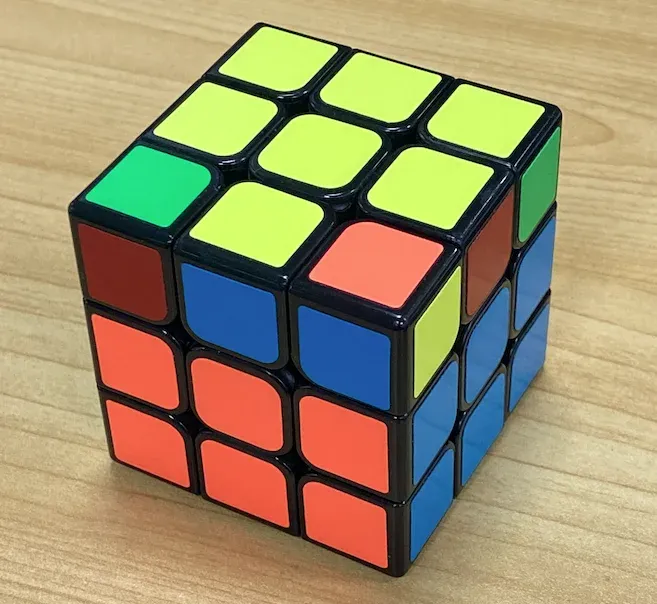
Use: F R U R' U' F'
Apply the correct pattern:
Dot: apply once
L shape: hold L at top-left, apply once
Line: hold horizontal line, apply once
Step 5. Align Yellow Edges
Turn the top face so at least two yellow edges match their side centers, then run the edge-swap sequence. Repeat until all four edges are aligned.
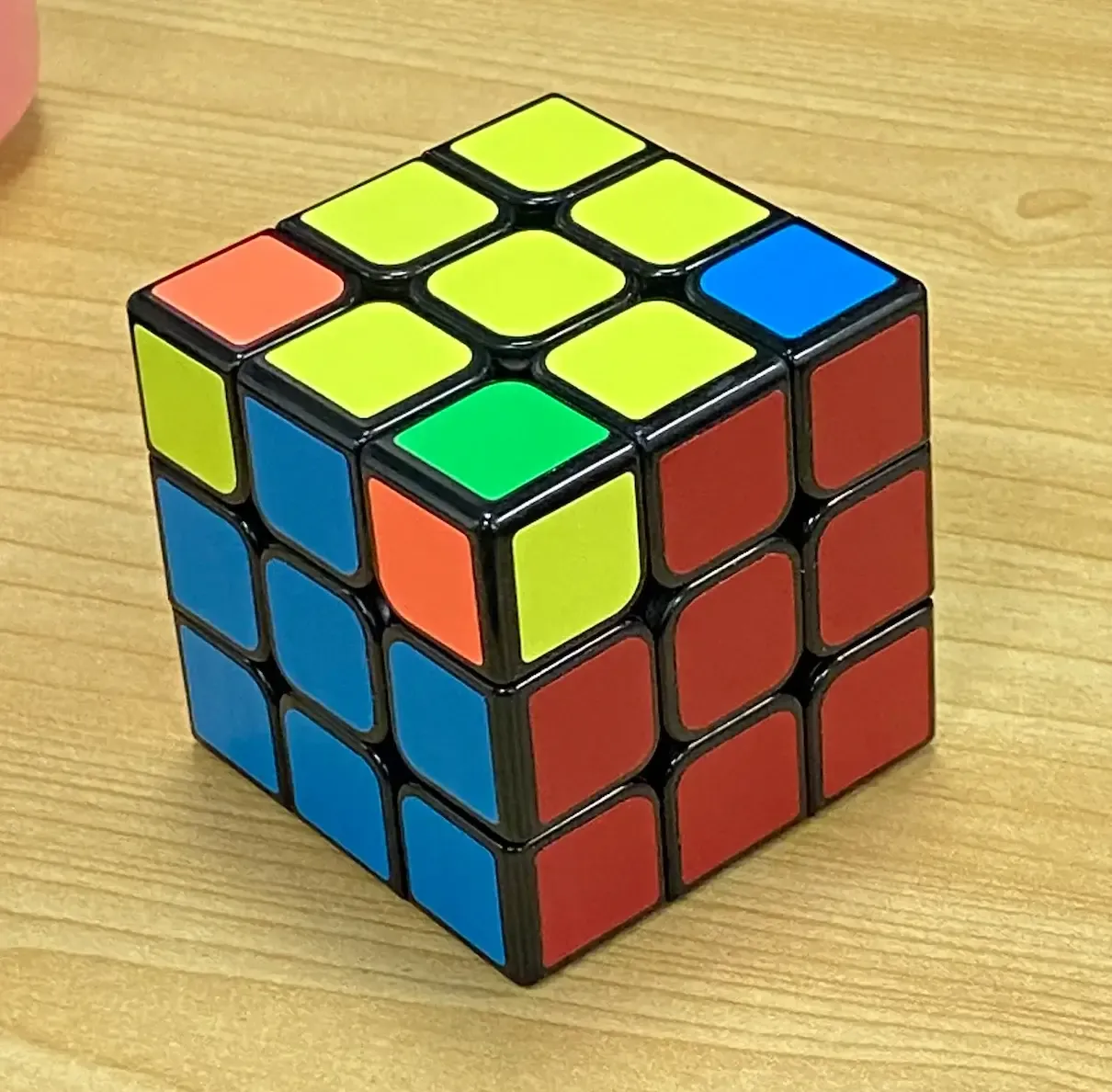
Use: R U R' U R U2 R'
Rotate U between attempts until at least one edge aligns, then continue until all 4 align.
Step 6. Position Yellow Corners
Check which top corners are in the correct locations, even if twisted. Use the corner-position sequence until all corners sit in the right spots.
Use: U R U' L' U R' U' L
Repeat until all corners are in correct spots.
Step 7. Twist Yellow Corners (Final Step)
Twist each incorrect corner in place one by one. Keep the cube orientation fixed while you do this. The cube may look temporarily scrambled, then restored as you finish the last corner.
Hold an unsolved corner at front-right-top and repeat until that corner is solved: R' D' R D
Turn only the top face (U) to bring the next unsolved corner to front-right-top, then repeat. Do not rotate the whole cube between corners.
How to Solve Any Type of Rubik's Cube
Once you understand the basic solving workflow, the same logic can be applied to many different cubes. While each puzzle has its own structure, most solutions follow the same idea: solve pieces in stages while protecting the parts you've already completed. Below is a quick overview of how to solve a Rubik's Cube from any scramble.
Standard Cubes (2x2, 3x3, 4x4...)
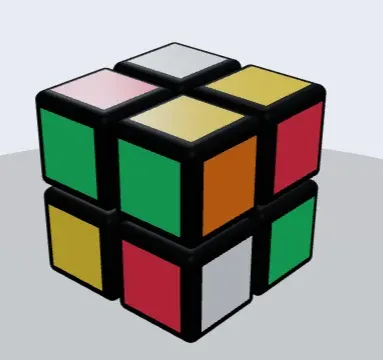
To solve 2x2 Rubik's Cube or other regular cubes, it helps to think of the puzzle as a 3x3 cube with different corner dispensations. Here we mainly mention 2x2x2 and 4x4x4 as examples for your reference and to help you apply the concepts to other problems.
- 2x2x2 Cube
It helps to think of the puzzle as a 3×3 cube with only corners.
| Key Characteristics | Practical approach |
|---|---|
| No edge pieces | Solve one face (first layer corners) |
| No fixed centers | Position top-layer corners |
| Uses the same corner logic as the 3×3 last layer | Orient top-layer corners |
- 4x4x4 Cube
The 4×4 cube solution introduces additional preparation steps before you can solve it like a 3×3.
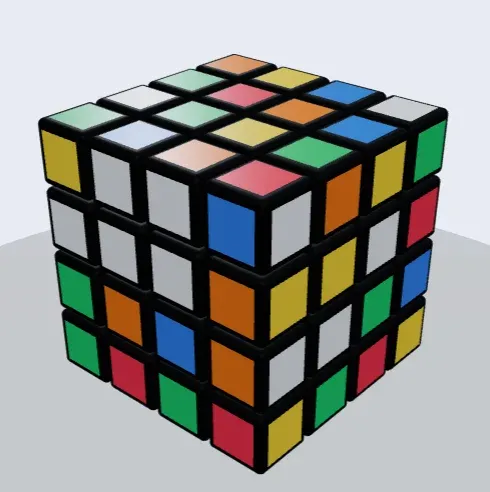
Build centers.
Pair edges.
Then solve as reduced 3x3.
Important: 4x4 can produce parity cases (states impossible on 3x3), so you may need one parity algorithm. This is why users who know 3x3 can still feel stuck on larger cubes.
Popular Non-Standard Cubes
Besides the standard Rubik's Cube, there are many other interesting irregularly shaped Rubik's Cubes. Although their specific solution methods differ, the general steps are similar.
- Pyraminx
Pyraminx solving relies heavily on pattern recognition, and beginners can usually learn it quickly with only a few algorithms.
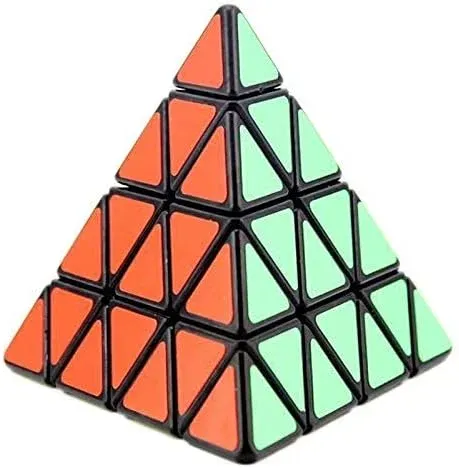
Solve tips first (easy and independent).
Match centers and build one face.
Use short edge-cycle algorithms for the last layer.
Ivy Cube
The Ivy Cube focuses mainly on corner positioning and leaf-piece movement. Because the puzzle has fewer total states than a 3×3, repeated practice leads to fast mastery.
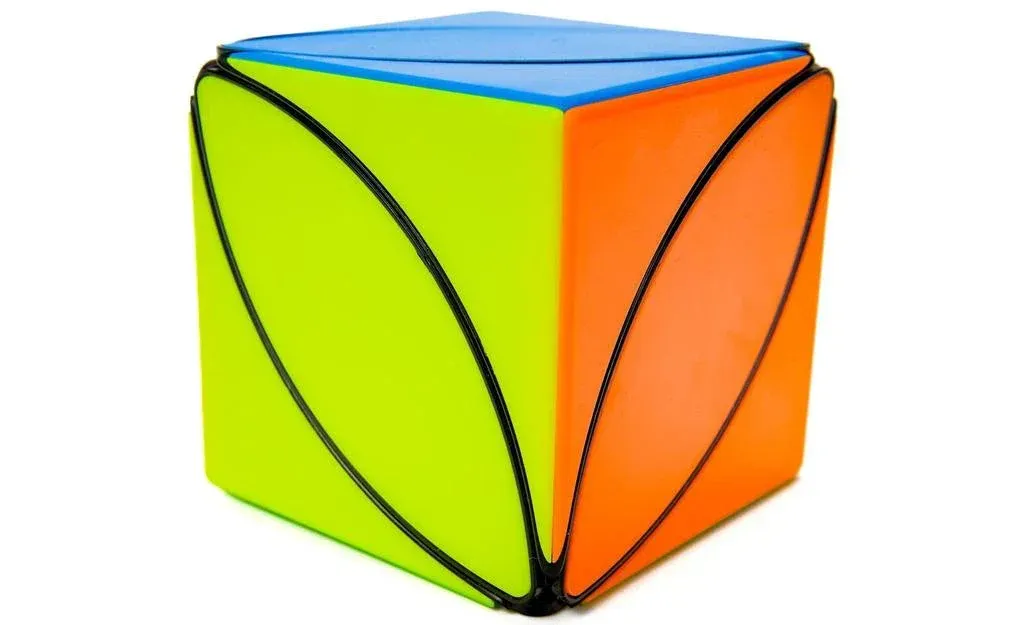
Focus on corner placement and leaf-piece movement.
Many cases can be solved with intuitive setup plus short cycles.
Fewer total states than 3x3, so repetition gives fast mastery.
What to Do When You Get Stuck
If you feel like "I know the steps but still can't finish the cube", the issue is usually a small mistake in recognition or execution. Use the checklist below to quickly identify the problem and fix it without restarting the entire solution.
| Situation | Most Likely Cause | Fast Fix |
|---|---|---|
| White cross breaks while inserting corners | Cross not anchored to matching centers | Rebuild cross with center alignment first |
| Middle layer loops forever | Inserting wrong edge or wrong side | Recheck destination colors; use left/right insert correctly |
| Yellow cross not appearing | Wrong orientation pattern handling | Hold L-shape/line correctly before applying algorithm |
| Last layer corners look impossible | Corner position/orientation confusion | Position corners first, then orient; do not mix phases |
| 4x4 looks unsolvable | Parity case | Use a dedicated parity algorithm, then continue |
| Cube is still "impossible" | Accidental disassembly or illegal state | Reassemble correctly or reset with a solver tool |
Extra recovery rules:
Never spam random turns. That destroys progress tracking.
Undo with intent. If a move sequence fails, reverse it and restart from last confirmed state.
Use checkpoints. Confirm each phase before moving to the next.
Separate solve vs pattern. If you want how to solve any rubik's cube pattern, first fully solve the cube, then apply pattern algorithms from solved state.
To Sum Up
How to solve any mixed up Rubik's Cube? Solving a Rubik's Cube is less about tricks and more about using a repeatable system. If you follow the same step order every time, cross, first layer, middle layer, and last layer, and use the stuck checklist when something feels "impossible", you can solve any normal 3×3 scramble consistently. After that, moving to 2×2, 4×4, and other cube variants becomes much easier because the same solving logic still applies.
How to Solve Any Rubik's Cube FAQ
Is there any trick to solve a Rubik's cube?
Yes, but it's not really a "trick". Solving a Rubik's Cube relies on learning a structured method and a few move sequences (algorithms) rather than random turning. Most beginners use a step-by-step approach:
Make a cross on one face.
Complete the first layer corners.
Solve the middle layer edges.
Finish the last layer using a few simple algorithms.
What are the 7 steps to solving a Rubik's cube formula?
Here are the 7 simple steps to solve a 3×3 Rubik's Cube using the beginner method:
Make the white cross. Form a cross with the white edge pieces and match them with the center colors.
Solve the white corners. Place the four white corners to finish the first layer.
Solve the middle layer edges. Insert the correct edge pieces into the middle layer.
Make the yellow cross. Create a yellow cross on the top face.
Align the yellow edges. Rotate the yellow edges so they match the side center colors.
Position the yellow corners. Move the yellow corners into their correct locations.
Twist the yellow corners. Rotate each corner until the cube is fully solved.
How to solve any Rubik's Cube with 2 moves?
You generally cannot solve any scrambled Rubik's Cube with only 2 moves.
A fully scrambled 3×3 Rubik's Cube usually requires many moves to solve. In fact, mathematicians proved that the maximum number of moves needed is 20 (called "God's Number"), and most beginner methods take 50–100 moves.
How to solve a 2x2 Rubik's Cube from any scramble?
Solve one layer. Choose one color (usually white) and complete that face with its four corners.
Place the top corners correctly. Move the top corners so each one is in the correct position. Formula: U R U' L' U R' U' L
Twist the top corners. Hold an unsolved corner at the front-right-top and repeat: R' D' R D. Turn the top (U) to bring the next corner into place and repeat.
Finish the cube. After all the top corners are twisted correctly, the 2×2 cube is solved.
How to solve any Rubik's Cube scramble?
To solve any Rubik's Cube scramble, use a consistent step-by-step method so solved pieces stay in place while you work on the rest.
Make the white cross. Form a white cross and match the edge colors with the center pieces.
Solve the white corners. Place the four white corners to complete the first layer.
Solve the middle layer. Insert the correct edge pieces into the middle layer.
Make the yellow cross. Create a cross on the top (yellow) face.
Align the yellow edges. Rotate the yellow edges so they match the side centers.
Position the yellow corners. Move the corners to the correct locations.
Twist the yellow corners. Rotate each corner until the cube is fully solved.
How to solve any Rubik's Cube fast?
To solve any Rubik's Cube fast, focus on using an efficient method and improving your solving habits.
Learn a structured method
Practice algorithms
Improve look-ahead
Use finger tricks
Reduce unnecessary moves
Practice regularly

Kelsey Geller focuses on practical Rubik's Cube learning for beginners. Her guides simplify complex steps, explain the "why" behind moves, and help new cubers build confidence with a reliable solving approach. Every guide follows CubeSolver's editorial review standards before publishing.