
No headings found
The Rubik's Cube is one of the world's most iconic puzzles, which stands for creativity, logic, and perseverance. But while many recognize it, few know Rubik's Cube history. This article will explore how it went from a teaching tool to a global sensation, why it nearly vanished, and how a passionate community helped bring it back.
What Is the Rubik's Cube
The Rubik's Cube is a classic 3D puzzle with a simple appearance but deep complexity. Shaped like a cube, it has six faces, each made up of nine smaller squares arranged in a 3x3 grid. Each face is colored differently — usually white, red, blue, green, yellow, and orange.
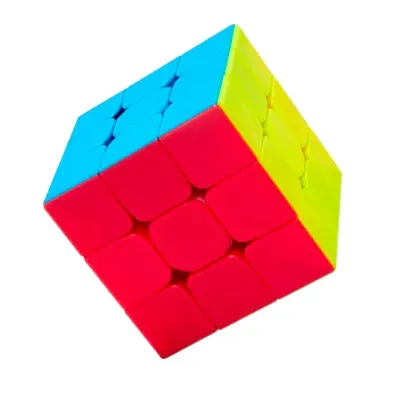
The goal sounds straightforward: scramble the cube by rotating its layers, then restore each side so that all nine squares show the same color. But don't be fooled, the puzzle hides enormous depth. A standard 3x3 Rubik's Cube has over 43 quintillion possible combinations. Still, thanks to what's known as God's Algorithm, any scrambled cube can be solved in 20 moves or fewer.
Learn About the History of Rubik's Cube
More than just a toy, the Cube combines logic, pattern recognition, spatial awareness, and hands-on problem-solving. It's a brain teaser that continues to challenge and inspire puzzle lovers of all ages. Now, let's take a closer look at the fascinating history of the Rubik's Cube.
The Invention of the Rubik's Cube
The Rubik's Cube was invented in 1974 by Ernő Rubik, a Hungarian professor of architecture and design in Budapest. His original intention was to help his students understand three-dimensional movement and geometry. Using wood and rubber bands, he created a cube that could twist and turn without falling apart — a mechanism never seen before.

Rubik didn't immediately realize he had created a puzzle. That moment came only after he scrambled the cube and then struggled to restore it to its original state. It reportedly took him a month to solve it the first time. Once he succeeded, he realized the cube had far more potential than just being a classroom tool.
He applied for a Hungarian patent in 1975, naming it the "Magic Cube" (Bűvös Kocka). By 1977, it was being sold in Hungarian toy shops. But the real turning point came when the puzzle made its way to the West.
Early Challenges & Global Spread
Bringing the Magic Cube to Western markets wasn't easy. In 1979, Hungary was still behind the Iron Curtain, and exporting goods was a complicated process. However, at a toy fair in Nuremberg, Germany, toy expert Tom Kremer saw the cube's potential. He played a key role in securing a licensing deal with the Ideal Toy Company in the U.S.
Renamed the Rubik's Cube, the puzzle was officially launched worldwide in 1980. The response was overwhelming. Within two years, over 100 million cubes were sold, and the Cube became a global sensation. Although very few people could solve the Cube without help, its colorful design and engaging tactile experience made it an irresistible hit.
The 1980s Rubik's Cube Craze
The early 1980s saw an explosion of Rubik's Cube mania. The puzzle appeared everywhere on TV shows, in music videos, on T-shirts, in books, and even sparked cartoons and competitions. Cube battles broke out in schools and offices, and for many, solving the cube became a symbol of intelligence and persistence.
In 1982, the first official Rubik's Cube World Championship was held in Budapest, the cube's birthplace. Minh Thai from the United States won, solving the puzzle in just 22.95 seconds, a cube world record at the time.
Books on solving the cube flew off shelves, and merchandise featuring the puzzle became a staple. For a while, it was impossible to go anywhere without seeing a Rubik's Cube until the craze eventually faded.
Evolution of the Rubik's Cube
By 1983-1984, the Cube craze had started to fade. Many who had purchased the cube struggled to solve it and eventually lost interest. New toy trends took over, and the Rubik's Cube faded from mainstream popularity, briefly dismissed as just another 1980s fad.
However, passionate enthusiasts kept the cube alive. These dedicated communities developed advanced solving methods, improved lubricants, and even began modifying the cube's mechanics for smoother turns.
Manufacturers took notice, releasing higher-quality cubes and new variations, including the 4x4 Rubik's Revenge, 5x5 Professor's Cube, and other shape-shifting and mirror puzzles. Over time, the Rubik’s Cube transformed from a nostalgic toy into a serious puzzle platform, with a new generation of solvers.
Rubik's Cube in the Digital Age
In the early 2000s, the Cube made a major comeback, fueled by online communities and the rise of speedcubing as a competitive sport. The founding of the World Cube Association (WCA) in 2004 helped standardize competition formats, paving the way for global tournaments.
Thanks to platforms like YouTube, online leaderboards, and dedicated forums, new solvers could learn algorithms faster than ever. The cube wasn't just making a return — it was evolving, becoming faster, more sophisticated, and increasingly competitive.
Today's speedcubers use advanced methods such as CFOP, Roux, or ZZ, solving the puzzle in under 4 seconds. Meanwhile, companies like GAN, MoYu, and QiYi have developed ultra-light, magnetized, and customizable cubes that allow for near-frictionless turns, a huge leap from the blocky models of the 1980s.
The Rubik's Cube has also found its place in education and technology. Teachers use it to explain concepts like group theory, permutations, and algorithms, while programmers create code to simulate solutions. AI-powered robots have even solved the cube in less than 0.4 seconds.
Use an AI Cube Solver
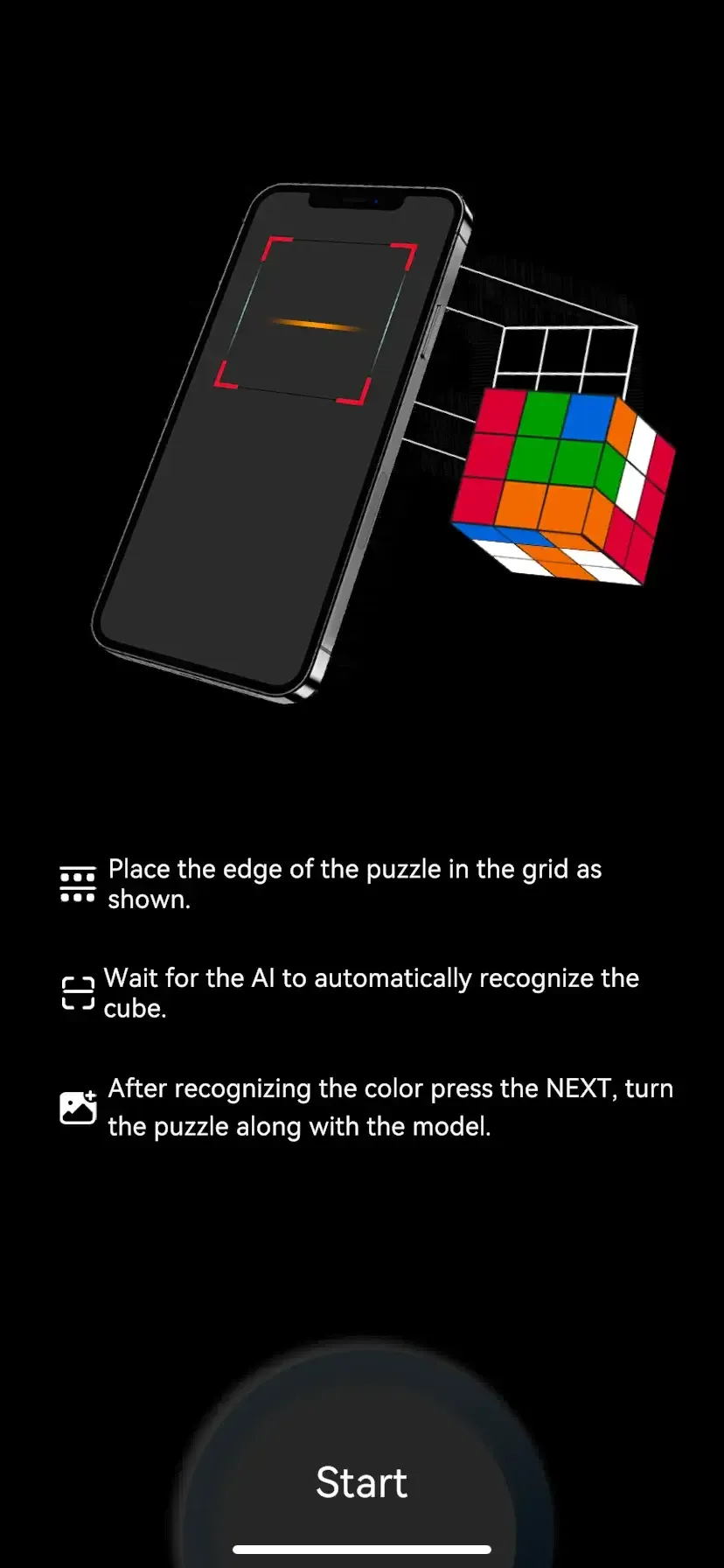
Are you a fan of Rubik's Cube? Try an AI Cube Solver app with powerful solutions to tackle the traditional cube's challenges. Just scan your scrambled cube or manually input the colors, and you'll be able to solve the puzzle quickly and easily.

CubeSolver AI


Wrapping Up
The history of the Rubik's Cube spans from its invention in Hungary to becoming a global sensation. After a peak in the 1980s, it faded but made a strong comeback in the digital age. Today, the cube remains a symbol of problem-solving and creativity, continuing to inspire enthusiasts and competitive solvers worldwide.
Rubik's Cube History FAQ
Q: Who solved Rubik's Cube first?
The first person to solve the Rubik's Cube was its inventor, Ernő Rubik. After he scrambled the prototype in 1974, he reportedly took about a month to solve it. This marked the moment when he realized he had created not just a model for spatial instruction, but a world-class puzzle.
Q: How did the Rubik's Cube impact society?
The Rubik's Cube has had a lasting societal impact in several key ways:
- Education: It introduced millions of spatial reasoning, logic, and mathematics.
- Culture: It became a symbol of 80s pop culture, and later, intelligence and perseverance.
- Community: It fostered global communities around solving, modding, and speedcubing.
- Innovation: It inspired puzzle design, robotics, and algorithm development, especially in AI and programming.
- Accessibility: It bridged generations and cultures, requiring no language, age, or background to enjoy or solve.

Kelsey Geller focuses on practical Rubik's Cube learning for beginners. Her guides simplify complex steps, explain the "why" behind moves, and help new cubers build confidence with a reliable solving approach. Every guide follows CubeSolver's editorial review standards before publishing.