
No headings found
The LEGO Rubik's Cube combines the fun of LEGO building with the challenge of puzzle-solving. Made entirely from LEGO bricks, it requires careful assembly to ensure smooth movement. Whether you're a LEGO fan, a Rubik's Cube solver, or just enjoy creative DIY projects, the LEGO Rubik's Cube instructions cover everything from building steps to solving techniques.
What Is a Rubik's Cube LEGO
A LEGO ideas Rubik's Cube is a unique adaptation of the classic puzzle, designed using LEGO pieces instead of traditional molded components. Some models are decorative, while others are fully functional, utilizing LEGO Technic elements for movement.

- Customizable Design – Colors, themes, and structures can be modified.
- Mechanical Complexity – Requires precise alignment for smooth rotations.
- Hands-On Engineering – Encourages problem-solving and creativity.
- LEGO Technic Integration – Utilizes gears and axles for improved movement.
Why the Rubiks Cube LEGO Is Unique
The LEGO Rubik's Cube stands out for its unique combination of engineering and creativity. It has gained popularity among a variety of groups, including:
- LEGO Enthusiasts looking for a new mechanical challenge to tackle.
- Speedcubers are interested in experimenting with unconventional puzzle designs and building their own cube.
- STEM Educators use it as an engaging tool in classrooms to teach concepts of engineering, mechanics, and problem-solving.
- Hobbyists are exploring innovative ways to customize and personalize the Rubik's Cube, combining the world of LEGO with puzzle-solving.
How to Make a LEGO Rubik's Cube
Building a LEDO Rubik's Cube set can be a rewarding project, allowing you to create either a visually stunning model or a fully functional puzzle. Depending on whether you want a display piece or a working cube, the process will vary.
Option 1: Display Model (Non-Functional)
If you're looking for a simple, non-rotating version of a Rubik's Cube, this display model option will allow you to build a visually accurate cube without the need for rotational capabilities.
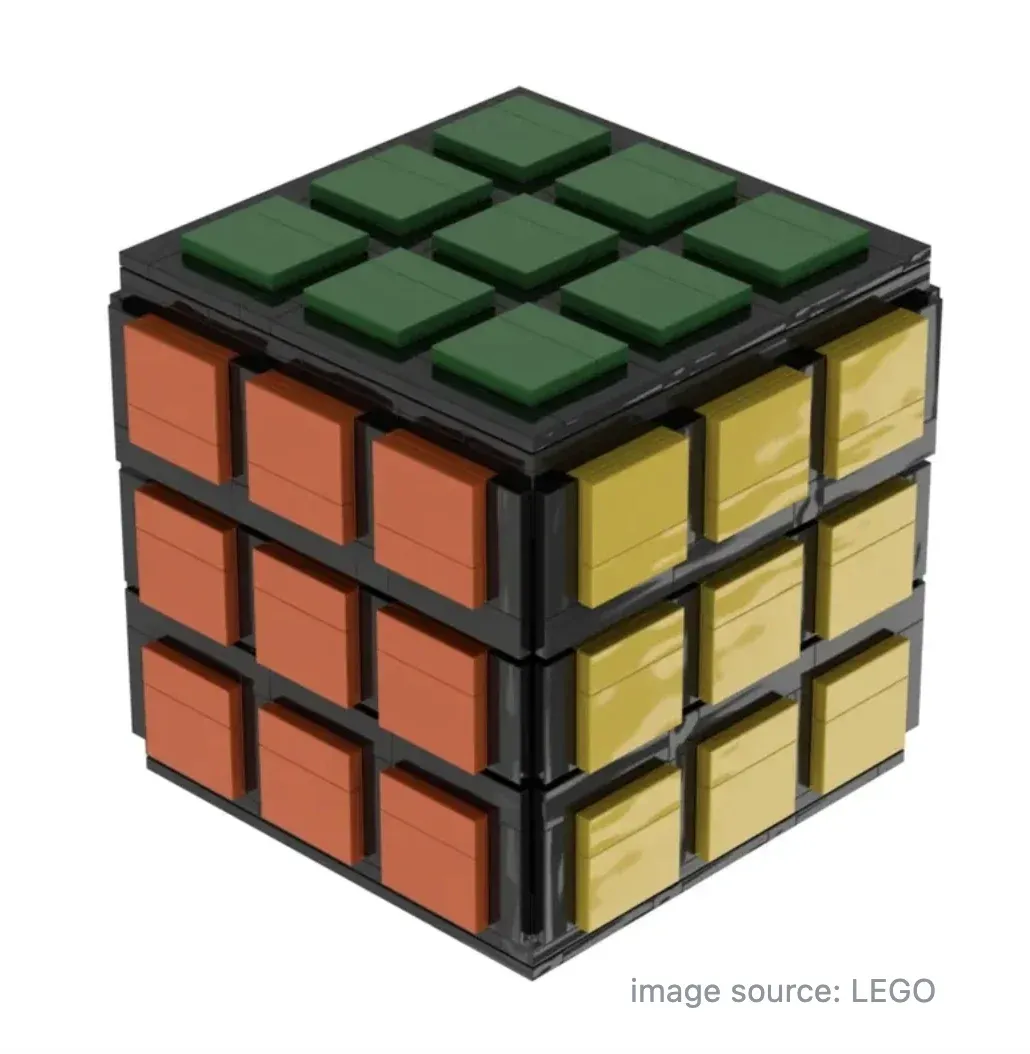
Step 1. Gather LEGO bricks in six colors that correspond to a standard Rubik's Cube.
Step 2. Assemble a solid 3x3 cube structure with secure connections.
Step 3. Attach colored tiles or plates to mimic the traditional Rubik's Cube pattern.
Step 4. Reinforce the structure internally to ensure stability.
Option 2: Fully Functional LEGO Cube
If you're up for a more challenging build, creating a fully functional Cub Rubik LEGO involves intricate design and engineering. This version requires a rotating mechanism that allows the cube to twist and turn just like the original puzzle.

Step 1. Start by building a central core using LEGO Technic axles and rotational joints.
Step 2. Design movable sections with ball joints or hinge pieces to allow for rotation.
Step 3. Test each layer's movement to ensure smooth, uninterrupted turning.
Step 4. Strengthen the structure to prevent misalignment or pieces coming loose.
Step 5. Optimize the design by experimenting with different LEGO Technic components.
Note: After completing your LEGO Rubik's Cube, you can enhance your solving experience with an AI Cube Solver app. This tool analyzes the cube's current state and provides step-by-step solutions to guide you through the solving process.

CubeSolver AI


LEGO Rubik's Cube Solve
Solving a functional LEGO Rubix Cube follows the same basic principles as solving a traditional 3x3 Rubik's Cube. However, due to the potential for increased friction and mechanical constraints, extra care must be taken when turning the layers.
Solve the White Cross
Begin by aligning the white edge pieces around the white center. Make sure that the edge pieces match the color of their adjacent centers.
First Two Layers (F2L)
Position the white corners and middle edges correctly to complete the first two layers. The goal is to get the bottom layer fully solved while also solving the edges in the middle layer.
Orient the Last Layer (OLL)
Adjust the pieces on the top layer so that all top-layer pieces have the same color facing up. This step may require some algorithms to orient all the top pieces.
Permute the Last Layer (PLL)
Finally, arrange the pieces in the correct positions on the last layer, ensuring that each piece is in its right spot. This step finishes the solve by positioning all the pieces correctly.
Common Challenges & Fixes
Building a functional LEGO Rubiks Cube presents a few unique challenges. Understanding these issues and applying the right solutions will improve both the cube's performance and its longevity.
Stability Problems
LEGO bricks are not naturally designed for rotational motion, which can result in the cube's structure becoming weak over time, especially after extended use. To prevent instability, use LEGO Technic axles and other reinforcement techniques. This provides additional support and ensures that the cube remains sturdy while rotating.
High Friction & Stiff Movement
LEGO components tend to create more friction than conventional speedcubes, which can make turning the layers stiff and less smooth. Apply a silicone-based lubricant to the moving joints to reduce friction. Additionally, using rounded connectors where possible helps minimize resistance, improving the cube's turning capability.
Alignment Issues
Slight misalignments can disrupt the smooth movement of the cube and cause functionality issues. Design the core with small gaps between the layers to accommodate any minor shifts in positioning. This ensures even pressure distribution and helps maintain consistent movement.
Conclusion
The LEGO Rubix Cube offers a unique combination of puzzle-solving and hands-on construction. Whether you choose to build a display piece or a fully functional model, this project provides an opportunity to develop mechanical skills and creative problem-solving abilities. As innovations in LEGO design and cubing mechanics continue, future iterations of the cube will likely become even more sophisticated and accessible.
LEGO Rubik's Cube FAQ
Q: Does LEGO make a Rubik's Cube?
LEGO does not officially make a Rubik's Cube, but many enthusiasts have built functional and decorative versions of the Rubik's Cube using LEGO bricks. These custom creations replicate the design and function of the classic puzzle, with some versions even featuring rotating mechanisms and working like a traditional Rubik's Cube.
Q: How to make a Rubik's Cube from LEGO?
To build a LEGO Rubik's Cube, construct a 3x3 cube using LEGO bricks. Create a central core with LEGO Technic parts for rotation. Attach colored pieces to form the six faces, ensuring smooth movement. For a functional model, test and lubricate the layers. Alternatively, you can build a static version for display without the twisting mechanism.

Kelsey Geller focuses on practical Rubik's Cube learning for beginners. Her guides simplify complex steps, explain the "why" behind moves, and help new cubers build confidence with a reliable solving approach. Every guide follows CubeSolver's editorial review standards before publishing.