

No headings found
O Cubo de Rubik 5x5, também conhecido como Cubo do Professor, é um dos quebra-cabeças mais desafiadores da família do Cubo de Rubik. Com suas peças adicionais, apresenta um nível de dificuldade totalmente novo. No entanto, se você deseja aprimorar ainda mais suas habilidades de cubagem, é um ótimo quebra-cabeça para resolver.
Entenda o Cubo de Rubik 5x5
Antes de resolver o cubo 5x5x5, é importante compreender a sua estrutura. Com mais peças por aresta e peças centrais flutuantes que se movem durante a resolução, é mais complexo que o 3x3. Isto requer algoritmos avançados, especialmente para alinhar os centros e emparelhar as bordas.
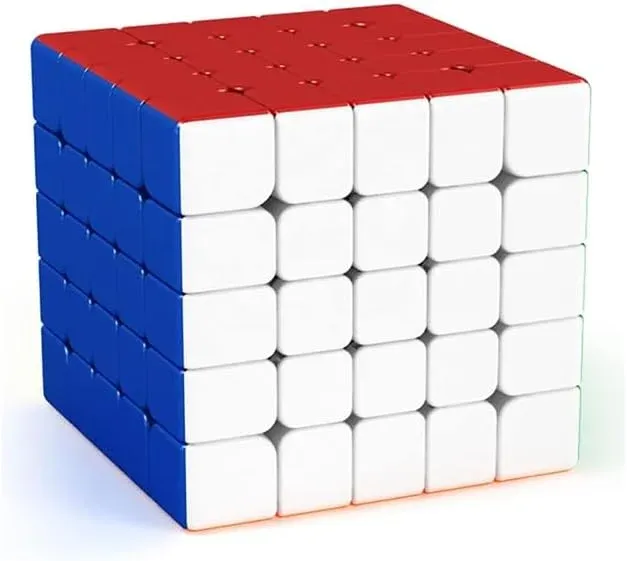
- 54 Centros: Cada face do cubo 5x5 possui um quadrado central fixo que permanece no lugar, determinando a cor final desse lado. Ao seu redor estão oito peças centrais móveis que precisam ser corretamente alinhadas para combinar com o centro fixo e completar a face.
- 8 cantos: Semelhante ao cubo 3x3, o 5x5 também possui 8 peças de canto. No entanto, são mais simples de manusear porque, uma vez posicionadas corretamente as bordas, os cantos se encaixam naturalmente e suas posições são fixas. O desafio dos cantos reside principalmente na sua orientação durante as últimas etapas.- 36 Arestas: Os cubos 5x5 têm 12 arestas, cada uma com várias arestas menores. Eles precisam estar corretamente alinhados e orientados para garantir que o quebra-cabeça seja resolvido. Ao contrário do 3x3, onde cada aresta é composta por apenas duas peças, o 5x5 tem mais complexidade devido às peças adicionais que devem ser emparelhadas.
Em novembro de 2024, o speedcuber polonês Tymon Kolasiński estabeleceu um novo recorde mundial do Cubo de Rubik 5x5 em impressionantes 31,60 segundos. Agora, vamos dar uma olhada mais de perto em como você pode resolver o 5x5 sozinho, passo a passo, e trabalhar para melhorar seu próprio tempo de resolução!
Como resolver um cubo de Rubik 5x5
O solucionador do Cubo de Rubik 5x5 segue uma abordagem semelhante ao cubo 3x3, mas com etapas adicionais para contabilizar as camadas e peças extras. No total, existem cinco etapas principais para resolver o cubo 5x5:
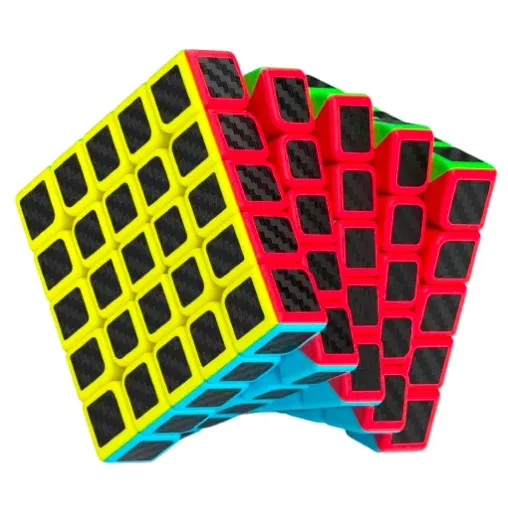
- Resolva as peças centrais: Comece alinhando as peças centrais em todas as faces, pois elas estão fixadas como no 3x3.
- Emparelhar as arestas: Em seguida, emparelhe as arestas, o que é uma etapa crucial antes de prosseguir para a resolução das camadas.
- Resolva as duas primeiras camadas (F2L): Assim que as arestas estiverem emparelhadas, resolva as duas primeiras camadas como faria em um 3x3.4. Resolver a última camada****: Semelhante ao 3x3, resolva as bordas e cantos da última camada.
- Corrigir erros de paridade: Por fim, resolva quaisquer erros de paridade que possam ocorrer, um desafio único no 5x5 devido às suas peças extras.
Bônus: Se você tem um Cubo de Rubik e deseja resolvê-lo rapidamente, você pode tentar usar um aplicativo de resolução de Cubo de Rubik da AI. Este aplicativo pode analisar o padrão atual do seu cubo e fornecer a melhor solução para resolvê-lo com eficiência.
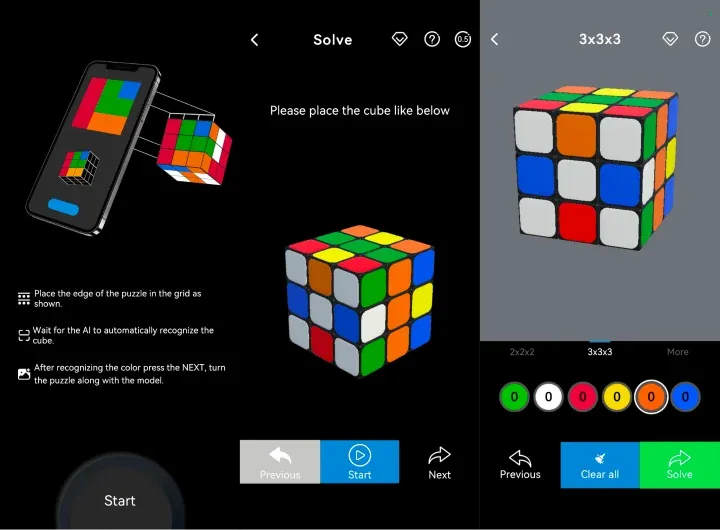

CubeSolver AI


O primeiro passo para resolver o cubo de Rubik 5 por 5 é organizar as peças centrais. Ao contrário do 4x4, o 5x5 possui centros intermediários fixos que determinam a cor de cada face, como o 3x3. Existem três tipos de peças centrais – centros fixos, centros de canto e centros de arestas – que devem ser alinhados corretamente antes de resolver as arestas.
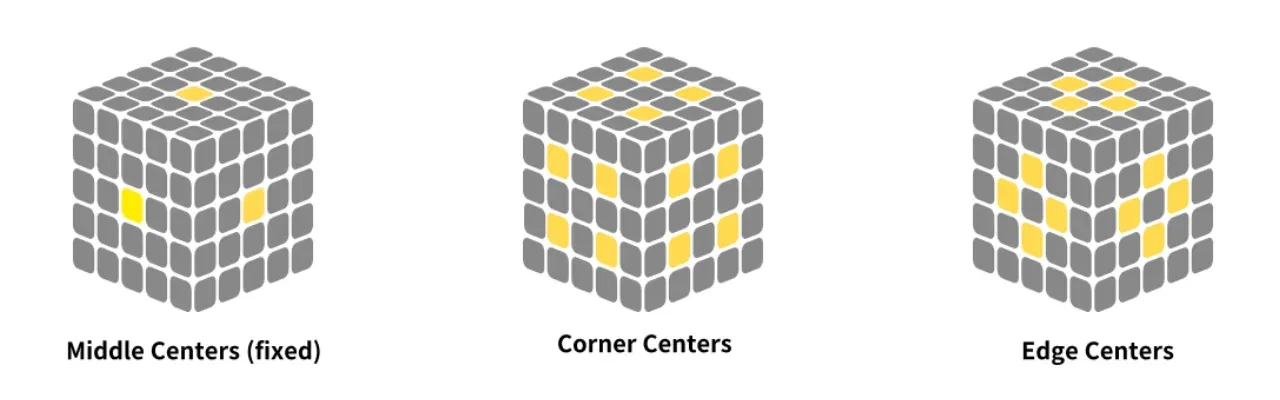
Etapa 1. Forme uma barra 1x3 no meio usando dois centros de borda e o centro fixo. Em seguida, crie duas barras externas 1x3 com centros de canto e borda e anexe-as para completar o centro.
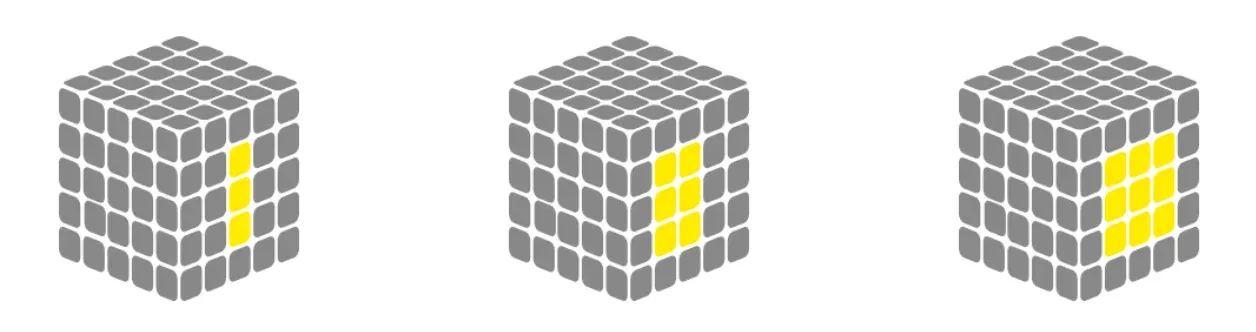
Etapa 2. Passe para o centro do lado oposto, seguindo o mesmo método sem perturbar o centro concluído.
Etapa 3. Segure os centros resolvidos nos lados esquerdo e direito e trabalhe em dois centros adjacentes. À medida que você completa mais centros, seus movimentos disponíveis ficarão mais restritos, então planeje cada movimento com cuidado.
Procedimento 2: emparelhar as peças da bordaExistem dois tipos de bordas: bordas intermediárias (mosquitos) e peças de asas. Os mosquitos podem virar no lugar, mudando de orientação, enquanto as peças das asas permanecem fixas em seu posicionamento. Combinar adequadamente essas arestas é fundamental para progredir na solução. Cada combinação de cores não opostas tem três arestas, e o objetivo é combiná-las corretamente para formar grupos de arestas completos, como em um cubo 3x3.
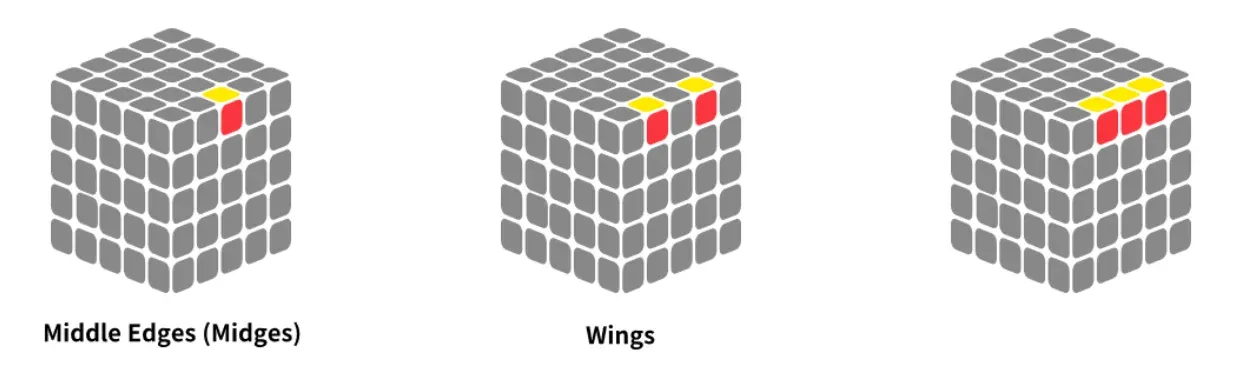
Emparelhe as primeiras 8 arestas (método Freeslice):
Isso envolve o uso de uma fatia do cubo como espaço de trabalho para emparelhar as peças da asa e da borda intermediária. Em seguida, forme pares completos de arestas fazendo voltas amplas em torno deste eixo. Uma vez resolvida uma aresta, movemo-la para a camada superior ou inferior e continuamos a emparelhar o resto, mantendo os centros intactos.
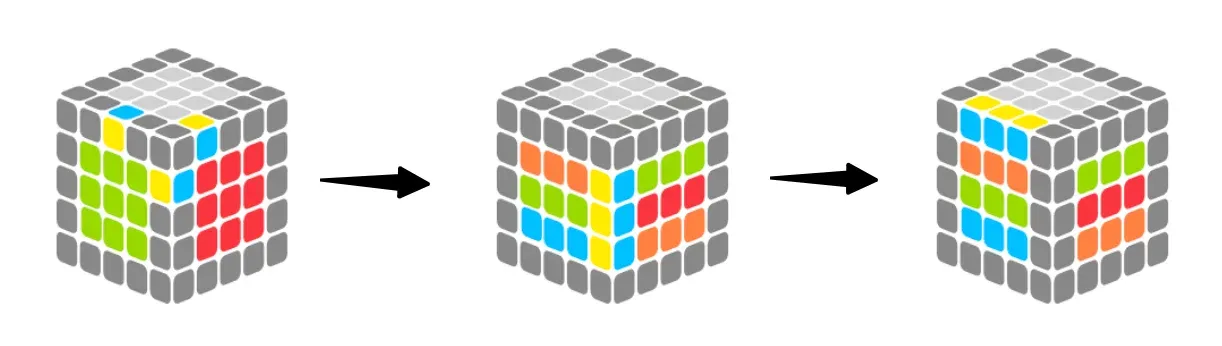
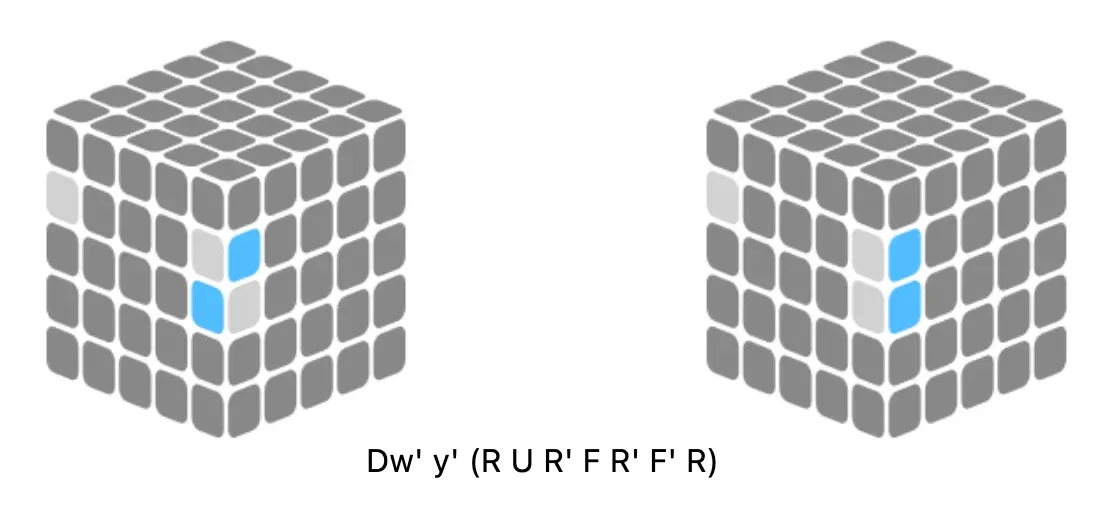
Aqui estão dois algoritmos úteis para mover uma borda da posição frontal superior para a posição frontal direita:
- R U' R' (preserva a orientação da borda)
- F R' F' R (muda a orientação da borda)
Para virar a borda frontal direita no lugar, use:
- **R U R' F R' F' R **Continue emparelhando as arestas até ter 8 arestas resolvidas – 4 na parte superior e 4 na parte inferior. Feito isso, restaure os centros às suas posições corretas. Neste ponto, você terá apenas 4 arestas para resolver.
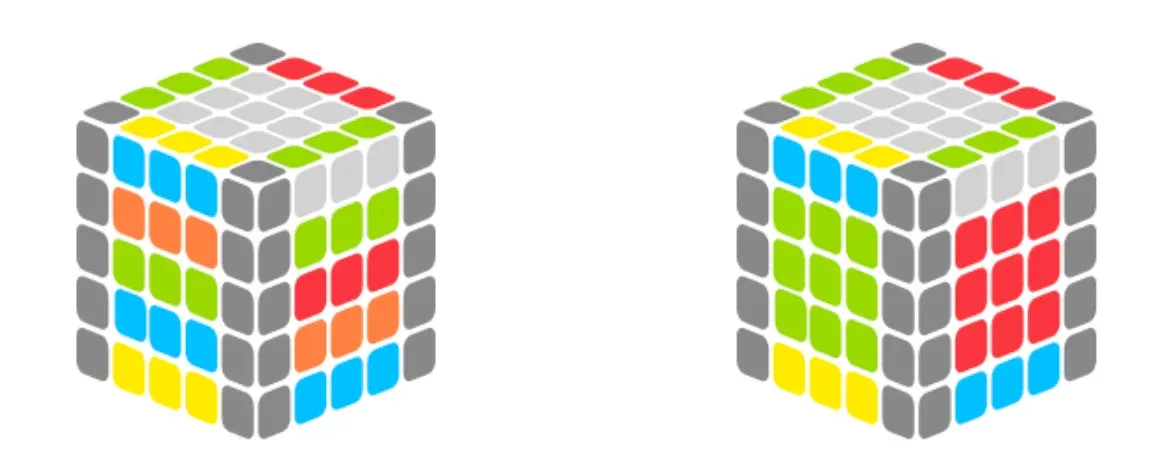
Emparelhe as últimas 4 arestas:
Para resolver as últimas 4 arestas, comece encontrando um par onde uma asa já esteja conectada ao seu cume correspondente. Existem duas possibilidades: ou as cores de ambas as peças combinam corretamente ou estão combinadas incorretamente, criando um padrão xadrez.
Se você não tiver nenhuma aresta com asa e midge emparelhados correta ou incorretamente, você pode usar os seguintes algoritmos (ou variações semelhantes) para emparelhá-los:
Procedimento 3: Corrija erros de paridade do cubo de Rubik 5x5
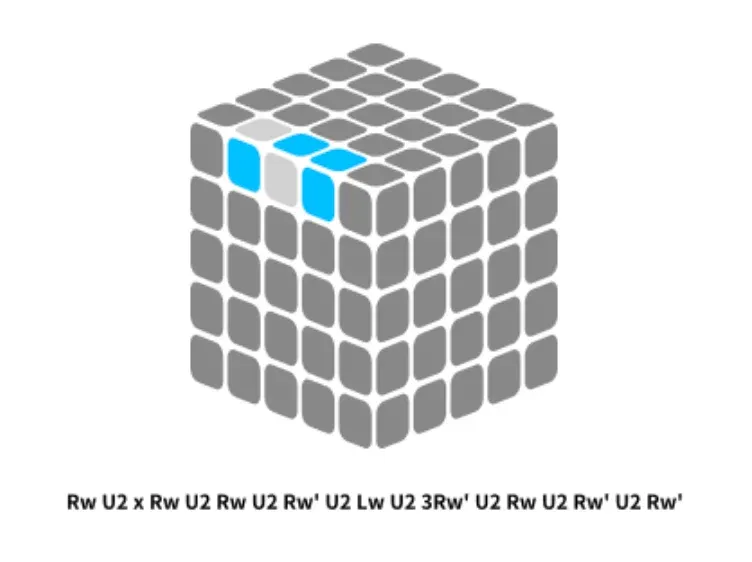
Depois de resolver 11 arestas, sua 12ª e última aresta será resolvida automaticamente ou você poderá encontrar uma paridade de arestas 5x5, o que requer a troca de duas peças de asa. Use o seguinte algoritmo para corrigir isso:Depois que os centros forem resolvidos e as arestas emparelhadas, você poderá tratar o 5x5 como um cubo 3x3. Os centros que você alinhou no cubo de velocidade 5x5 funcionam como os centros fixos em um 3x3, e cada grupo de peças de 3 arestas atua como uma única aresta em um 3x3. Agora, basta usar as camadas externas para terminar de resolver como faria com um 3x3 padrão.
Concluindo
O Cubo de Rubik 5x5 pode parecer esmagador à primeira vista, mas com a abordagem certa, torna-se um desafio agradável. Seguindo o processo passo a passo descrito acima, você pode trabalhar gradualmente com as complexidades de resolver o melhor Cubo de Rubik 5x5. Lembre-se de que a prática é fundamental – cada erro é uma oportunidade para aprender e melhorar suas habilidades de cubagem.
Perguntas frequentes sobre o cubo de Rubik 5x5
P: Resolver um 5x5 é o mesmo que resolver um 3x3?
Resolver um Cubo de Rubik 5x5 não é exatamente o mesmo que resolver um 3x3, embora existam semelhanças. Ambos os cubos envolvem resolver as peças centrais, emparelhar arestas e orientar cantos. No entanto, o 5x5 é mais complexo devido às suas camadas e peças adicionais.
P: Resolver um 5x5 é fácil?Resolver um Cubo de Rubik 5x5 é mais desafiador do que um 3x3 devido às camadas e peças extras. Envolve resolver centros, emparelhar arestas e lidar com erros de paridade. Embora exija técnicas avançadas, fica mais fácil com a prática, especialmente se você estiver familiarizado com o 3x3.

Kelsey Geller focuses on practical Rubik's Cube learning for beginners. Her guides simplify complex steps, explain the "why" behind moves, and help new cubers build confidence with a reliable solving approach. Every guide follows CubeSolver's editorial review standards before publishing.