

No headings found
Este blog explorará a anatomia, técnicas de resolução, história e satisfação psicológica de conquistar o Cubo de Rubik 11x11. Quer você seja um solucionador avançado em busca de orientação ou uma mente curiosa fascinada por quebra-cabeças extremos, você está no lugar certo. Vamos começar entendendo o que torna o 11x11 uma fera única na família Rubik.
O que é o cubo de Rubik 11x11
Um cubo de Rubik 11x11, muitas vezes chamado de "supercubo", apresenta 121 quadrados por face, totalizando 726 adesivos visíveis (assumindo adesivos padrão de cor sólida; alguns cubos modernos usam designs de ladrilhos). Mas não se deixe enganar pelo número – não se trata apenas de tamanho. O que o diferencia é a complexidade de suas peças:
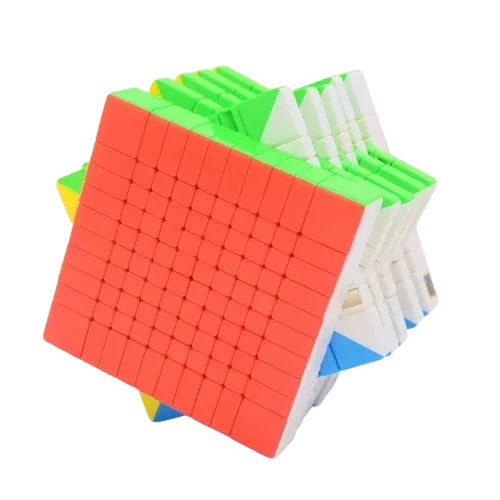
- Centros: 81 por face (grade 9x9), consistindo de 1 núcleo central fixo (ancorado mecanicamente) e 80 peças centrais flutuantes que necessitam de alinhamento.
- Arestas: Cada borda é composta por 9 peças menores (não 5), normalmente chamadas de asas internas, asas externas e a peça da borda central, totalizando 180 peças de borda (já que há 12 bordas, cada uma com 9 partes: 12 × 9 = 108).
- Cantos: Ainda são os clássicos 8 cantos, embora estejam enterrados sob camadas de cores circundantes.Ao contrário do cubo 3x3, que depende de algoritmos de virada de face, o 11x11 exige estratégias de movimento em camadas, resolução de erros de paridade (como paridade de borda e centro) e um equilíbrio entre planejamento metódico (para construção de centro) e solução adaptativa de problemas (para correspondência de borda).
Uma Breve História do Cubo de Rubik 11 por 11
Antes de mergulhar na solução, vale a pena observar a jornada até a existência do Cubo 11x11. Embora o 5x5 (Cubo do Professor) existisse desde a década de 1980, o 11x11 não se tornou popular até 2011, quando ShengShou lançou o primeiro modelo produzido em massa.
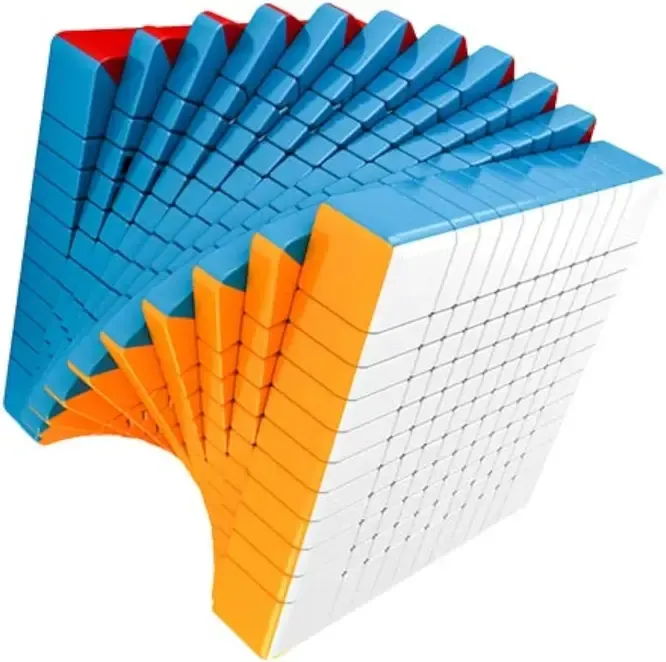
Posteriormente, empresas como YuXin, MF8 e MoYu refinaram os mecanismos internos, introduzindo rotações mais suaves e maior estabilidade. Essas inovações transformaram o 11x11 de uma novidade de colecionador em um quebra-cabeça totalmente solucionável e até mesmo rápido.
A transição: do domínio do básico ao enfrentamento do cubo 11x11Quando você atinge o 11x11, provavelmente já passou anos dominando cubos menores. Você pode ter memorizado mais de 50 OLLs, aperfeiçoado seus truques com os dedos e até mesmo resolvido rapidamente cubos 7x7. Então, o que torna o 11x11 diferente? Não se trata apenas do tamanho. Isso muda a maneira como você resolve. Enquanto os cubos menores se concentram na velocidade e na eficiência, o 11x11 trata da resistência e do planejamento cuidadoso.
O salto de 5x5 ou 7x7 para 11x11 não é um simples avanço. É mais como um salto. Cada camada adicionada traz novas arestas para acompanhar, mais espaço para erros e mais chances para festas. As estratégias que você aprendeu em cubos menores ainda se aplicam, mas agora você deve ter cuidado extra.
Desalinhar o centro? Pode levar dez minutos para consertar. Pareamento incorreto de uma vantagem? Você pode perder vários minutos de trabalho. A memória muscular do 3x3 ou 5x5 ainda ajuda, mas resolver o 11x11 requer uma mudança na sua abordagem. Não se trata mais de resolver rapidamente. Trata-se de resolver com cuidado e estratégia. Este quebra-cabeça é um processo lento, uma dança entre reconhecer padrões e manter o controle da mecânica.
Dica: se você ainda tiver dificuldades com cubos tradicionais, experimente um aplicativo móvel AI Cube Solver. Ele lhe dará rapidamente a melhor solução, ajudando você a melhorar suas habilidades de resolução de cubos.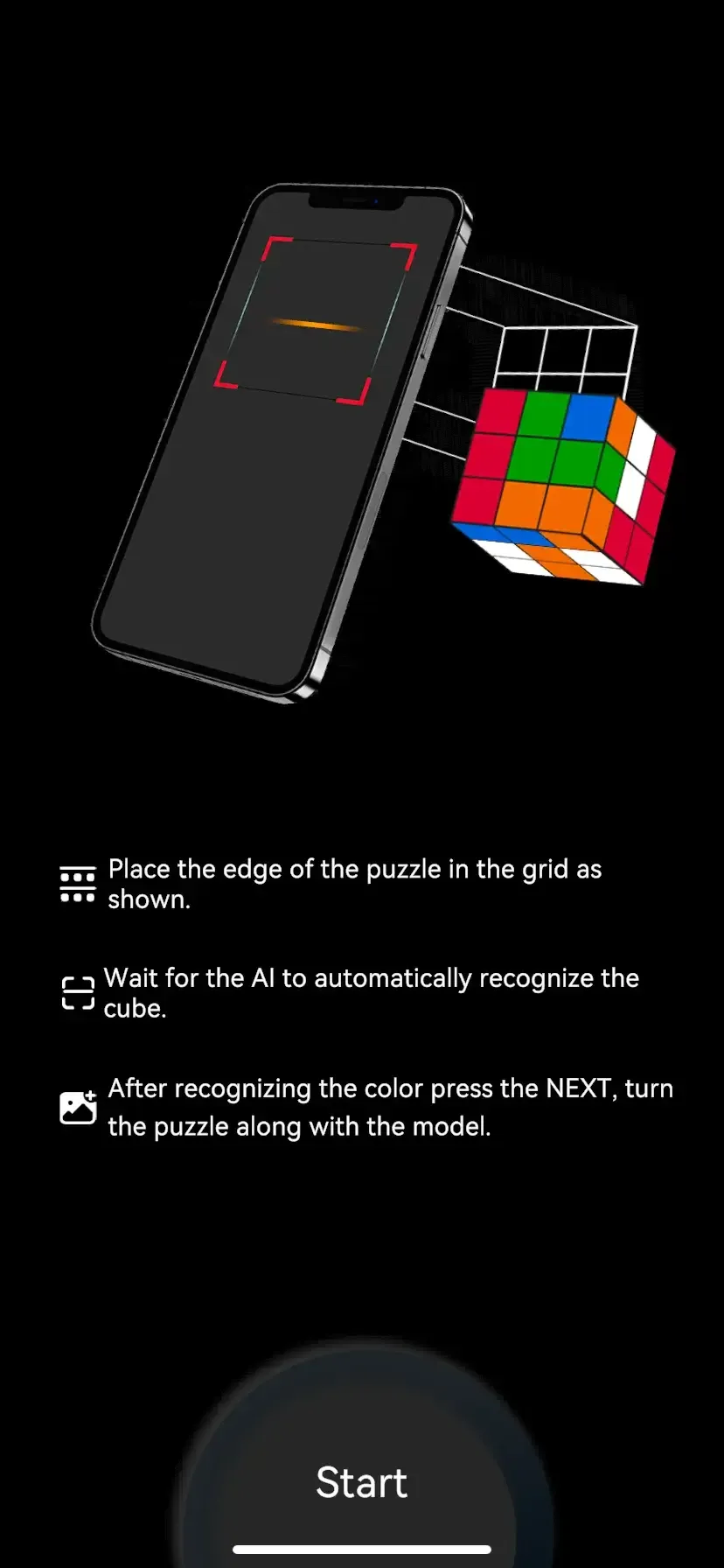

CubeSolver AI


Agora que você tem uma compreensão básica do cubo 11x11, vamos nos aprofundar nas etapas para resolver esse quebra-cabeça desafiador. Continue lendo para aprender como quebrar a complexidade e dominar o Cubo de Rubik 11x11!
Resolva os Centros
- Comece com uma face: Escolha uma cor e concentre-se em resolver todas as 121 peças centrais dessa face. Os centros do cubo 11x11 são mais complexos porque cada face possui uma grade de quadrados 11x11. Não tenha pressa para colocar cada peça corretamente.
- Resolva o centro oposto: Uma vez feito um centro, olhe para a face oposta e resolva seu centro usando o primeiro como referência. Como os centros são fixos entre si, esta etapa se torna mais fácil quando você resolve a primeira.
- Alinhe os centros adjacentes: Agora, vá para os centros adjacentes e resolva-os. Certifique-se de que os dois primeiros centros resolvidos permaneçam intactos enquanto você trabalha nos outros. Paciência é fundamental aqui porque mesmo pequenos desalinhamentos podem afetar toda a rede.
Dicas:
- Use técnicas de barra deslizante: pegue emprestadas as técnicas que você aprendeu ao resolver centros 7x7. Este método envolve mover um bloco de peças centrais como uma unidade, o que ajuda a acelerar o processo.- Mantenha pares e barras intactos: Ao formar pares de centros ou barras de peças resolvidas, tente mantê-los intactos enquanto continua resolvendo. Perturbar esses grupos pode levar a frustrações desnecessárias.
- Experimente uma abordagem de “bloqueio central”: se você achar difícil manusear as peças centrais flutuantes, considere bloquear seções para mantê-las no lugar. Isso reduz a chance de as peças saírem do alinhamento.
Emparelhe as bordas
O emparelhamento de bordas no 11x11 é demorado. Cada aresta consiste em cinco partes e há 60 arestas para emparelhar no total. Esta etapa requer uma estrutura consistente e uma abordagem organizada para evitar confusão.
- Emparelhar duas arestas de cada vez: Comece emparelhando duas arestas e formando mini-barras (grupos de duas peças). Isso ajuda a reduzir a complexidade de trabalhar com cinco peças individuais por aresta.
- Combine os mini-barras: Depois de ter vários mini-barras, combine-os em bordas completas de 5 peças. Isso reduzirá significativamente o número de peças que você precisa manusear à medida que continua resolvendo.
- Use ranhuras de borda: Aplique ranhuras de borda do método 5x5, onde você coloca peças de borda emparelhadas em seus lugares corretos, mas você repetirá esta etapa para cada peça devido ao maior número de peças no 11x11.O desalinhamento é um problema comum ao emparelhar arestas. Em particular, você pode encontrar paridades de “borda interna” – problemas que não aparecem em cubos menores. Isso pode acontecer quando as peças da borda interna ficam desalinhadas durante o processo de emparelhamento. Para evitar isso, bloqueie sistematicamente os minibares – comece pelas barras mais externas e vá avançando para dentro. Essa abordagem minimiza o risco de as peças internas saírem do lugar.
Resolva o cubo como um 3x3
Depois que os centros são resolvidos e as arestas emparelhadas, o cubo se torna muito semelhante a resolver um 3x3 normal. Agora você pode usar seu método de resolução preferido – seja CFOP, Roux ou um método para iniciantes.
Neste ponto, as maiores complexidades do cubo 11x11 são tratadas e o quebra-cabeça se comporta essencialmente como um 3x3 normal, embora com um número maior de peças. O principal desafio nesta fase é manter os centros e bordas resolvidos enquanto se completam as fases finais.
Triunfo psicológico: por que vale a pena resolver um 11x11Resolver um Cubo de Rubik 11x11 é um teste de paciência e habilidade que dura horas e exige atenção meticulosa a centenas de movimentos precisos em seu complexo mecanismo. Ao contrário dos puzzles mais simples, este desafio requer a coordenação manual de inúmeras rotações sem atalhos, transformando a frustração em determinação concentrada à medida que restaura metodicamente a ordem através da repetição disciplinada.
Solucionadores experientes muitas vezes descrevem esse processo intensivo como um exercício meditativo e uma demonstração tangível de domínio na resolução de problemas, onde cada movimento cuidadosamente planejado conquista gradualmente o aparente caos do cubo.
Concluindo
O Cubo 11x11 representa um desafio avançado para cubers que dominam cubos menores como 3x3, 5x5 e 7x7, servindo como o próximo passo lógico no desenvolvimento de habilidades. Este quebra-cabeça não tem a ver com velocidade ou prestígio, mas exige solução metódica de problemas, paciência sustentada e execução precisa para alinhar adequadamente suas inúmeras peças.
Perguntas frequentes sobre o cubo de Rubik 11x11
P: Quantas peças tem um Cubo de Rubik 11x11?Um cubo de Rubik 11x11 tem um total de 1.320 peças. Isso inclui 121 peças centrais em cada uma das 6 faces, totalizando 726 peças centrais. São 60 arestas, sendo 5 peças por aresta, totalizando 300 arestas. Finalmente, existem 8 peças de canto, tal como num cubo 3x3 padrão. Então, ao somar todas essas peças, você obtém 1.320 peças no total.
P: Qual é o meu QI se consigo resolver um cubo de Rubik?
Resolver um Cubo de Rubik não se correlaciona diretamente com uma pontuação de QI específica. Embora a resolução do cubo demonstre habilidades de resolução de problemas, memória e raciocínio espacial, os testes de QI medem uma gama mais ampla de habilidades cognitivas, como lógica, matemática, linguagem e reconhecimento de padrões.

Kelsey Geller focuses on practical Rubik's Cube learning for beginners. Her guides simplify complex steps, explain the "why" behind moves, and help new cubers build confidence with a reliable solving approach. Every guide follows CubeSolver's editorial review standards before publishing.