
No headings found
The world's smallest Rubik's Cube isn't just a novelty item or a gimmick; it represents a true test of dexterity, precision, and problem-solving ability. Shrinking the iconic puzzle down to its tiniest form presents unique challenges, from handling its minuscule size to ensuring all moving parts remain functional despite the tiny dimensions.
What Is the World's Smallest Rubik's Cube
The world smallest Rubik's Cube is an incredibly tiny version of the classic 3x3 Rubik's Cube, with pieces that are often no more than 0.74 cm (about 0.29 inches) in size. This minuscule puzzle, often crafted with precision, operates exactly like the full-sized Rubik's Cube, albeit on a much smaller scale.
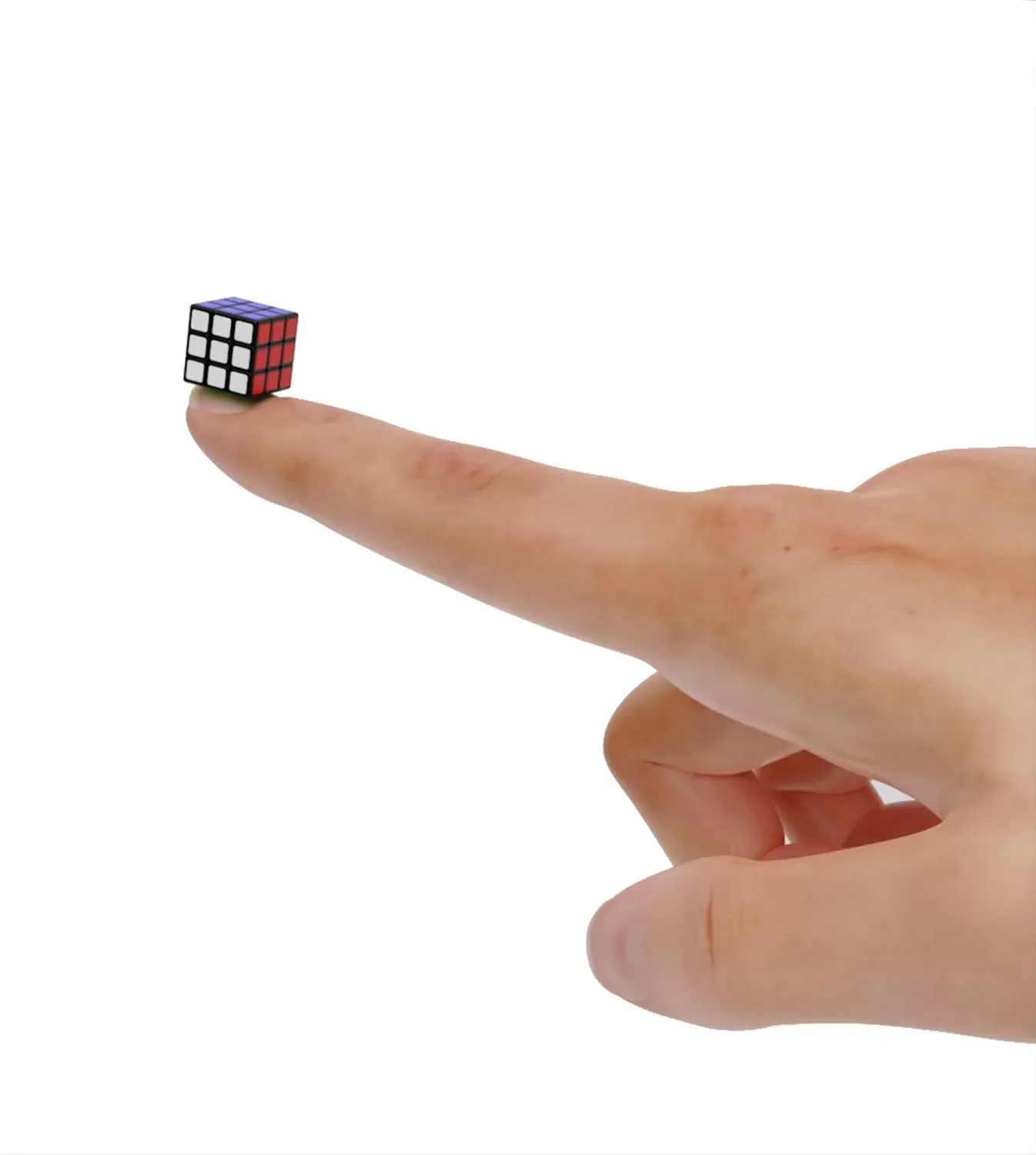
Despite its size, the smallest Rubik's Cube retains all the typical mechanics of its larger counterpart: it has six colored faces, 54 smaller squares, and the same rotational movement system. However, solving this cube becomes far more challenging due to its reduced size. The pieces are so small that it's difficult to move them with precision, requiring an entirely different approach to solving them.
Why Is the Small Rubik's Cube So Difficult to Solve
Solving the world's smallest cube is not just about using algorithms like those that solve the traditional Rubik's Cube. Several factors make it significantly more difficult:
Limited Finger Movement
Due to the tiny size of the puzzle, the amount of surface area you can grip is severely limited. This makes turning the cube more challenging, especially when performing the necessary finger tricks to solve the cube efficiently. The limited space makes it much harder to apply the same finger techniques that you'd use on a regular cube.
Precision and Control
With regular-sized cubes, solvers use their fingers to execute algorithms and turn the layers with a fair degree of control. However, the worlds smallest Rubiks Cube demands a higher level of precision and control to prevent over-rotating or misaligning the pieces. A slight misstep can cause the pieces to slip out of alignment or make the cube harder to manipulate.
Visual Challenge
The small size also presents a visual challenge. The tiny squares are difficult to distinguish, especially for those relying on color matching for orientation. With the small pieces, you need to have an extremely good eye for detail to recognize which colors belong together. This can make solving the cube more of a spatial and tactile challenge than a visual one.
Algorithm Application
The mechanics of the smallest Rubik's Cube are the same as the regular 3x3 Rubik's Cube, meaning the same solving algorithms apply. However, due to the limitations of space, performing algorithms is more difficult. Algorithms that are simple on a full-sized cube become more complicated due to the cube's small size, and precision becomes key in ensuring that each move aligns correctly.
How to Solve the World's Smallest Cube: A Unique Approach
While solving the Cube may seem overwhelming at first, it's still possible to approach it just like you would a traditional Rubik's Cube, though with some added challenges. Here's how you can approach solving it:
Bonus: Inspired by this smallest Rubik's Cube? While our AI Cube Solver app works only with standard cubes, it's perfect for practicing solves and refining your technique before tackling the tiniest challenge.

CubeSolver AI


Step 1. Solve the Centers
Start with the center pieces. While these centers aren't as challenging as the edges or corners, they still require attention. Position the center pieces correctly, making sure that all six centers are in the right place. Since this puzzle is so small, the smallest misalignment can make solving the next layers difficult.
Step 2. Solve the Edges
Next, focus on the edge pieces. The edge pieces need to be paired up and positioned so that the colors align correctly (or in the case of the smallest cube, the pieces' sizes match up). This step requires patience and fine motor control to ensure you're aligning the pieces in their correct places.
Step 3. Solve the Corners
Finally, solve the corners by positioning and orienting them correctly. The corner pieces will need to be rotated into their correct orientations without disturbing the already solved edges.
Tips for Solving the Worlds Smallest Rubiks Cube
Solving the world's smallest Rubik's Cube takes more than just knowing the moves — it requires patience, precision, and a careful touch. Here are a few tips to help you handle this tiny challenge more effectively.
- 1. Use Precision: The tiny size means that every turn must be done with care. Avoid over-rotating and ensure that each move is deliberate and controlled.
- 2. Work Slowly: While you may be used to quickly manipulating a regular cube, take your time with the smallest Rubik's Cube to ensure that the pieces stay in place.
- 3. Use Magnification: If you struggle with seeing small pieces, using a magnifying glass or a digital magnifier can help.
- 4. Practice Finger Dexterity: Since the puzzle is small, it's essential to practice using different finger movements and learning how to move the pieces without slipping.
Wrapping Up
The world's smallest Rubik's Cube is much more than just a novelty item—it's a fascinating challenge that requires precision, patience, and dexterity. Whether you're a collector or a seasoned puzzle solver, mastering the tiny Rubik's Cube offers a new dimension to cubing that challenges your skills in ways the larger cubes simply cannot.
World's Smallest Rubik's Cube FAQ
Q: What is the world's smallest Rubik's Cube?
The world's smallest Rubik's Cube is a fully functional 3x3 puzzle measuring just 5.6 millimeters (0.22 inches) on each side. It was created by Japanese engineer Tony Fisher and is officially recognized as the smallest working Rubik's Cube in the world
Q: Is there a 0 by 0 Rubik's cube?
Yes, there is a 0x0 Rubik's Cube, but it's not a real puzzle. It's a solid cube with no moving parts or colors, often made as a joke or novelty item. Since there's nothing to solve, it's considered "always solved" and is popular as a fun collectible among cube enthusiasts.

Kelsey Geller focuses on practical Rubik's Cube learning for beginners. Her guides simplify complex steps, explain the "why" behind moves, and help new cubers build confidence with a reliable solving approach. Every guide follows CubeSolver's editorial review standards before publishing.