The Sudoku Cube is a fascinating fusion of two legendary puzzles: the Rubik's Cube and Sudoku. While traditional speedcubing relies on pattern recognition, finger tricks, and algorithm efficiency, solving a Sudoku Cube requires logical deduction and number placement, similar to the famous number puzzle.
What Is a Sudoku Rubik's Cube
A Sudoku Cube is a modified 3x3 Rubik's Cube where each face contains numbers instead of colors. The goal isn't just to match sides like a standard cube, but to arrange the numbers so that each face contains all digits from 1 to 9, with no repetitions—just like a 3x3 Sudoku grid.
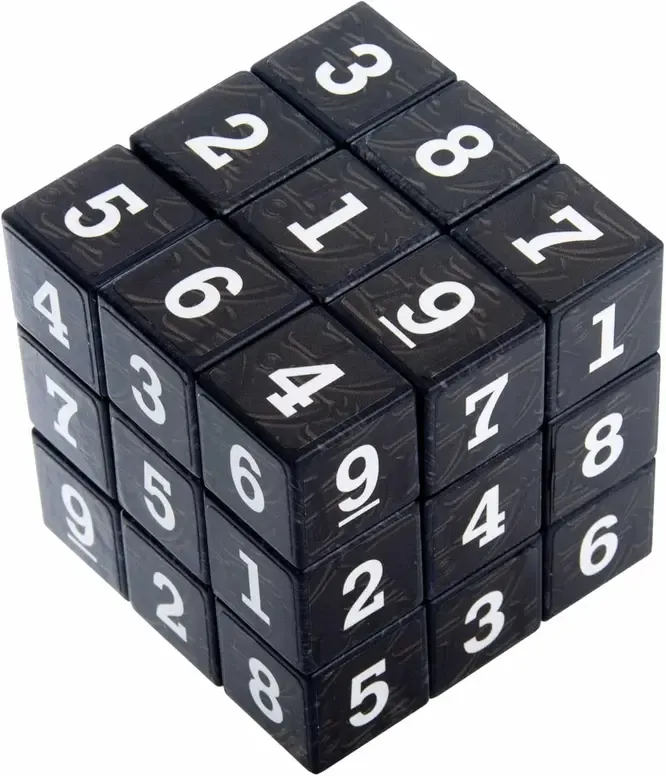
This variation introduces an entirely different solving process. Instead of just relying on algorithms, solvers must incorporate logical reasoning, positional awareness, and Sudoku-style thinking to complete the puzzle correctly.
How Is a Sudoku Rubiks Cube Different from a Rubik's Cube
Although both the traditional Rubik's Cube and the Sudoku Cube share a similar mechanical structure, their solving methods are quite different and require distinct approaches:
1. Number-Based Solving vs. Color Matching
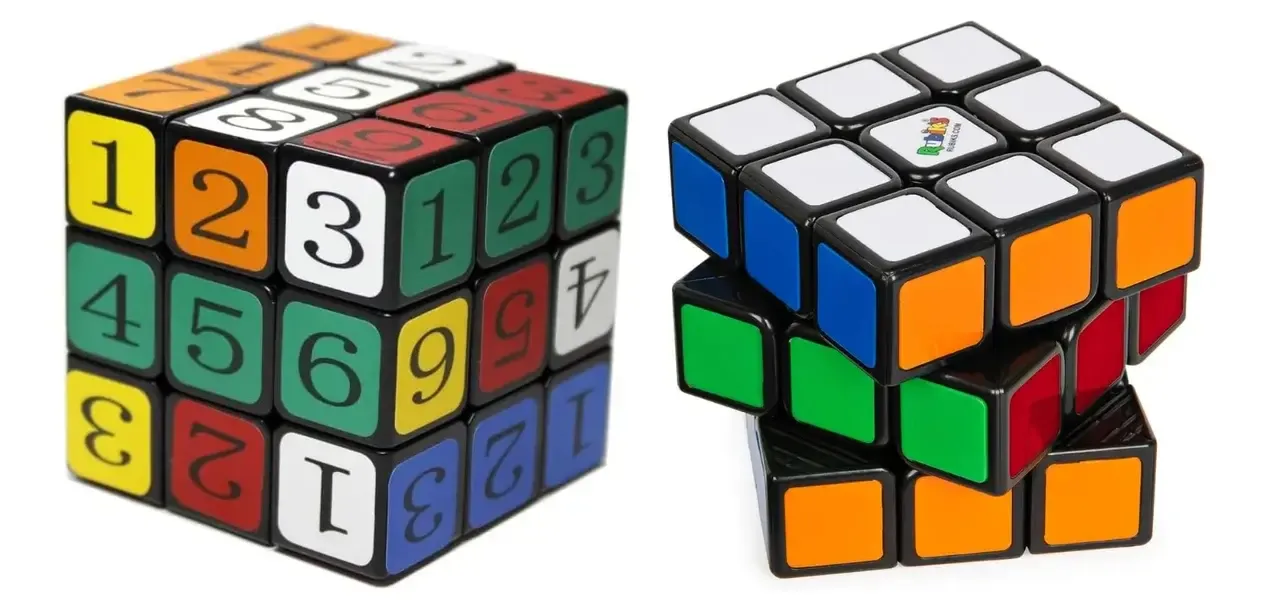
A standard Rubik's Cube is solved by aligning the colors on each of its six faces. In contrast, a Rubik's Cube Sudoku challenges you to place the numbers 1 through 9 on each face, ensuring no number is repeated. This adds a numerical twist to the classic puzzle, requiring a different type of problem-solving.
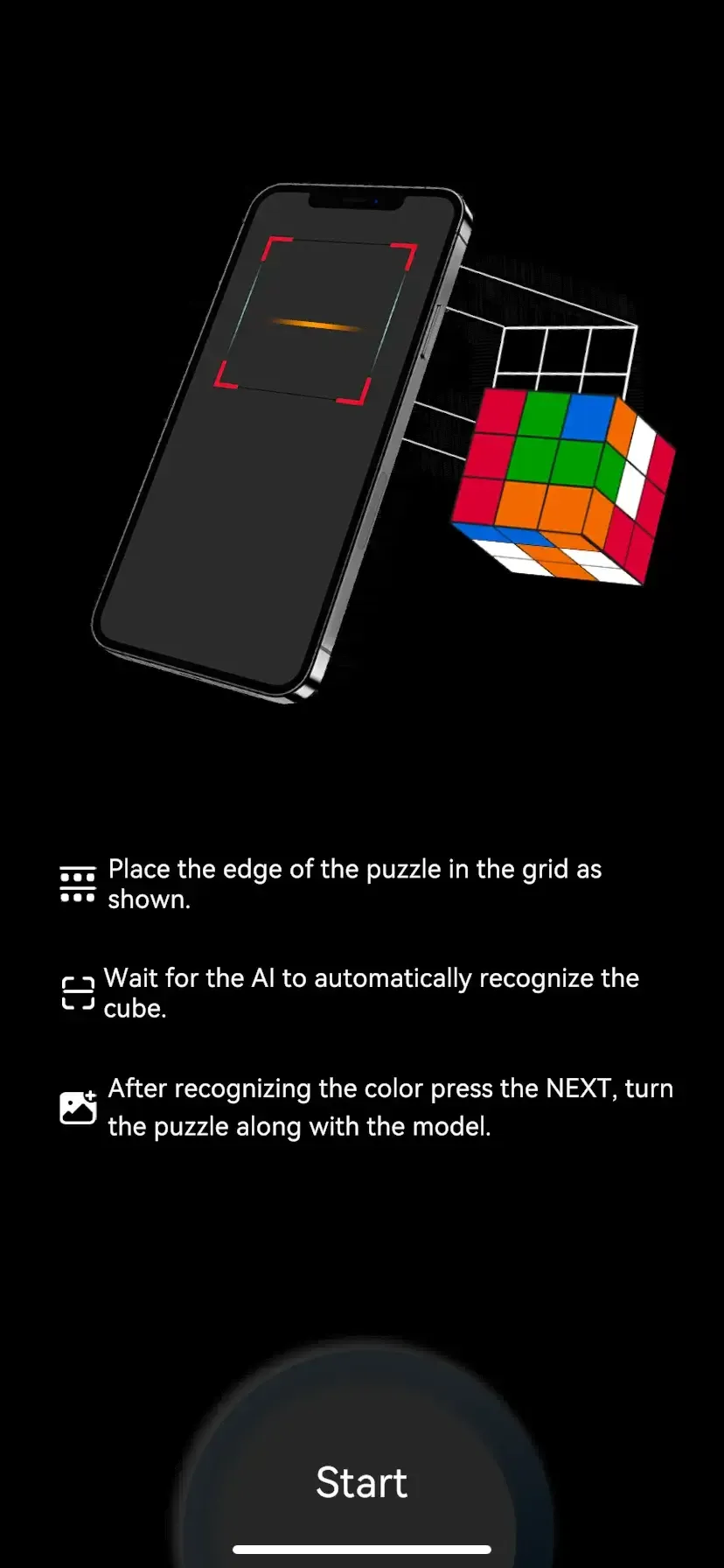
Bonus: If you want to solve a traditional cube, there's a great AI Cube Solver app that can help you with step-by-step solutions. Whether you're a beginner or an experienced cuber, this app can guide you through the process and even provide hints for tricky maneuvers.
2. Logic-Based Solving vs. Algorithmic Strategy
When solving a regular Rubik's Cube, speedcubers rely heavily on memorized algorithms and recognizing patterns. However, a Sudoku Cube takes a more logical approach, much like solving a traditional Sudoku puzzle. You need to apply reasoning and strategy to figure out where each number should go, which makes the solving process feel more like a math puzzle than a spatial one.
3. Orientation Matters More
In a regular Rubik's Cube, once you've correctly positioned the edges and corners, the puzzle is essentially solved. But with the Sudoku Cube, even if the numbers are placed correctly, the orientation of each piece is just as important. Incorrect orientations can mess up the solution, so you need to pay close attention to both the position and alignment of the pieces as you solve.
Overall, while the two puzzles may look similar at first glance, the Sudokube introduces a whole new level of complexity, requiring both logical reasoning and careful attention to detail for a successful solution.
How to Solve a Sudoku Puzzle Cube
Solving a Sudoku Cube is more challenging than a regular 3x3 Rubik's Cube. The process involves not only positioning the numbers correctly but also ensuring that orientations and logical consistency are maintained across all faces. Here's a step-by-step guide to help you tackle this puzzle:
Step 1: Understand the Numbering System
Before jumping into solving, take a moment to analyze the cube:
- Check for duplicate numbers: Look for any numbers that are already placed correctly and are in their proper position.
- Identify restrictions: Some numbers may already be locked into certain spots, limiting where others can go.
- Look for patterns: Search for clusters or groups of numbers that might help you figure out where others should go.
Step 2: Solve One Face First
Start by solving one face of the cube, placing the numbers 1 through 9 in their correct spots. Unlike a regular Rubik's Cube, it's not just about matching colors—each face must adhere to Sudoku rules, meaning no number can repeat within a row, column, or adjacent faces.
Step 3: Build the Second Layer
After completing the first face, move to the second layer. Here, you'll need to use logic to deduce which numbers fit into each position, all while ensuring that the adjacent faces follow the Sudoku rules. Pay attention to how each number interacts with others on neighboring sides.
Step 4: Complete the Last Layer
This is where things get tricky. While a standard Rubik's Cube might use algorithms like OLL and PLL to finish the last layer, the Sudoku Cube demands a more logical approach. You'll need to think through the puzzle step-by-step:
- Fixing swapped numbers: If two numbers are swapped, you may need a parity fix.
- Flipped numbers: If a number is in the correct spot but flipped, perform a rotation maneuver to adjust it.
Step 5: Verify and Adjust
Once you think you've solved the cube, double-check your work:
- Does each face have the numbers 1 through 9 with no repeats?
- Are all numbers in the correct orientation?
- Are the edges and corners logically placed?
Since every Sudokube has a unique number distribution, solving one requires both your cubing knowledge and your Sudoku skills and intuition. With patience and practice, you'll get the hang of it and start solving it more efficiently!
Comparing Sudokube to Speedcubing Techniques
For those used to traditional speedcubing, the Sudoku Cube presents a mental challenge rather than a physical one. Let's compare key differences:
| Feature |
Standard Rubik's Cube |
Sudoku Puzzle Cube |
| Solving Approach |
Algorithms & Speed |
Logic & Deduction |
| Goal |
Match Colors on Each Face |
Place 1-9 on Each Face Without Repeats |
| Speedcubing Techniques |
CFOP, Roux, ZZ |
Sudoku-Based Logic |
| Difficulty Level |
Beginner to Advanced |
Advanced to Expert |
| Orientation Considerations |
Only Colors Matter |
Number Placement & Orientation Matter |
Common Mistakes & Troubleshooting Sudoku Cube Puzzle Solving
Even seasoned Cubers and Sudoku enthusiasts can run into problems when solving a Sudoku Cube. Here are some common mistakes and practical solutions to help you troubleshoot and solve the puzzle more effectively:
- Mistake 1: Misplaced Numbers
Solution: Double-check the adjacent faces to make sure no number is repeated. If you find a mistake, retrace your steps and correct the error. Sometimes, it's as simple as adjusting one number to fix a larger issue.
- Mistake 2: Incorrect Orientations
Solution: If a number is in the right spot but upside down, don't panic. Use a corner twist or rotation maneuver (familiar cubing techniques) to flip the number into its correct orientation. Pay attention to these small details as they can make a big difference.
- Mistake 3: Repeating a Number on a Face
Solution: Take your time and go row by row, checking that each number from 1 to 9 is placed uniquely across all rows, columns, and adjacent faces. If a number repeats, carefully adjust its placement until each face is Sudoku-compliant.
- Mistake 4: Getting Stuck with a Parity Error
Solution: Unlike traditional Rubik's Cubes, Rubik's Cube Sudokus can encounter a "parity error," where two numbers might be swapped in a way that seems unsolvable. This typically requires advanced techniques like advanced rearrangement or swapping specific pieces to resolve the issue.
By recognizing and addressing these common mistakes, solving the Sudoku Cube becomes much easier. With practice and patience, you'll be able to troubleshoot more efficiently and improve your solving skills!
Bottom Line
The Sudoku Rubik's Cube is a clever mix of Sudoku and the Rubik's Cube, bringing together the best of both puzzles. It challenges your logic and spatial reasoning, offering a fun and rewarding experience for anyone who loves tackling tough brain teasers. Whether you're into Sudoku or cubing, this hybrid puzzle will keep you engaged and thinking!
Sudoku Cube FAQ
Q: Is Sudoku Rubik's Cube hard?
Yes, the Sudoku Rubik's Cube can be challenging, especially for those new to both Sudoku and the Rubik's Cube. It combines the logic of Sudoku with the spatial problem-solving of a Rubik's Cube, requiring you to think strategically about number placement and cube orientation. While it may take some time to get used to, with practice, it becomes more manageable and can be a rewarding puzzle to solve!
Q: Which is the hardest cube in the world?
The hardest cube in the world is generally considered to be the Teraminx, a 12x12x12 puzzle. It's incredibly complex, with billions of possible configurations, making it much more difficult to solve than a standard Rubik's Cube. Its size and the sheer number of moves required to solve it make it one of the most challenging cubes out there.