The Puppet Cube is one of the most deceptive and mind-bending puzzles in the world of twisty cubes. Unlike a traditional Rubik's Cube, this puzzle shape-shifts as you turn it, making it appear completely scrambled even after just a few moves. Solving the Puppet Cube requires a strong understanding of shape manipulation, piece recognition, and advanced solving techniques.
Understand the Puppet Rubik's Cube: A Shape-Shifting Nightmare
At first glance, the Puppet Cube might look like a simple 3x3 modification, but its mechanics set it apart from a standard Rubik's Cube. With just a few turns, it twists, shifts, and distorts into unpredictable shapes, making it one of the trickiest puzzles around.
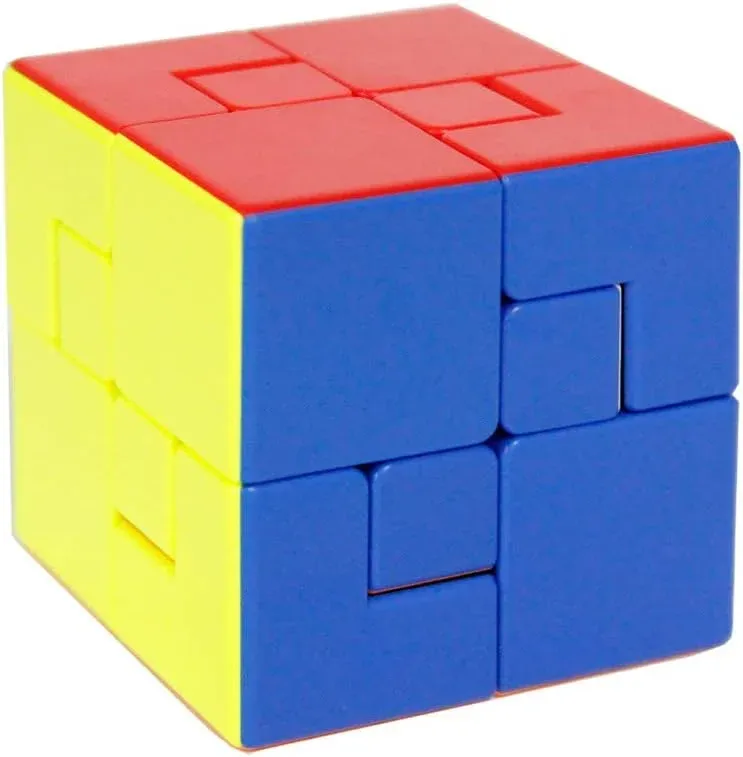
Key Features of the Puppet Cube:
- Unconventional Turning Rules – Some moves are restricted based on piece alignment, requiring careful planning.
- Shape-Shifting Design – The cube quickly loses its form, making it hard to track piece positions.
- Bandaging Effect – Certain moves get blocked, forcing solvers to think ahead to free locked pieces.
For these mechanics, solving the Puppet Cube scrambled isn't just about matching colors—it's about understanding how pieces interact in different orientations. Before we dive into solving techniques, let's explore why the cube is more challenging than a traditional Rubik's Cube and how local cubing communities have embraced its complexity.
Why Is the Puppet Cube So Difficult
The MoYu Puppet Cube presents three major challenges that make it far more difficult than a standard 3x3 Rubik's Cube:
- No Fixed Reference Points: Unlike the traditional cube, there are no static centers to help guide alignment, making it harder to track your moves.
- Restricted Movement (Bandaging): Many moves are blocked due to the cube's design, forcing solvers to think creatively to unlock pieces.
- Extreme Shape Transformation: The cube quickly loses its cubic form and becomes unrecognizable, making it difficult to determine where the pieces are positioned.
Because of these challenges, typical speedcubing methods like CFOP (Cross, F2L, OLL, PLL) won't work here. Solvers need to rely more on positional awareness, intuition, and a step-by-step approach to bring the scrambled Puppet Cube back to its original shape.
How to Solve a Puppet Cube: Step-by-Step Method
Solving the Puppet Rubik's Cube requires a different approach than solving traditional cubes, mainly due to the bandaging effect. Instead of focusing on cube's color alignment, the first goal is to restore the cube's shape, then proceed with positioning the pieces correctly.
Bonus: If you also consider how to solve a traditional Rubik's cube, there's a suggested AI Cube Solver app. Simply input the cube's current configuration, and the app will provide you with optimized move sequences to reach the solved state quickly.
Procedure 1: Restore the Cube's Shape
The first procedure is to get the Puppet Cube scrambled back into its original cubic shape. Here are the detailed steps:
Step 1. Identify major deformations and find moves that help bring the blocky sections back together.
Step 2. Look for free moves that allow you to reposition bandaged sections.
Step 3. Be cautious not to scramble the cube further—some moves can make the shape worse.
Step 4. Trial and error is often necessary to reconstruct the basic cubic form before proceeding.
Procedure 2: Solve the Corners First
Once the cube's shape is restored, the next task is positioning the pieces correctly. Because the Rubik's Puppet Cube lacks fixed centers, positioning the corners is crucial to building a stable foundation.
Step 1. Identify matching corner pairs that should be adjacent.
Step 2. Use intuitive moves to swap misplaced corners without disrupting the cube's shape.
Step 3. Apply basic corner permutation algorithms like R U R' U R U2 R' to cycle misplaced corners.
Procedure 3: Position and Orient the Edges
After positioning the corners, the final procedure is to solve the edges, bringing the cube closer to its final solved form. Keep reading to check how to solve the edges:
Step 1. Identify incorrect edges and find moves that swap them without disturbing the corners.
Step 2. Use commutators (small, repeating move sequences) to adjust edges without undoing progress.
Step 3. Keep refining the edge positions until all pieces are correctly aligned.
With careful adjustments, the Puppet Cube will return to its solved state. However, due to its shape-shifting nature, it's common to make mistakes along the way. Take your time, and with practice, you'll become more skilled at handling its complexities.
Common Mistakes and How to Fix Them
Even experienced solvers often face challenges with the Puppet Rubik's Cube due to its complexity. Here are some common mistakes and simple solutions to help you get back on track:
Mistake 1: The Cube Won't Return to a Cubic Shape
Fix: Try reversing your last few moves to undo unnecessary scrambling. It's a quick way to reset and get the shape back on track.
Mistake 2: Pieces Are Blocked or Bandaged Together
Fix: Look for free moves that can separate the blocked pieces without affecting the rest of the cube. Sometimes, a little adjustment in the right spot can unlock the bandaged sections.
Mistake 3: The Cube Appears Solved, But Some Edges Are Misplaced
Fix: Use a basic edge swap algorithm to reposition the edges correctly. This is an easy fix that will get everything in place without messing up your progress.
Now that we've covered common solving challenges and troubleshooting tips, let's look at other puzzles that offer a similar level of difficulty for those seeking a new challenge.
Unique Puzzles to Challenge Your Cubing Skills
If the Puppet Cube has caught your interest, you'll love exploring these distinctive, shape-shifting puzzles that each bring something entirely different to the table:
Ghost Cube
The Ghost Cube is a master of disguise. When scrambled, its pieces lose their recognizable form entirely, making it a visually confusing puzzle to solve.
What sets the Ghost Cube apart is that you must solve it by shape recognition rather than color matching. This puzzle's unpredictable shape makes it a truly abstract challenge, forcing you to focus entirely on the geometry of the pieces as you piece them back together.
Mirror Cube
The Mirror Cube ditches traditional colors and instead uses pieces of varying sizes, which makes solving it feel like working with a set of blocks that gradually shift in height.
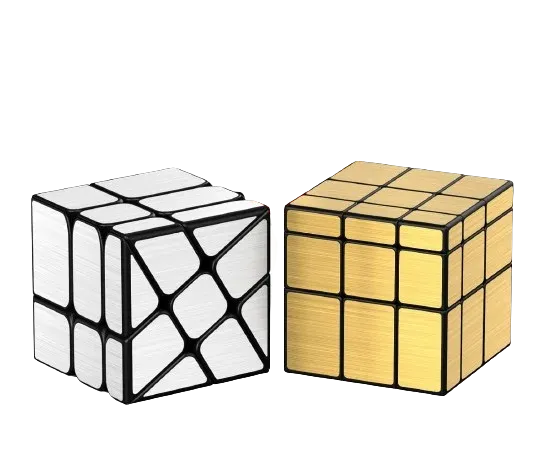
Unlike most cubes, where you align by color, the Mirror Cube relies on adjusting pieces based on height. As you twist it, the puzzle slowly transforms into a distorted, irregular shape that requires spatial awareness and intuition rather than following set algorithms. It's all about visualizing how the pieces will fit together.
Axis Cube
The Axis Cube takes the 3x3 design to a new level by introducing misaligned rotation axes. While it turns like a regular Rubik's Cube, its axes shift at odd angles, creating a puzzle that looks and feels completely different from the classic design.
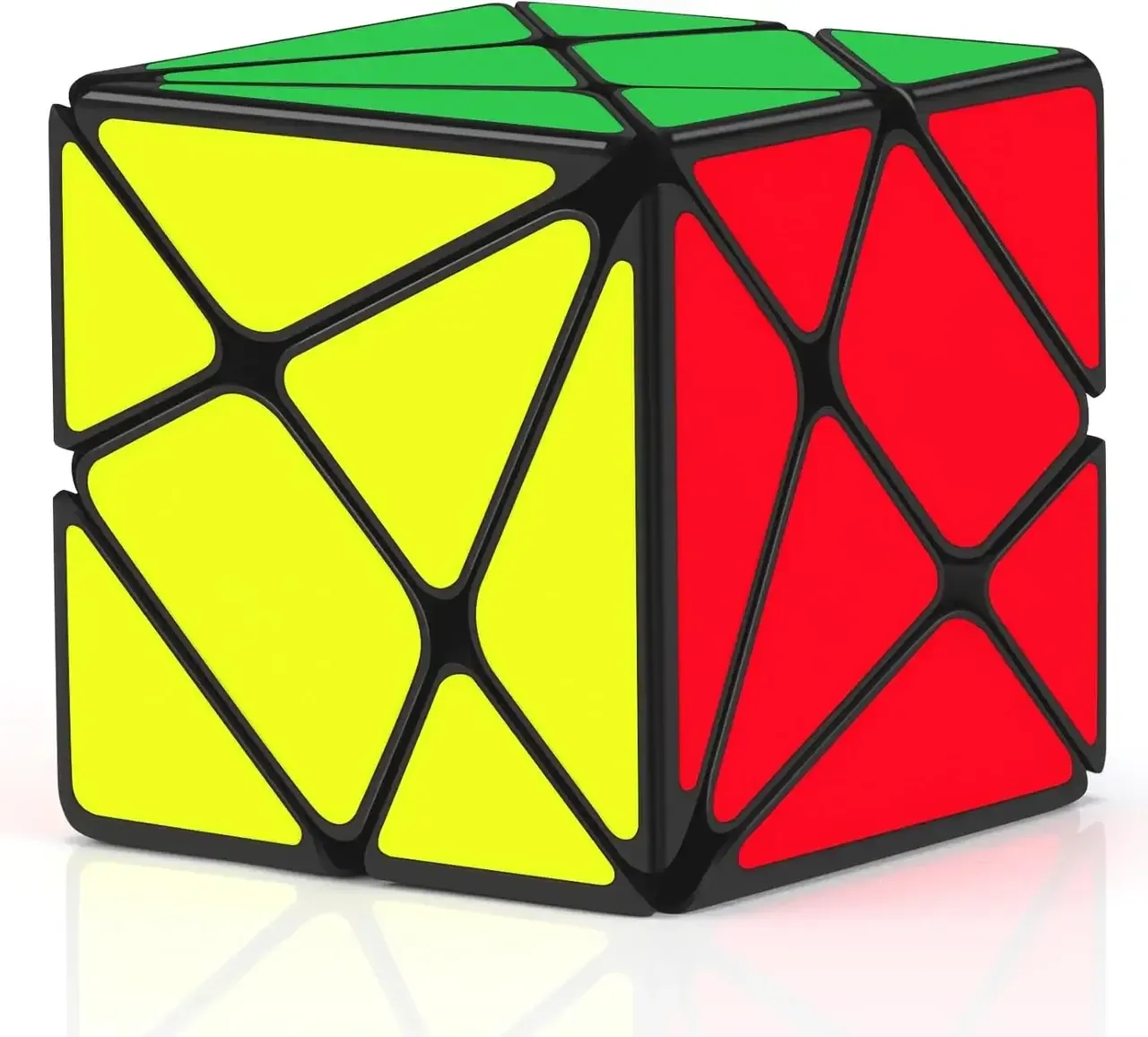
This creates a complex solving experience where you need to think beyond standard moves. Solving the Axis Cube is about understanding how the pieces interact within this misalignment, requiring innovative thinking and a keen understanding of how the cube's geometry changes as it rotates.
Wrapping Up
The Puppet Cube challenges your spatial reasoning and problem-solving skills. Unlike the classic Rubik's Cube, it focuses on shape restoration rather than color matching. To solve it, first restore the cubic shape for easier piece recognition, then solve the corners to set a foundation, and finally, align the edges to complete the puzzle.
Puppet Cube FAQ
Q: How hard is a Puppet Cube?
The Puppet Cube is difficult because it lacks fixed reference points, and its shape-shifting design makes piece recognition challenging. The bandaging effect also blocks certain moves, requiring creative solutions. Solving it demands more spatial awareness and intuition than a standard Rubik's Cube.
Q: What is a Puppet Cube?
It is a twisty puzzle similar to a Rubik's Cube but with a unique design. Unlike the standard cube, it shape-shifts as you twist it, losing its cubic form and making piece recognition more difficult. The puzzle requires solving by restoring the shape, positioning the corners, and aligning the edges, rather than just matching colors.