Mastermorphix looks like a simple pyramid-shaped puzzle, but it is closer to a shape-modified 3x3 than a normal pyramid puzzle. Its difficulty comes from the way the pieces disguise themselves: centers can look like corners, corners can appear rotated even when they are in the right place, and the whole puzzle changes shape as you turn it. This guide explains what a Mastermorphix really is, how its piece roles relate to a standard 3x3, and how to solve it without getting lost in the shifting shape.
What Is a Mastermorphix
At first glance, the Mastermorphix doesn't look like a Rubik's Cube at all. Its smooth, rounded, or pyramid-like shape can be confusing, even for experienced solvers. But beneath that unique exterior lies the same internal mechanism as a standard 3x3 cube.
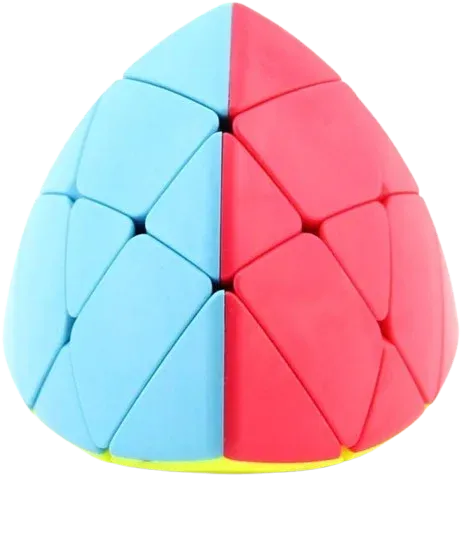
The Mastermorphix is essentially a shape-mod of the Rubik's Cube. It keeps the same core rotation system but swaps out the cube's familiar shape and stickers for a more complex, deceptive design. This makes the puzzle more visually tricky and mentally challenging.
Unlike relying heavily on classic Cube's color, the Mastermorphix challenges you with shape, symmetry, and spatial awareness. Some pieces even share the same color, making it harder to identify positions by sight alone.
Still, if you already know how to solve a Rubik's Cube, you're not starting from scratch. You'll just need to adapt your solving skills to this new shape and rethink how you read the puzzle — turning familiar logic into a new spatial challenge.
What Makes the Mastermorphix Cube Unique
Unlike traditional cubes that maintain their cubic shape, the Mastermorphix pulls a clever trick on your eyes. When scrambled, it transforms into entirely different forms, distorting its original structure. Its true configuration is hidden behind deceptive surfaces, forcing you to rely more on spatial memory than on simple color recognition.
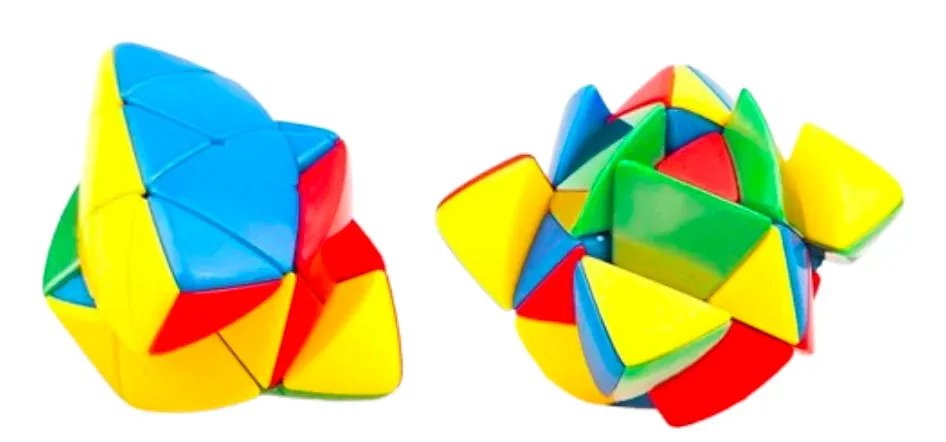
Solving the cube isn't just about matching colors but about understanding how the pieces fit together in space. You need to focus on the cube's structure, not just the pattern. This shift in perspective turns the classic cube-solving experience into something far more intricate and engaging, making it an ideal challenge for cubers seeking a deeper level of complexity.
Types of Mastermorphix Puzzles
The Mastermorphix family includes several variations, each offering its own level of difficulty and shape-shifting complexity. Here's a quick breakdown:
| Puzzle Type |
Description |
Difficulty (1-5) |
Time Commitment |
| Mastermorphix 3x3 |
The classic, based on the 3x3 Rubik's Cube. Simple yet tricky. |
3 |
30-45 minutes |
| Mastermorphix 2x2 (Morph Egg) |
Smaller version with fewer pieces. Easier for beginners. |
2 |
15-30 minutes |
| Mastermorphix 4x4 |
Based on the 4x4 Rubik's Cube. Involves parity errors (two pieces are swapped, and no algorithm can solve them). |
4 |
45-60 minutes |
| Stickerless Mastermorphix |
Relies on piece shape rather than color, making it even trickier. |
5 |
60+ minutes |
| Mastermorphix with Axis Modifications |
Rotates around unconventional axes, making solving more challenging. |
5 |
60-90 minutes |
Solve the Mastermorphix: A Step-by-Step Guide
At first glance, the Mastermorphix looks very different from a traditional Rubik's Cube, but the core solving logic is still familiar. The real challenge is reading the shape, tracking piece orientation, and knowing which part should move next.
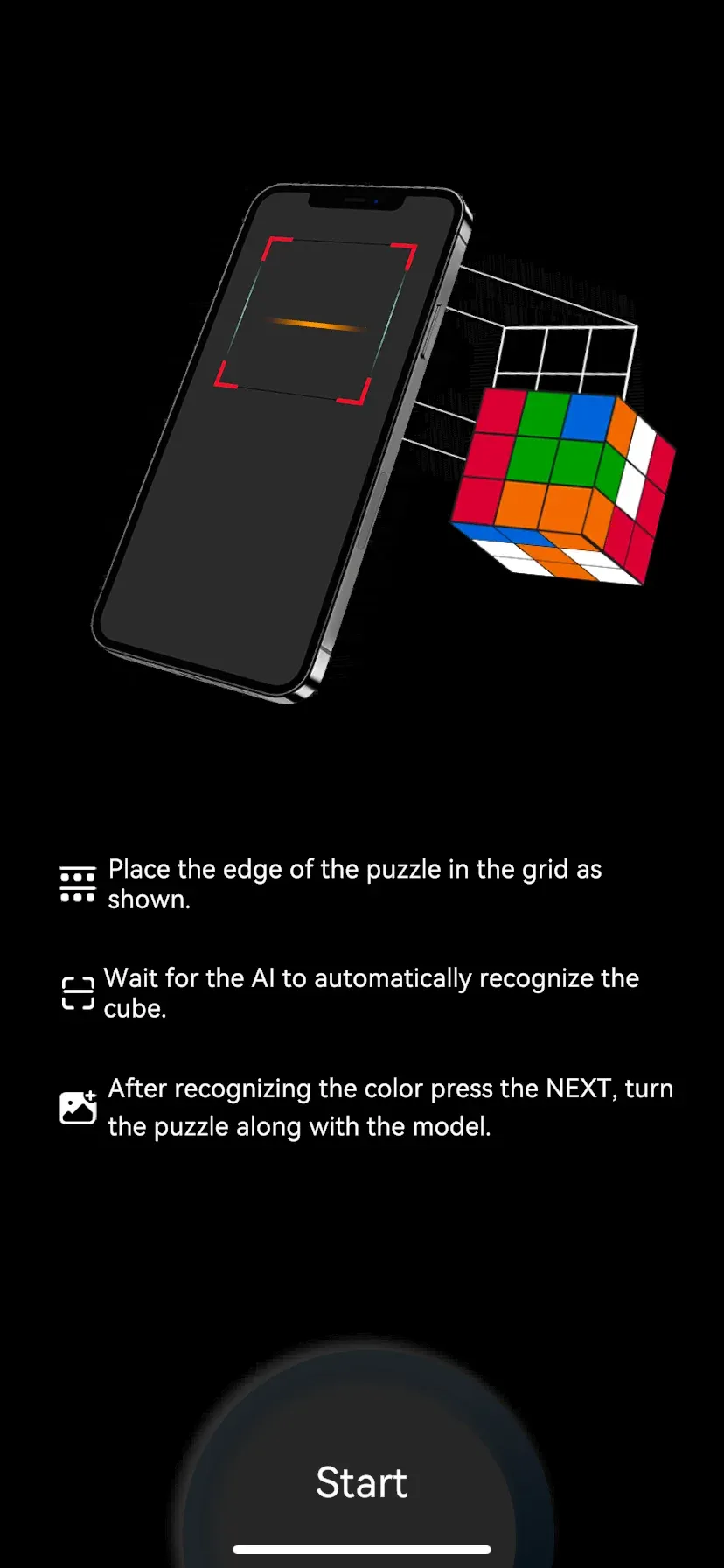
Bonus: Start with a standard Rubik's Cube using CubeSolver AI to build the basic layer-by-layer habits first. Once those steps feel natural, the Mastermorphix becomes easier to approach as a shape-changing challenge.
Step 1. Understand the Piece Roles
Like any cube, there are corners, edges, and centers. However, these are harder to identify in the Mastermorphix, especially when it starts to morph. The goal is to return it to its original, symmetrical state by understanding how the pieces fit into the scrambled shape.
Step 2. Solve Layer by Layer
Start by solving one layer at a time, just like you would on a classic 3x3 cube. This will help anchor your solution and create a solid foundation for the rest of the puzzle. Once the first layer is done, the rest will fall into place more smoothly.
Step 3. Watch for Parity Errors
Here's a helpful tip: treat the puzzle like a blindfolded cube. Instead of relying on visual cues, focus on the feel of the pieces and their structure. By paying attention to how the puzzle moves and fits together, you'll develop a more intuitive understanding of how to solve it.
Step 4. Use Touch and Structure Over Sight
Here's a helpful tip: treat the puzzle like a blindfolded cube. Instead of relying on visual cues, focus on the feel of the pieces and their structure. By paying attention to how the puzzle moves and fits together, you'll develop a more intuitive understanding of how to solve it.
Step 5. Be Patient
Like any shape-mod puzzle, mastering the Mastermorphix takes practice. Don't get discouraged if it takes time to figure out. Keep experimenting with different methods, and soon you'll be solving them faster and more intuitively.
Final Verdict
The Mastermorphix is worth trying when a regular 3x3 no longer feels challenging enough. It rewards patient inspection more than fast turning, so do not rush through it like a normal speed solve. Start slowly, rebuild one clear reference point at a time, and treat each mistake as a clue about how the puzzle is hiding its structure. If you enjoy puzzles that make familiar methods feel unfamiliar again, the Mastermorphix is a strong next step.
Mastermorphix FAQ
Q: Is a Mastermorphix harder than a regular 3x3?
Yes, but not because it uses a completely different solving method. A Mastermorphix is harder because the shape changes as you turn it, so pieces are harder to recognize. If you already know a beginner 3x3 method, the main challenge is learning how to read the puzzle when the usual square faces are gone.
Q: How do you flip centers on a Mastermorphix?
On most Mastermorphix puzzles, the centers do not move around like edge or corner pieces. They can look flipped or twisted because the surrounding pieces are misaligned. Before trying a special fix, solve the nearby edges and corners first. In many cases, the center will look correct once the surrounding shape is restored.
Q: Is a Mastermorphix the same as a Pyraminx?
No. A Pyraminx is a different puzzle with its own turning system and solving method. A Mastermorphix may look pyramid-shaped, but many versions are shape-modified 3x3 puzzles. That means the solve is closer to a Rubik's Cube than to a Pyraminx.
Q: Why does my Mastermorphix look solved but still feel wrong?
This usually happens when the visible shape looks close, but one or more pieces are not oriented correctly. Check whether the tips, edges, and larger face pieces line up smoothly from every side. Do not judge only from one angle, because the puzzle can hide a wrong piece when viewed from the front.