The 6x6 Rubik's Cube, commonly referred to as the V-Cube 6, presents a significant leap in complexity compared to its smaller counterparts. Featuring six layers per face and over 200 individual components, this puzzle demands proficiency in advanced cubing techniques, including center reconstruction, edge pairing, and parity resolution.
Understand the Rubik's Cube 6x6
The 6x6 Cube is an even-layered puzzle, meaning it lacks a fixed center, unlike its odd-layered counterparts such as the 5x5 Cube, and the 7x7 cube. This characteristic introduces additional complexity in color orientation and edge positioning, requiring solvers to manually reconstruct the centers before proceeding to subsequent solving stages.
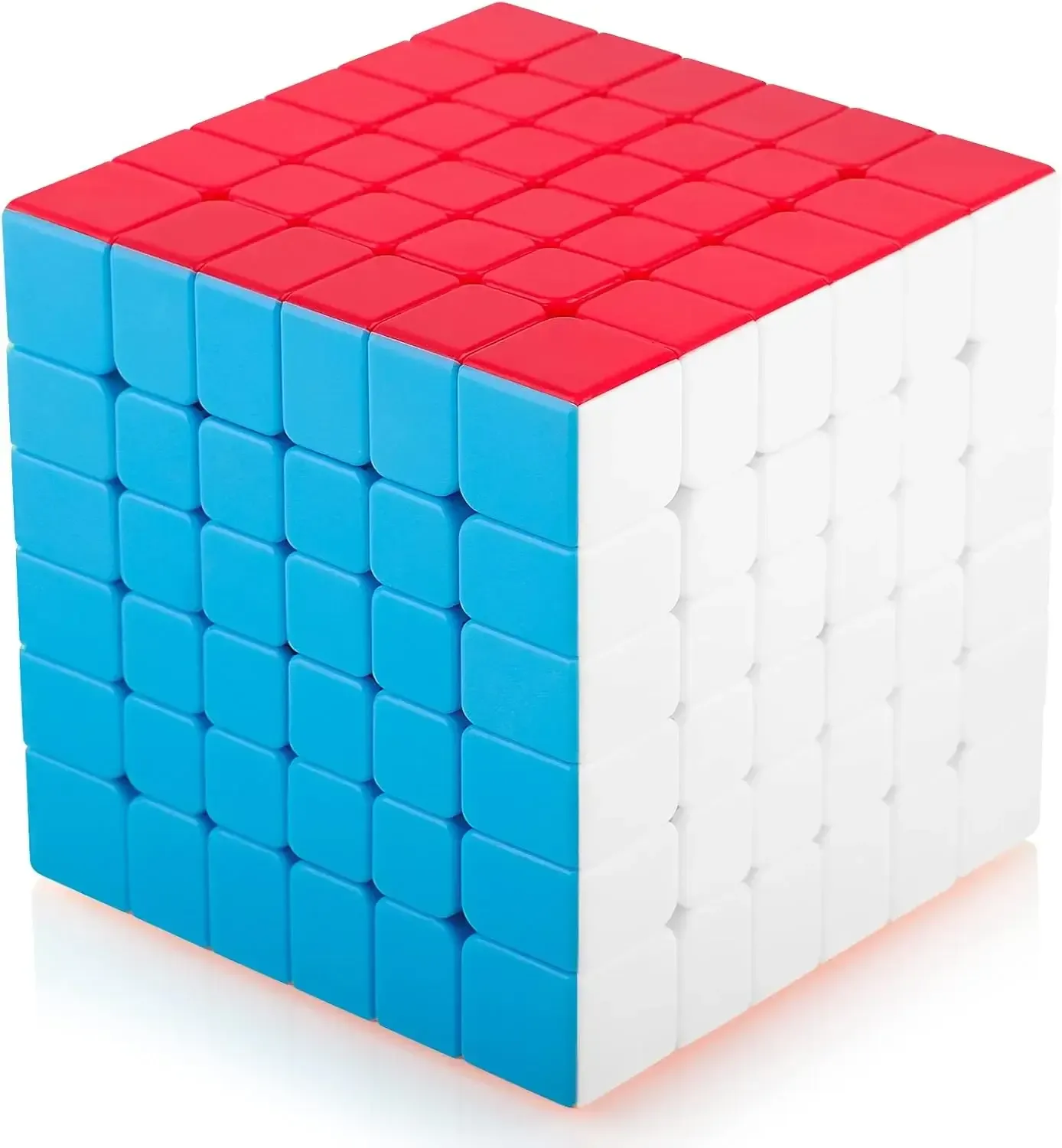
- Six layers per face, significantly increasing the number of pieces that require alignment.
- Floating center pieces necessitate precise placement to avoid orientation errors.
- Multiple edge pieces per side, creating a greater likelihood of parity errors.
- Parity algorithms are required to resolve cases exclusive to even-layered cubes.
How to Solve a 6x6 Rubik's Cube
The standard approach to solving a 6x6 Rubiks Cube follows the reduction method, whereby the puzzle is first reduced to a 3x3 equivalent before implementing traditional solving techniques. This method encompasses the following steps:
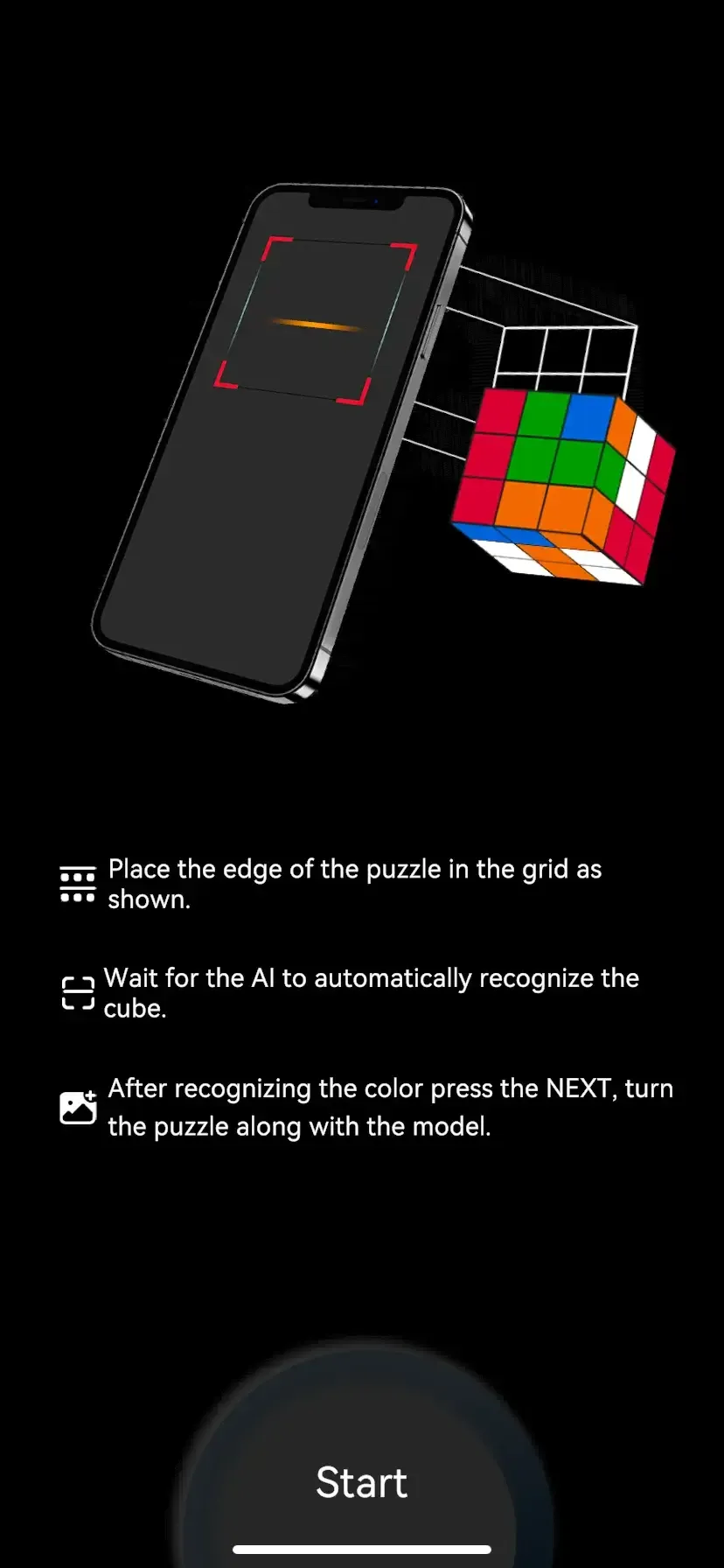
Note: If you're new to cubing, it's best to start with a 3x3 Rubik's Cube before moving on to the 6x6. To speed up your progress, you can use the Cube Solver app. Simply input the cube's colors, follow the instructions, and the app will walk you through the solving process step by step.
Procedure 1. Reconstruct the Centers
Since the Rubik's 6x6 does not have fixed centerpieces, solvers must manually reconstruct them to ensure proper alignment. Mistakes at this stage can lead to complications in later steps, making careful placement essential.
Step 1. Choose a starting color, typically white or yellow, and build 2x3 center blocks using basic U, R, L, and D moves.
Step 2. Solve the opposite center to maintain symmetry, such as White-Yellow, Blue-Green, and Red-Orange.
Step 3. Double-check the center alignment before moving on to edge pairing.
Procedure 2. Pair the Edges
Edge pairing is one of the most challenging stages of solving a 6 by 6 Rubik's Cube due to the increased number of pieces. The "Slice and Restore" technique helps align edge pairs while keeping previously solved centers intact.
Step 1. Identify two matching edge pieces and position them on the same face.
Step 2. Use slice moves (M and E layers) to align the edge pairs.
- M (Middle): The vertical slice between L and R.
- E (Equatorial): The horizontal slice between U and D.
Step 3. Restore any disrupted centers after each pairing step.
Step 4. Solve any remaining mismatched edges using parity resolution techniques.
Procedure 3. How to Solve 6x6 Rubik's Cube Using 3x3 Methods
Once all edges are successfully paired, the 6 by 6 Cube functions like a standard 3x3. From this point, you can apply familiar methods such as F2L (First Two Layers), OLL (Orientation of the Last Layer), and PLL (Permutation of the Last Layer) to complete the puzzle. However, due to the cube's larger size, extra caution is needed to avoid accidental misalignments while executing algorithms.
Procedure 4. Address Parity Errors
Parity errors are unique challenges in even-layered cubes like the 6x6 Cube. These occur because the puzzle lacks fixed centers, leading to misaligned edges or misplaced pieces. Recognizing and resolving these errors efficiently is key to a smooth solution.
- Edge Parity Errors
Even-layered cubes can sometimes leave a single edge flipped or swapped, which is impossible on a 3x3. These errors require special algorithms to fix:
- Flipped Edge Parity (OLL Parity): R2 B2 U2 l U2 R' U2 R U2 F2 R F2 l' B2 R2
- Swapped Edge Parity (PLL Parity): R2 U2 R2 Uw2 R2 Uw2 U2
- Center Misalignment
Since centers are manually constructed in a 6x6 Rubix Cube, errors in their positioning can lead to incorrect color orientation in the final stages. This must be corrected before finishing the solve.
Step 1. Identify which center piece is misplaced.
Step 2. Use a center swap algorithm to reposition it without disturbing the solved edges.
Step 3. Verify correct alignment before proceeding to the last layer.
To Sum Up
Solving the 6x6 Rubiks requires a mix of technique, strategy, and precision. Unlike smaller cubes, it presents extra challenges like center reconstruction, tricky edge pairing, and parity errors. However, with a solid grasp of the reduction method and key algorithms, solvers can efficiently navigate these hurdles and progress to even larger cubes like the 7x7.
6x6 Rubik's Cube FAQ
Q: How to solve a 6 by 6 Rubik's Cube?
To solve a 6x6x6 Cube, first reconstruct the centers, then pair the edges. Once done, solve it like a 3x3 using standard algorithms. Watch for parity errors, which require special moves to fix before completing the solve.
Q: Is the 6x6 Cube hard?
The 6x6 speed Cube is more challenging than smaller cubes due to its lack of fixed centers, complex edge pairing, and unique parity errors. However, with practice and the right algorithms, solving it becomes manageable, especially for those familiar with the 4x4 and 5x5 cubes.